REVIEW · PARIS
Murders and Mysteries of the Louvre Museum
Book on GetYourGuide →Operated by Meeting the French · Bookable on GetYourGuide
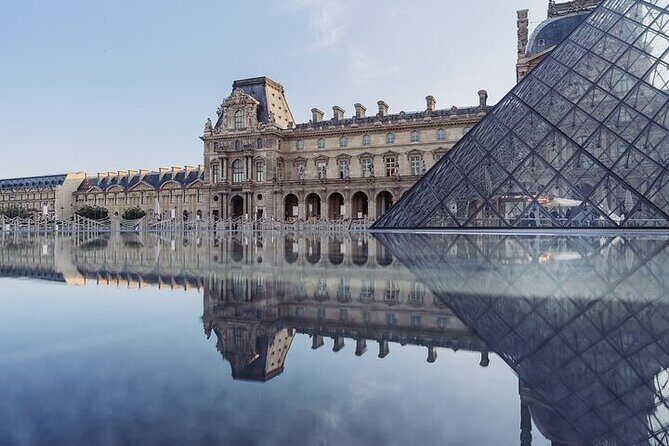
Louvre secrets with a detective’s pace. This 2-hour small-group tour turns the Louvre into a crime scene of art, legends, and medieval leftovers, with a guide who leads you through famous rooms and some lesser-known corners. You start under the glass pyramid and move after security, so you’re not wasting your limited time wrestling the biggest crowds.
I love two things most. First, you get the Louvre’s medieval roots—when it was a fortress and royal residence—woven right into what you’re looking at. Second, you hit the big names (like the Egyptian collection, Venus de Milo, crown jewelry, French masterpieces, and the Mona Lisa) while also getting the strange backstories that usually stay off the museum highlights posters.
One consideration: this is the Louvre, so noise and crowds are real. If your guide’s English is hard to catch in loud rooms, you’ll want to position yourself close and keep the group in sight, because it can be easy to lose track in tight passages.
In This Review
- Key things to know before you go
- Meeting the Louvre guide at the Pyramid: easy start, clear target
- Security vs skip-the-line: how your 2 hours actually save time
- The murders-and-mysteries theme: medieval walls set the tone
- Medieval remnants and what they mean for first-timers
- Egyptian galleries with a dark twist: magic, rituals, and context
- Venus de Milo and crown jewelry: big icons, human stories
- Venus de Milo
- Crown jewelry
- French masterpieces and the Mona Lisa: the smile isn’t just cute
- Price and value: $200 for 2 hours, what you get for the money
- What can go wrong: the main drawbacks to watch for
- Who should book this Louvre murder-mystery tour
- Should you book this Louvre murder-and-mysteries tour?
- FAQ
- Where do I meet the guide?
- How long is the tour and how big is the group?
- What does the price include?
- Will I skip the security line too?
- What languages are available?
- What should I bring and what’s not allowed?
- After the tour ends, can I keep exploring the Louvre?
Key things to know before you go
- Small group (up to 8) keeps the tour feeling personal instead of a school field trip.
- Meet at the Statue of Louis XIV in front of the Louvre Pyramid for an easy, obvious target.
- Skip the ticket line, but not the security check queue.
- Medieval fortress history gives context for why certain galleries feel so eerie.
- Big highlights plus overlooked areas help you make the most of only 2 hours.
- Your ticket continues after the tour, so you can wander at your own pace afterward.
Meeting the Louvre guide at the Pyramid: easy start, clear target
Your tour begins at a very specific spot: the Statue of Louis XIV, right in front of the Louvre Pyramid at Rue de Rivoli (75001 Paris). That matters more than you’d think. The Louvre is a maze, and the quickest way to lose time is to start with a vague meeting point.
Plan to arrive a bit early so you have time to get checked in and find your guide before the crowd flow thickens. The format here is also smart: you meet your guide after the security check but before the ticketed entrance. That means you’re already past the most annoying bottleneck before your tour officially starts, so your 2 hours actually go toward art instead of waiting.
The tour is offered in English and French, and it’s led by a live guide. A small-group setup (limited to 8 participants) helps with questions and keeps you from doing the Louvre shuffle with 40 strangers.
Other Louvre history and royal-palace tours in Paris


Security vs skip-the-line: how your 2 hours actually save time

Here’s the practical truth: you’ll skip the ticket line, not the security line. That’s an important distinction because many people assume skip-the-line means you’ll go straight through the whole process. You won’t. You still need to plan for security.
Still, the payoff can be big. Once you’re through security, you’re guided directly toward the parts of the museum that make sense for a highlight tour with a themed twist. And because the tour is only 2 hours, you’ll feel the difference between a timed plan and wandering on your own.
Also note the museum rules for what you can bring. You’ll want to keep things light:
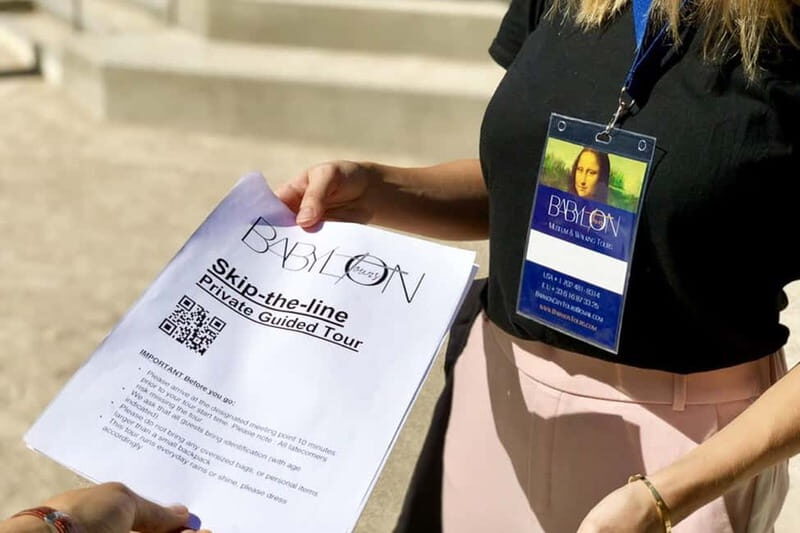
- Bring your passport or ID card.
- Avoid luggage or large bags.
- Items exceeding 55x35x20 cm aren’t permitted.
If you’re traveling with a day bag, keep it manageable. When you’re moving quickly between sections, being weighed down by oversize items can slow the whole group down.
The murders-and-mysteries theme: medieval walls set the tone

The tour’s premise is simple and fun: the Louvre isn’t just a museum; it’s a place where centuries of politics and danger left marks. The guide brings that to life by linking what you see to the Louvre’s history as a medieval fortress, later a royal residence, and a site where betrayal, scandal, and even murder played out.
That theme changes how you experience the art. Alone, it’s easy to treat the Louvre as a checklist: look, admire, move on. With this approach, the galleries feel like chapters. The medieval remnants of the old royal castle don’t sit there like background trivia—they become part of the story machine that explains why the museum feels heavy in places.
You also learn how the museum’s evolution shaped its collections and spaces. That’s one of the most useful parts of a themed guide: it gives you a mental map. Instead of seeing random rooms, you start to understand why these rooms connect the way they do.
Medieval remnants and what they mean for first-timers
One of your early wins is getting oriented using the Louvre’s medieval remnants. These are the physical clues that the Louvre used to be more fortress than palace-gallery. When you understand that starting point, later stops land differently.
For example, when you move from “old stone walls” to “masterworks and famous sculptures,” it stops feeling like two separate worlds. The guide’s job is to connect the scale: the Louvre as an old power center, then the Louvre as a curated stage for art and authority.
Practical note: since you’re moving in a small group, you’ll likely spend less time stuck at bottlenecks. Still, wear comfortable shoes. The Louvre has long distances, and even a highlight tour can involve a fair amount of walking in a short window.
Egyptian galleries with a dark twist: magic, rituals, and context
The Louvre’s Egyptian collection is huge, and it can be overwhelming if you walk in cold. This tour helps by selecting what matters and attaching it to a story. You’ll hear about magic and long-forgotten rituals and how the guide interprets the ancient world collections.
This is where the tour’s theme pays off. Egyptian art is often presented as “famous objects,” but the guide’s emphasis on rituals and beliefs gives you a better sense of what these works were meant to do. You’re not just viewing artifacts—you’re getting a guided explanation of cultural meaning, which makes it much easier to remember what you saw.
And since the tour is only 2 hours, you’ll appreciate any approach that prevents decision fatigue. On your own, it’s common to bounce between galleries and still feel like you missed the point. Here, you’re pushed toward the pieces that support the tour’s narrative.
Other museum experiences in Paris






Venus de Milo and crown jewelry: big icons, human stories
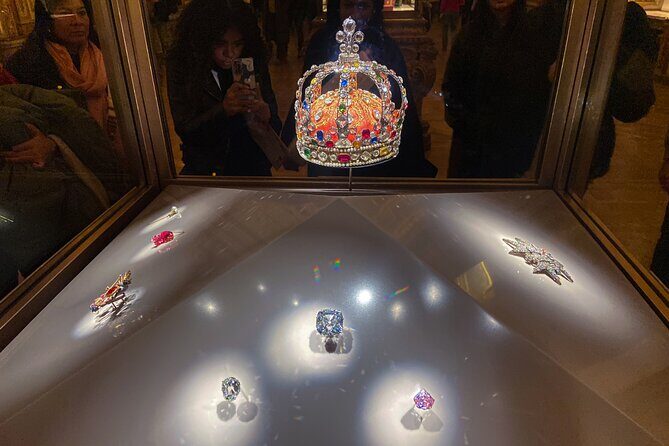
Next comes the mix of recognizable masterpieces and monarchy-level spectacle. You’ll see Venus de Milo, the crown jewelry collection, and then transition into French masterpieces and the closing anchor: the Mona Lisa.
Even if you know these names already, the value is in the “why this matters” part. A good museum guide doesn’t just say what something is; it explains what it signals to its era and why people kept returning to it. The murders-and-mysteries angle adds another layer: it frames luxury and fame inside a world where power had enemies, secrets, and consequences.
Venus de Milo
Venus de Milo is famous enough that many visitors only do a quick glance. With this tour, you’re meant to slow down and understand what makes the work significant. The guide also positions it inside the broader ancient-world story, so it doesn’t feel like a random stop.
Crown jewelry
The crown jewelry room tends to hit differently when you connect it to the Louvre’s royal past. Jewelry is about identity and authority. In a museum that once served royal power, it’s hard not to see the stakes.
One bonus: small groups tend to make it easier to hear explanations clearly, and at least some guides also help with photos. If you want a souvenir that doesn’t come from awkward self-timing, it’s worth asking your guide if they can help with a quick picture.
French masterpieces and the Mona Lisa: the smile isn’t just cute
The Louvre’s French masterpieces section can feel like a wall of masterpieces. This tour tries to turn that wall into a line you can follow. The guide uses the themed lens to highlight the darker side of storytelling—how artists depicted intense events and how those choices affect how you read the images.
Then comes the finale: the Mona Lisa. You’re shown the painting with attention to her expression, and you’ll try to understand the meaning behind her enigmatic smile. It’s still the Mona Lisa—crowds, glare, and photo sticks are part of the deal—but having an interpretive framework makes the stop more satisfying than a quick sighting.
Even better, the tour doesn’t leave you trapped at the Mona Lisa for the whole afternoon. After the tour finishes, your ticket lets you stay at the Louvre to explore the rest on your own. That’s a smart way to split the day: guided momentum first, then personal wandering where your interests pull you.
Price and value: $200 for 2 hours, what you get for the money
At $200 per person for 2 hours, you’re paying for three things:
1) a live guide,
2) museum entry fees,
3) and most importantly, skip-the-line access for museum entry (not security).
That last part is the practical value. The Louvre is famous for making visitors waste time. If this tour gets you moving after security and into the museum efficiently, the cost becomes easier to justify—especially if you only have one half-day in Paris and you don’t want to spend it playing “where am I?” with 20,000 other people.
The small group size (max 8 participants) also adds value. You’re less likely to feel like a face in the crowd. In the best moments, you get explanations that go beyond simple facts—artistic technique, relationships between artists, and connections between what you’re seeing and why it matters.
Is it a bargain? Not really, but it can be fair value if you want a guided plan that hits major works and still keeps the focus on a theme you can actually remember.
What can go wrong: the main drawbacks to watch for
This kind of tour can have two predictable friction points:
Audio and group control. The Louvre is loud. If a guide speaks softly or has an accent that’s hard to follow, you’ll feel it fast. Your best move is to keep near the guide rather than drifting to the edge of the group for photos.
Theme match. This tour sells a murders-and-mysteries angle. If you’re hoping for full-on detective theatrics, you might find the tone more “storytelling with darker art themes” than “interactive crime drama.” The good news: even then, you’ll still cover the museum’s strongest hits—Egypt, major sculptures, royal jewelry, French masterpieces, and the Mona Lisa.
Who should book this Louvre murder-mystery tour
This is a strong fit if you:
- Have limited time and want a guided “best of” that doesn’t feel generic.
- Like art history when it comes with stories—especially when those stories connect to power, fear, and intrigue.
- Want meaning, not just labels. The tour’s themed explanations are designed to make familiar artworks click differently.
- Prefer a small group so you can ask questions and stay together.
It may be less ideal if you:
- Need very loud, crystal-clear audio to enjoy guides in busy spaces.
- Already know the Louvre well and mostly want space to roam without any structure.
- Carry heavy bags that are likely to create slowdowns at security (you’ll need to keep items within the museum’s limits).
Should you book this Louvre murder-and-mysteries tour?
I’d book it if you want to experience the Louvre as a story, not as a catalog. The combination of medieval context, major masterpieces, and a timed plan makes it a solid use of a short visit. The price isn’t cheap, but you’re paying for guide-led direction plus museum entry—and you’re getting a better chance of leaving with connections in your head.
If you’re the type who enjoys getting lost and building your own route, you might be happier doing the Louvre independently. But if you want your first meeting with the museum to feel like plot and not confusion, this is a smart way to start.
FAQ
Where do I meet the guide?
Meet your guide at the Statue of Louis XIV in front of the Louvre Pyramid, Louvre Museum, Rue de Rivoli, 75001 Paris, France.
How long is the tour and how big is the group?
The tour runs for 2 hours, and it’s a small group limited to 8 participants.
What does the price include?
The price includes museum entrance fees. It also includes skip-the-line access for entering the museum.
Will I skip the security line too?
Skip-the-line access applies to museum entry, but it does not include the queue for the security check.
What languages are available?
The live guide offers English and French.
What should I bring and what’s not allowed?
Bring your passport or ID card. Luggage or large bags aren’t allowed, and items exceeding 55x35x20 cm are not permitted in the museum.
After the tour ends, can I keep exploring the Louvre?
Yes. Your ticket allows you to stay at the Louvre to explore the rest of the museum on your own.