REVIEW · PARIS
Paris: Louvre Museum Tour Mona Lisa & Iconic Masterpieces
Book on GetYourGuide →Operated by GetYourGuide France · Bookable on GetYourGuide
The Louvre clicks when a guide tells the story. This tour hands you skip-the-line access through the pyramid and points your eyes at the big icons like the masterpiece stories behind the Mona Lisa, Venus de Milo, and Winged Victory. One catch: it’s steps and lots of walking, so it’s not a fit for wheelchair users.
I especially like the way the group stays small (max 20) and the guide talks clearly thanks to headsets. I also found the meeting point smart and easy to follow: the Kiosque des Noctambules kiosk, Murano glass beads sparkling near the Comédie Française.
If your mobility is limited, mobility limits matter here. There are many steps in the museum, wheelchairs are not permitted on this tour, and you won’t be able to bring luggage or large bags into the galleries.
In This Review
- Key Highlights You’ll Care About
- A 2-Hour Louvre Route That Feels Like a Real Plan
- Starting at the Kiosque des Noctambules: Don’t Go Straight to the Louvre
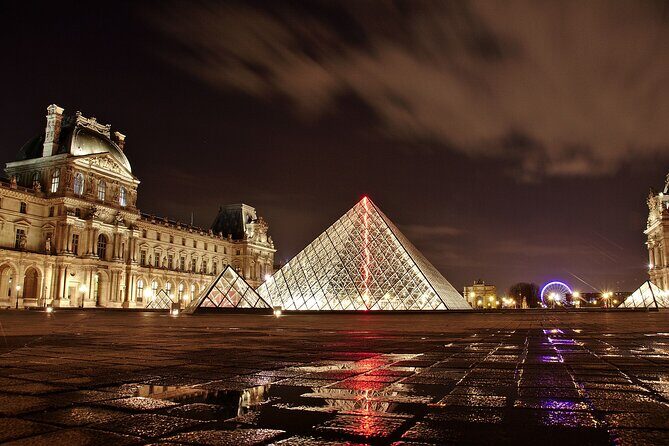
- Pyramid Entry with Pre-Reserved Tickets: Where the Value Comes From
- Mona Lisa, Venus de Milo, and Winged Victory: What You’ll Actually Gain
- Mona Lisa: More Than Just a Face Behind Glass
- Venus de Milo: Why This Sculpture Shaped Artists for Centuries
- Winged Victory of Samothrace: The Movement You Can Feel
- The Louvre Palace Layers: From Royal Collections to the Castle Foundations
- How the Route Ends (and Why the Under-the-Pyramid Rule Matters)
- Orsay Upgrade in the Morning: A Smart Pairing If You Plan Your Days
- Group Size, Headsets, and Crowds: How to Keep Your Sanity
- What to Bring, What Not to Bring, and the Step-Heavy Reality
- Should You Book the Louvre Mona Lisa Tour?
- FAQ
- Where is the meeting point for this Louvre tour?
- How do I recognize the guide?
- What ticket advantage do I get?
- What are the main masterpieces you’ll see?
- How long is the tour and what happens after?
- Can I re-enter the rooms after I exit?
- What language is the guide?
- Is it suitable for wheelchair users or people with mobility impairments?
- What should I bring and what’s not allowed?
Key Highlights You’ll Care About
- Pre-reserved entry via the pyramid so you don’t waste your prime time stuck in ticket lines
- Headsets for clear commentary while you move through the Louvre’s most famous works
- A tight highlights route in just 2 hours that still covers ancient Greece, Renaissance art, and more
- Up-close moments with the Mona Lisa and major sculptures you’ll recognize immediately in person
- Stay-after flexibility to explore at your own pace once the guided portion ends
A 2-Hour Louvre Route That Feels Like a Real Plan

The Louvre is huge. Without a plan, you’ll do what most people do: wander, aimlessly chase a few famous paintings, then leave overwhelmed and only half satisfied. This tour is designed to fix that. In about 2 hours, you get a guided highlights route that focuses on the works that anchor the museum’s story—then you’re free to keep exploring after the tour.
The best part is that you don’t just look at famous art—you learn what to notice before you get there. You’ll walk in with the Mona Lisa already in your head, but the guide helps you see how her fame grew (including the theft in 1911 that turned it into a global obsession). You’ll also get more meaning from the big ancient sculptures—Venus de Milo and the Winged Victory—by understanding why they became so influential.
And yes, it’s efficient. But it’s not rushed in the way some “see everything” tours feel. The group stays together, the commentary stays on topic, and the route gives you a clean path through the museum’s biggest hits.
Other Mona Lisa tours at the Louvre



Starting at the Kiosque des Noctambules: Don’t Go Straight to the Louvre
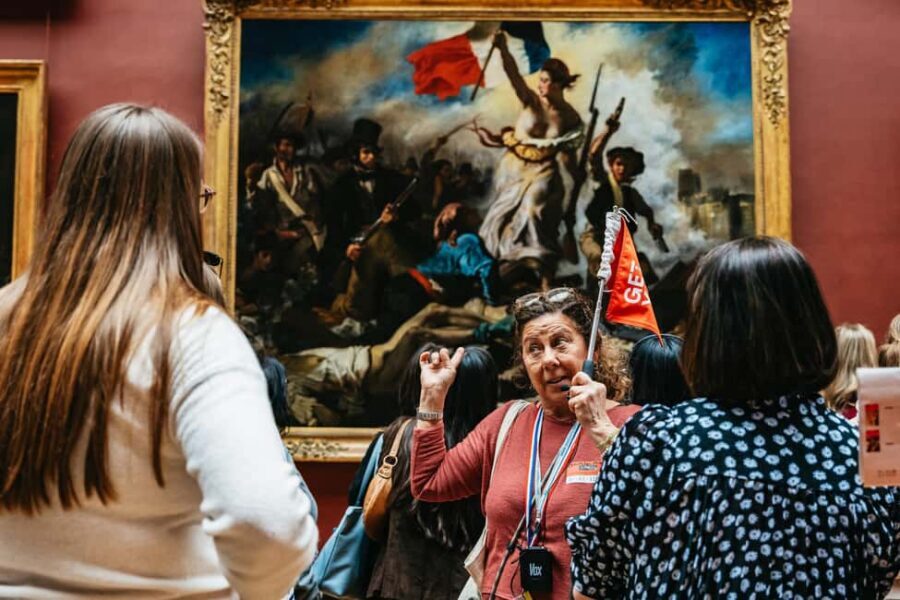
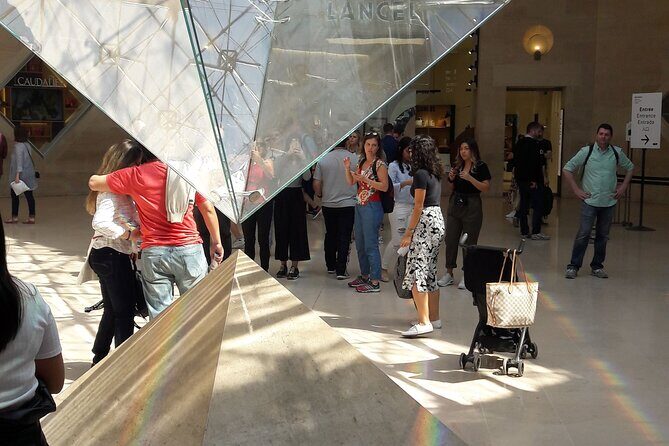
Here’s the number one logistics mistake: don’t show up at the Louvre entrance and hope for the best. You’ll meet your guide at the Kiosque des Noctambules, a colorful structure decorated with Murano glass beads, facing the Comédie Française.
This matters because your entry time and skip-the-line advantage depend on the group meeting properly first. The kiosk is about a 5-minute walk from the Louvre entrance. Look for your guide holding a GetYourGuide flag. Guides arrive at the tour start time, not before.
If you’re using the metro, aim for Palais Royal – Musée du Louvre (exit Place Colette). That gets you close to the right side of the area where you can walk over without stress.
Small detail, big payoff: you show up at the meeting point, and your first hour inside goes smoother.
Pyramid Entry with Pre-Reserved Tickets: Where the Value Comes From
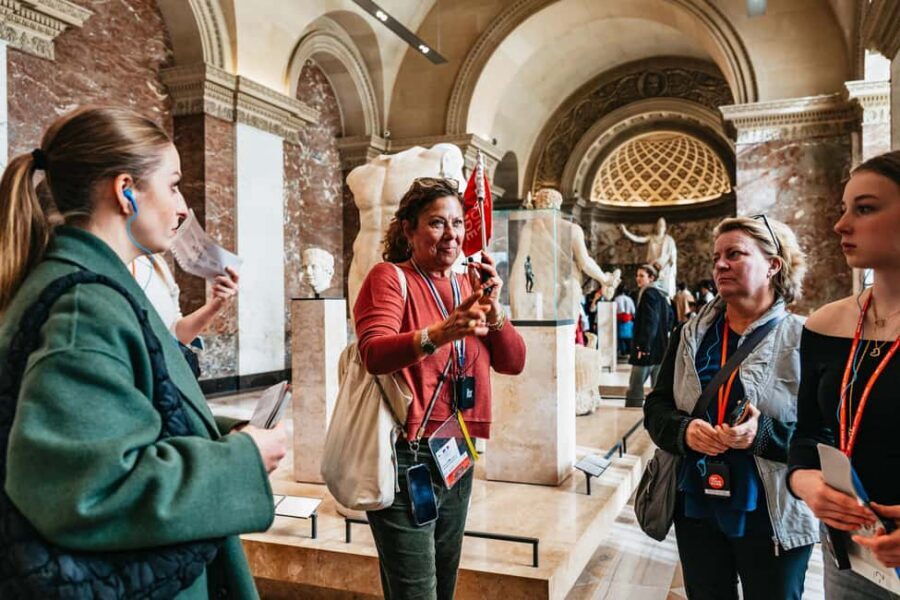
At $79 per person for a 2-hour guided tour, the cost might look steep at first glance—until you factor in what you’re buying. You’re paying for two things that matter in the Louvre: access and direction.
You get a pre-reserved entry ticket, which helps you avoid the worst of the ticket line chaos at the museum. You’re also using a structured highlights route with a licensed guide, so you’re not spending your energy figuring out where to go next.
One practical note: skip-the-line does not always mean instant entry in every situation. The tour info says you may still wait up to 20 minutes at security check-in during peak season. That’s normal for a museum this size. The key is you’re not adding extra delays from ticket searching.
This is also where the guide earns their keep. The difference between walking through the Louvre on your own and walking through it with a plan is huge. In the more positive guide experiences, people mention getting to see the Mona Lisa with better positioning rather than getting swallowed by the crowd.
If you’ve got limited time in Paris, paying for this kind of access is usually cheaper than losing a day to exhaustion and disappointment.
Mona Lisa, Venus de Milo, and Winged Victory: What You’ll Actually Gain

This is a highlights tour, so the big names are the draw—but the real win is the guidance on how to read them.
Mona Lisa: More Than Just a Face Behind Glass
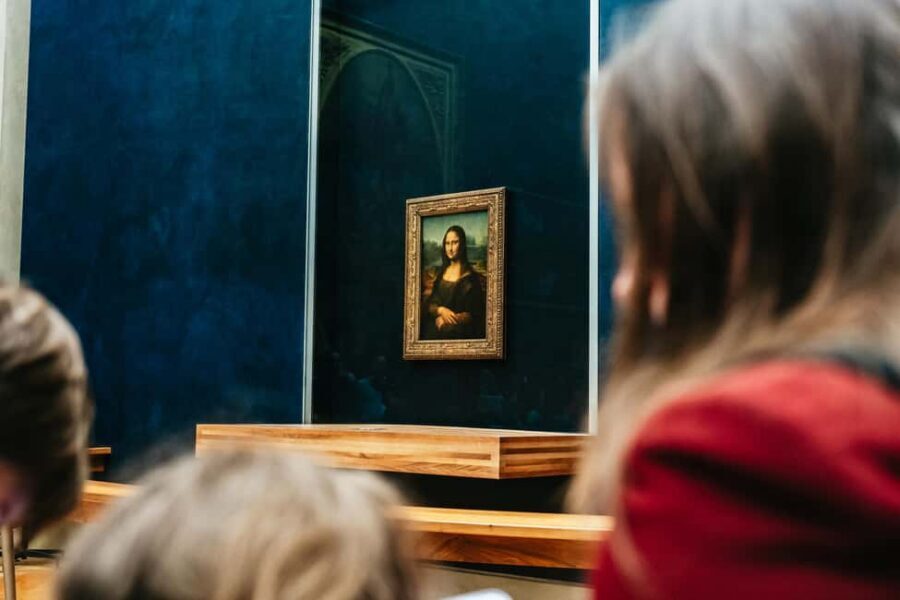
The guide helps set up the Mona Lisa story in a way that makes standing in front of it more satisfying. You’ll hear how its 1911 theft helped cement its fame, and you’ll get context about why the portrait became a magnet for attention.
Standing there afterward, you’ll likely notice how people react: they lean in, they crane their necks, they take photos. You’ll do that too, but you’ll also have a clearer sense of why the painting has this lasting pull.
Other Louvre masterpieces and highlights tours in Paris




Venus de Milo: Why This Sculpture Shaped Artists for Centuries
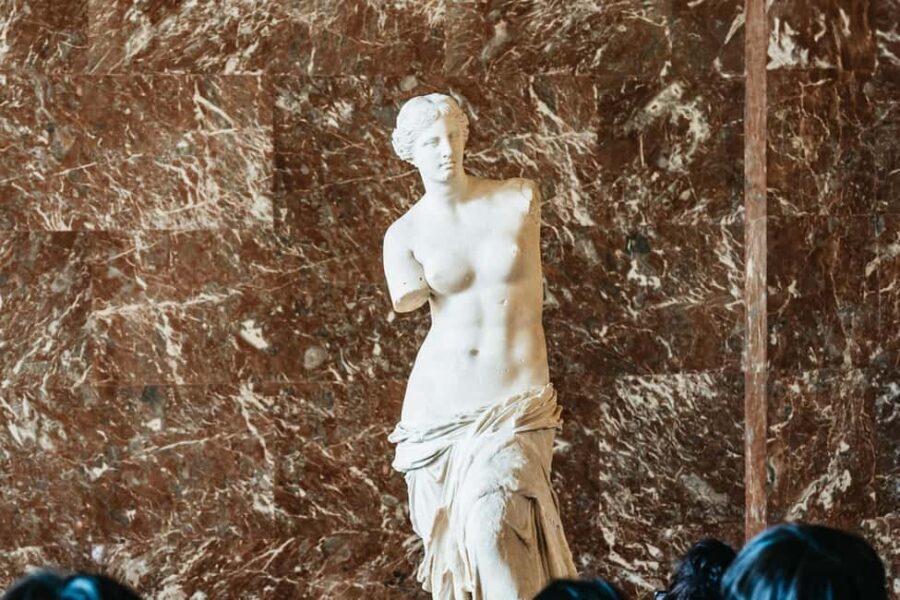
Venus de Milo is not just a famous nude statue. The guide helps explain what makes it so influential and what artists took from it. You’ll see the sculpture up close and get the kind of explanation that turns a “wow, that’s ancient” moment into something more specific.
Even if you’re not a sculpture person, this is the type of stop that makes you understand how the Louvre shapes European art history.
Winged Victory of Samothrace: The Movement You Can Feel
Winged Victory is dramatic. The guide frames it as the Hellenistic statue carved in the form of Nike, the Greek goddess of victory. That matters because it changes how you look at it. You’re not just seeing wings and stone—you’re seeing a concept built for impact.
When you understand what it represents, the pose feels more intentional. It stops being a famous object and becomes a powerful visual statement.
The Louvre Palace Layers: From Royal Collections to the Castle Foundations

One reason this tour works for first-timers is that it doesn’t treat the Louvre like a random set of rooms. You get a sense of the museum as a former royal residence and a long-evolving collection.
The tour includes an explanation of the Louvre’s site history, including what you can find in the basement: the foundations of the castle that once stood on the location. That background helps you understand why the museum feels like it has multiple lives. It’s not only a gallery—it’s a building with a past, and that past shapes how the museum flows.
Inside, you’ll also cover works spanning ancient civilizations through the mid-19th century. The tour doesn’t stop at only one era. You’ll move from ancient Greek relics into Renaissance art, then onward to paintings from the 13th to the 19th centuries, plus prints associated with the Royal Collection.
That wide timeline is great if you want a “sense of what the Louvre is” feeling. It won’t make you an art historian. It will make you less lost.
How the Route Ends (and Why the Under-the-Pyramid Rule Matters)

After your guided portion ends, you can spend as long as you’d like exploring the museum on your own. That’s a big deal. It lets you linger in front of the pieces you connected with during the tour, and it gives you a chance to detour without feeling like you’re breaking the schedule.
But there’s an important constraint: once you have exited the wings and are under the pyramid, you cannot re-enter the rooms. So you’ll want to think of the end of the guided highlights as your “last clear checkpoint” to decide what you still want to see.
Practical advice: if you’re the type who likes to see things twice—first with a guide, then alone—use that exit rule to guide your choices. Pick your must-sees near the end of the tour so you don’t end up with regrets after you’re out.
Orsay Upgrade in the Morning: A Smart Pairing If You Plan Your Days
The tour offers an upgrade by adding a morning tour of the Orsay Museum. Even with limited details, the logic here is strong: it’s a way to stack two major museum experiences without turning your Paris days into guesswork.
Here’s the simple way to decide. If you’re the kind of person who wants more art variety and you’re okay with a museum day starting early, the Orsay add-on can make your trip feel efficient rather than rushed. If you prefer a slower pace after the Louvre, you may be better sticking to just the Louvre tour and using the rest of the day to roam neighborhoods, markets, and cafés.
Either way, the Louvre portion is already built to give you a “best-of” foundation. The Orsay option just adds more art to your morning schedule.
Group Size, Headsets, and Crowds: How to Keep Your Sanity

This is a standard group limited to a maximum of 20 participants. That size is large enough to be social, small enough for the guide to manage the flow.
A major comfort upgrade here is the headset system. In a museum as noisy as the Louvre, it’s one less thing to fight. You can hear the guide’s explanations while you’re walking and stopping—so you’re not doing that exhausting thing where you lean in, lose the audio, then catch up late.
During summer, the Louvre can be busier than usual. The tour info even flags the reality: security lines may take longer, even with reserved entry. That means your best move is to treat the first part of the visit as time to absorb context, not just “get to the famous painting.”
The most praised guide experiences in the provided info also mention this crowd-handling skill—people credit guides with navigating the day smoothly and making the museum feel organized instead of chaotic.
What to Bring, What Not to Bring, and the Step-Heavy Reality

If you book this, wear comfortable shoes. Really. The Louvre is not a “cute shoes and hope” kind of place.
Also follow the rules exactly:
- No luggage or large bags
- No selfie sticks
- Wheelchairs and non-folding wheelchairs are not permitted on this tour
- Double baby strollers are not allowed
And keep in mind: there are many steps in the Louvre. That’s not just a minor inconvenience; it’s a core limitation of this specific experience.
If you’re unsure about your ability to manage steps, this is one of those tours where choosing the right option matters. The tour info explicitly says it is not suitable for people with mobility impairments and wheelchair users.
Should You Book the Louvre Mona Lisa Tour?
Book this tour if:
- You want a structured highlights route in 2 hours and hate wandering
- You care about understanding what you’re looking at, not just checking boxes
- You want pre-reserved access through the pyramid so your time isn’t eaten by ticket lines and confusion
- You’re comfortable with lots of walking and steps
Skip it (or choose a different format) if:
- Mobility is a challenge for you, since the tour is not wheelchair-friendly and includes many steps
- You prefer a slow, self-guided museum pace where the route doesn’t matter
- You plan to carry luggage or large bags, because you won’t be able to bring them in
My straight take: if this is your first Louvre visit and you only have a limited window, the guided highlights + time to explore afterward is one of the best ways to get meaning out of the museum fast. You’ll leave knowing why the Mona Lisa matters, why the ancient sculptures still influence modern art, and how the Louvre became the place it is today.
FAQ
Where is the meeting point for this Louvre tour?
Meet at the Kiosque des Noctambules, a colorful kiosk decorated with Murano glass beads facing the Comédie Française. It is about a 5-minute walk from the Louvre entrance. Do not go to the Louvre directly.
How do I recognize the guide?
Your guide will be holding a GetYourGuide flag. They arrive at the tour start time, not before.
What ticket advantage do I get?
You’ll have a pre-reserved Louvre entry ticket, which helps you skip the ticket line.
What are the main masterpieces you’ll see?
The tour includes the Mona Lisa, Venus de Milo, and Winged Victory of Samothrace, plus other key works across ancient and later periods.
How long is the tour and what happens after?
The guided portion lasts 2 hours. After the tour, you can spend as long as you’d like in the museum.
Can I re-enter the rooms after I exit?
Once you have exited the wings and are under the pyramid, you cannot re-enter the rooms.
What language is the guide?
The tour is offered in English and Portuguese.
Is it suitable for wheelchair users or people with mobility impairments?
No. The tour information states it is not suitable for people with mobility impairments and wheelchair users, and there are many steps in the museum.
What should I bring and what’s not allowed?
Bring comfortable shoes. Do not bring luggage or large bags, selfie sticks, or non-folding wheelchairs/electric wheelchairs. Double baby strollers are also not allowed.