REVIEW · PARIS
Priority ticket without waiting for the Louvre Museum
Book on Viator →Operated by Fast Track Entry · Bookable on Viator
Lines at the Louvre can eat your day. This Priority Ticket-style visit is built for fast entry and smoother timing, so you can focus on art instead of standing around. I also like that it’s a mobile ticket, which keeps things simple on a busy travel day. The one thing to plan carefully: your entry is tied to a fixed time window, and the meeting spot can be tricky if you arrive late.
Inside, you get to use the Louvre access set up by the museum at the time of your visit, and you go at your own pace. The whole experience is about 3 hours, which is a good match for a realistic Louvre bite—especially if you want to hit major works without turning it into a full-day ordeal.
This works best when you’re reasonably comfortable walking around a major museum and you’ll show up near public transit. Service animals are allowed, which is a practical plus if you travel with one.
In This Review
- Key things I’d pay attention to before you go
- Priority Entry at the Louvre: What fast access really means
- Your 3-hour Louvre visit: how to make the time count
- Entering with a guide: what you gain and what can go wrong
- Meeting point reality check: avoid the confusion
- What you’ll actually see: collections you can plan around
- Value and price: is $25 a good deal for the Louvre?
- Who this priority Louvre experience fits best
- Should you book the Louvre Priority Ticket?
- FAQ
- What does the Priority Ticket include inside the Louvre?
- How long does the experience last?
- Is there a mobile ticket?
- Do I need to be physically fit for the museum?
- Can I bring a service animal?
- Is this refundable if my plans change?
Key things I’d pay attention to before you go

- Priority entry, not just a ticket: the main value is getting through the start of the visit with less hassle
- Mobile ticket convenience: less paper to manage, easier day-of changes
- Timed entry windows: plan to be early, because waiting can disrupt later groups
- Self-paced museum time: you choose what to see inside the Louvre’s open collections
- Meeting point matters: some people found it confusing, so save your reminder details
Priority Entry at the Louvre: What fast access really means

A Priority Ticket for the Louvre sounds like magic. In practice, it means your visit starts with priority handling so you’re not stuck in the longest stretches of waiting that can happen at the start of the day.
The key detail is the timing. Entry runs on fixed time slots, and one of the explanations shared in support responses is that the museum uses time windows of about 30 minutes—so being late can make it impossible to wait around without throwing the schedule off for later groups.
That’s why this ticket type is most useful when you treat it like an appointment. You’re paying for a smoother “first hour” feeling: fewer delays at the start, then a museum visit that’s still up to you.
Other Louvre Museum entry tickets in Paris



Your 3-hour Louvre visit: how to make the time count

The experience is roughly 3 hours, and that’s a smart length for many first-time Louvre visits. It’s long enough to hit some headline rooms and still breathe, but short enough that you won’t feel like you need to see every painting that ever existed.
Once you’re in, you have access to the Louvre collections the museum has set up for your date, plus what’s on view temporarily at the time. That matters because the Louvre is never just one museum day—it changes based on what’s open, what exhibitions are running, and how the museum has organized the galleries.
Here’s how I’d approach the 3 hours if you want a confident route:
- Pick one “anchor” (a major work like Mona Lisa is common as an early target)
- Choose 2–3 additional areas that support your theme (paintings, sculptures, or a specific wing)
- Leave a small buffer for getting oriented, even if you have priority entry
Some people found that after entry, they were taken to a strong first stop fast. One guide, Elias, was described as getting people quickly into the museum and walking them straight to Mona Lisa. That kind of start can help a lot when you’re trying to avoid decision fatigue right after you enter.
Entering with a guide: what you gain and what can go wrong
This isn’t just a self-guided ticket. You’re also relying on a guide setup at the start—someone to help you get positioned so the priority aspect can do its job.
When it goes well, it feels like relief. Guides were described as friendly and patient, and at least a couple experiences highlighted fast help even when timing slipped. One person credited Ilyas for being amazing and for getting them into the museum quickly with skip-the-line style access. Another described Elias as pleasant and accommodating, with extra time to point the group toward a key exhibit.
But here’s the real trade-off: any guided start lives or dies by finding each other. The most negative feedback was less about the museum itself and more about meeting point confusion—an experience where a group couldn’t locate the guide and didn’t feel the situation could be resolved.
The lesson I’d take is simple: treat the meeting point details as your job for the day. Don’t wing it based on general area knowledge. Save your reminder and map, and arrive early enough that you’re not working under stress.
Meeting point reality check: avoid the confusion

The Louvre’s crowds aren’t subtle, and meeting up outside one of the world’s busiest museums can be chaotic. One of the most repeated issues in support-style responses is that schedules are fixed and it’s essential to arrive on time.
Support messages also pointed to a practical fix: the day before, you should receive exact meeting-point information and a map with the exact location. In other words, this is not a “meet somewhere near the entrance” situation. It’s a “be at this specific spot at this time” situation.
Also keep in mind that big city events can change foot traffic patterns. One response specifically mentioned an Olympics period, with adjusted organization and increased crowd flow. During times like that, the meeting point can feel harder to reach and easier to miss—even if you’re doing everything right.
My advice for stress-free meeting-up:
- Screenshot your reminder info right after booking
- Give yourself extra time to reach the area (you’re aiming to arrive early, not just on time)
- If you think you’ll be late, notify the organizer as soon as possible (one positive experience praised clear communication about being late)
And yes, it can still be frustrating if you can’t get hold of the guide quickly. One negative review mentioned limited contact options if you couldn’t find the representative except through chat. So build redundancy into your plan: arrive early, confirm the location details, and keep your phone charged.
What you’ll actually see: collections you can plan around
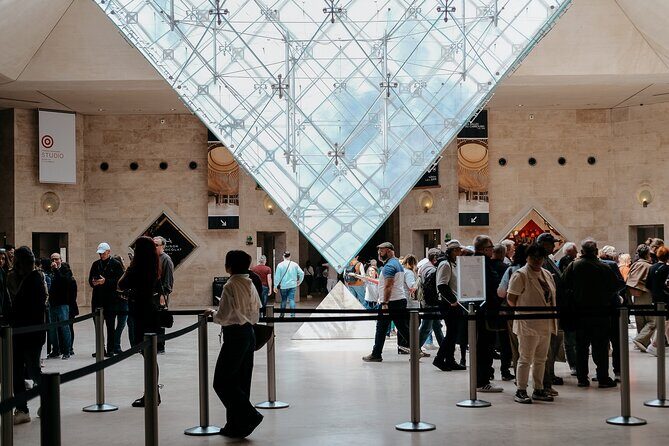
The Louvre can overwhelm you before you even start walking. The advantage of this kind of entry is that once you’re inside, you’re not stuck in a long delay deciding what to do next.
You’ll have access to the Louvre collections the museum has set up for your visit date. That means the lineup you see will match what’s open during your time window, including temporary exhibitions currently running.
To use this efficiently, I recommend you decide what kind of Louvre day you want before you go:
- If you want iconic art quickly, pick your top 1–2 masterpieces and build outward from there
- If you want variety, pick one broad theme and let the route connect the rooms
- If you’re here for temporary exhibitions, don’t treat them as optional—make them part of your anchor plan
Because you go at your own pace, you’re free to linger where you care and move on when you don’t. That flexibility is one of the underrated benefits of priority entry: it buys time at the front, then gives you control inside.
Other skip-the-line Louvre tickets in Paris





Value and price: is $25 a good deal for the Louvre?
At about $25, this Priority Ticket is priced like a time-saver. That’s exactly what you should evaluate: how much do you value starting quickly at the Louvre, rather than spending your early minutes stalled at entry?
If your travel day is packed—arriving late morning, catching another activity afterward, or you’re visiting during a high-demand period—priority access often feels worth it because it protects your schedule.
If you arrive very early on a day you expect to be calmer, you might not notice as much difference. But the Louvre’s reputation for crowd pressure means most people still benefit from any entry system that reduces the worst waiting.
Also, you’re not paying for a private tour of a narrow route. You’re paying for priority handling so you can use the 3-hour window well. When that happens, the value feels strong; when it fails due to missing the meeting point, the value evaporates fast. So the real “cost” isn’t money—it’s how well you follow the start-time plan.
Who this priority Louvre experience fits best
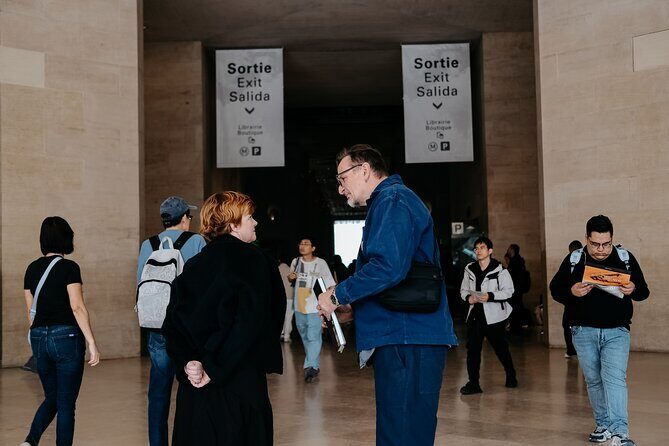
This experience fits best if you:
- Want a Louvre visit that’s about 3 hours, not an all-day marathon
- Prefer a guided start, then self-paced exploring
- Are comfortable with moderate walking demands in a major museum
- Want a mobile ticket for an easier day-of experience
- Travel with a service animal (service animals are allowed)
It also helps if you’re using public transportation since it’s near public transport. That’s practical for Paris because it reduces the “where do we park?” problem and makes it easier to build a reliable arrival plan.
If you’re the type who freezes when schedules change, or you know you’re likely to struggle with meeting points, consider adding extra buffer time. The Louvre is famous for crowds; your timeline needs a little cushion.
Should you book the Louvre Priority Ticket?
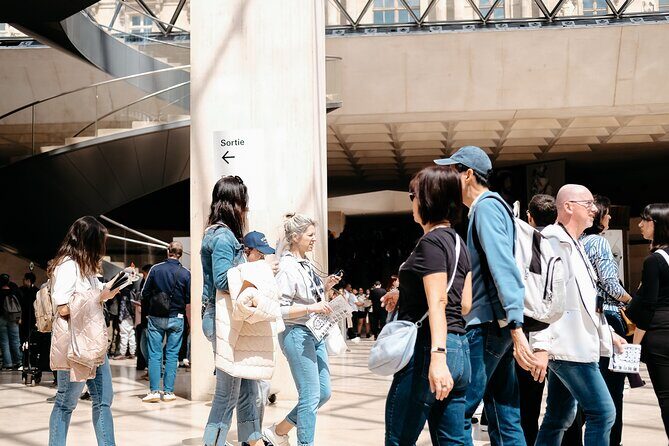
If you’re aiming for a first meaningful Louvre visit with less wasted time at the start, I think booking this kind of priority access can be a smart move. The best-case scenario is exactly what you want: you get the fast start, then you spend your limited hours choosing what matters most to you.
But I’d only feel fully confident booking if you can do two things: arrive early enough to handle meeting-point chaos and keep track of your timed entry window details. When those pieces line up, the experience can feel like the Louvre gives you a head start instead of a test.
If your schedule is flexible and you hate any time-pressure at all, you might find the Louvre more enjoyable with a less timing-dependent plan. For everyone else, this $25 priority approach is a solid way to protect your day and focus on the art.
FAQ
What does the Priority Ticket include inside the Louvre?
You’ll have access to the Louvre collections set up by the museum at the time of your visit, plus whatever temporary exhibitions are open during that period.
How long does the experience last?
It’s approximately 3 hours.
Is there a mobile ticket?
Yes, you’ll use a mobile ticket.
Do I need to be physically fit for the museum?
The experience is described as suitable for travelers with moderate physical fitness. That’s a good sign for typical museum walking, but it still involves moving around a lot.
Can I bring a service animal?
Yes, service animals are allowed.
Is this refundable if my plans change?
No. The experience is non-refundable and cannot be changed for any reason. If it’s canceled because a minimum number of travelers isn’t met, you’ll be offered a different date or a full refund.