REVIEW · PARIS
Paris: Guided Tour of the Must-Sees of the Louvre Museum
Book on GetYourGuide →Operated by Memories France · Bookable on GetYourGuide
The Louvre can swallow a day whole, unless you have a plan. This must-sees tour uses reserved entry and a live English guide to get you to the biggest artworks like the Mona Lisa, Venus de Milo, and Winged Victory without you wandering in circles for hours. I like the way the guide keeps the pace controlled while still giving you time to actually look, and I like having headsets so you can move at museum speed and still catch every story. One caution: even with pre-reserved tickets, security can still take time in busy periods (up to about 20 minutes in peak season).
You’ll start at the Arc du Carrousel du Louvre, walk in together, and then spend the core of your time inside the museum following a route through major eras—Italian Renaissance, ancient Egypt, Greece and Rome, plus 19th-century French painting. It’s one of those rare short Louvre experiences that feels like orientation with real payoff, not a sprint that leaves you dazed.
In This Review
- Key things I’d pay attention to
- Meet at Arc du Carrousel: your starting point and first win
- Pre-reserved entry helps, but security can still slow you down
- The core museum time: how the Louvre highlights route works
- Stop strategy you’ll feel in real time
- Mona Lisa moment: iconic, crowded, and worth the plan
- Venus de Milo and Winged Victory: why these stops aren’t just “famous”
- The Louvre as a former palace: using stories to make rooms feel alive
- How your guide keeps you from feeling rushed or lost
- Timing and pacing: the good, the fast, and the realistic
- What this tour includes (and what you’ll handle yourself)
- Value check: is $82 worth it for a 90-minute Louvre hit?
- Who should book this tour, and who might not love it
- Should you book this Louvre highlights tour?
- FAQ
- How long is the Louvre guided highlights tour?
- Where do we meet for the tour?
- Does the tour include skip-the-line entry?
- Are headsets provided?
- What is included in the price?
- Is hotel pickup or drop-off included?
- Is the tour suitable for wheelchair users?
- What can I bring, and what is not allowed?
Key things I’d pay attention to
- Arc du Carrousel meetup: you begin at a landmark right by the Louvre, opposite the glass pyramid area.
- Reserved tickets + guided route: you’re not spending your energy figuring out where to go next.
- Big-name highlights: expect stops built around crowd magnets like the Mona Lisa and other classics.
- Era-hopping that makes sense: Renaissance, ancient worlds, and French painting are handled in a way that’s easier to follow than random gallery hopping.
- Headsets included: hearing the guide stays consistent even when the group slows down at a painting.
- Small group feel: it’s easier to stay together than in the mega-coach style tours.
Meet at Arc du Carrousel: your starting point and first win
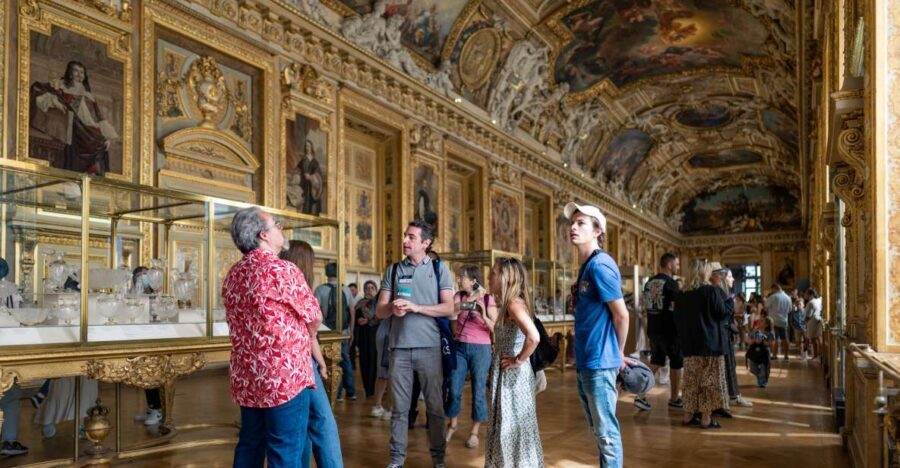
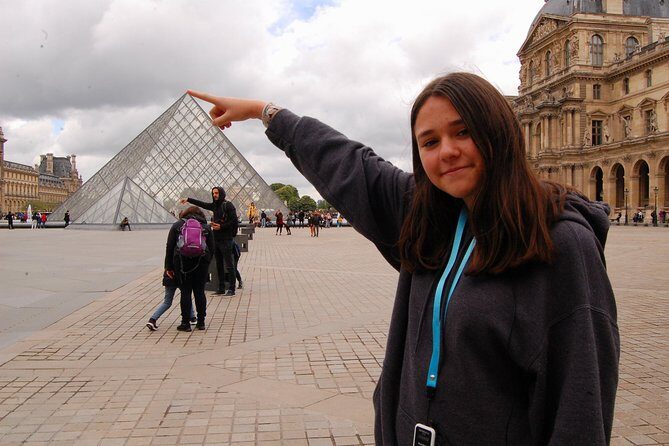
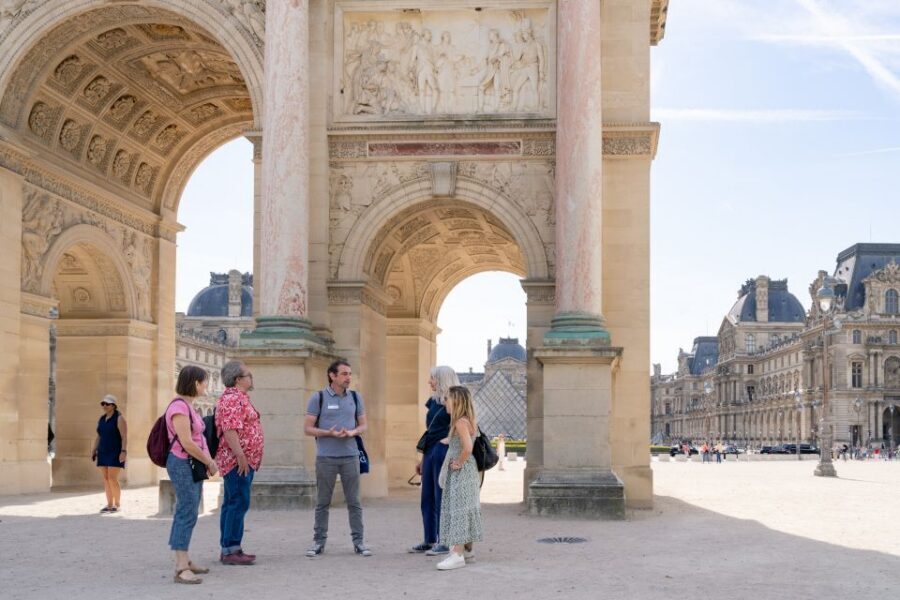
Your day begins at the Arc du Triomphe du Carrousel (also shown as Arc du Carrousel du Louvre on the arch directions), right where you can spot the Louvre glass pyramid area nearby. The guide is easy to identify: they wear a guide card on an orange lanyard with the Memories France logo.
Why this matters: the Louvre is huge, and the first problem you’ll face is simply getting your bearings. Starting at this arch keeps you from burning time trying to decode the museum entrances on your own. It also gives you a real “we’re going that way” moment early on, which helps when you’re dealing with lots of people before you even reach the galleries.
Comfort tip that sounds obvious, but is worth saying: wear good walking shoes. This tour includes a reasonable amount of walking, and you’ll want to stay mobile through museum-level crowds.
Other guided Louvre Museum tours in Paris



Pre-reserved entry helps, but security can still slow you down
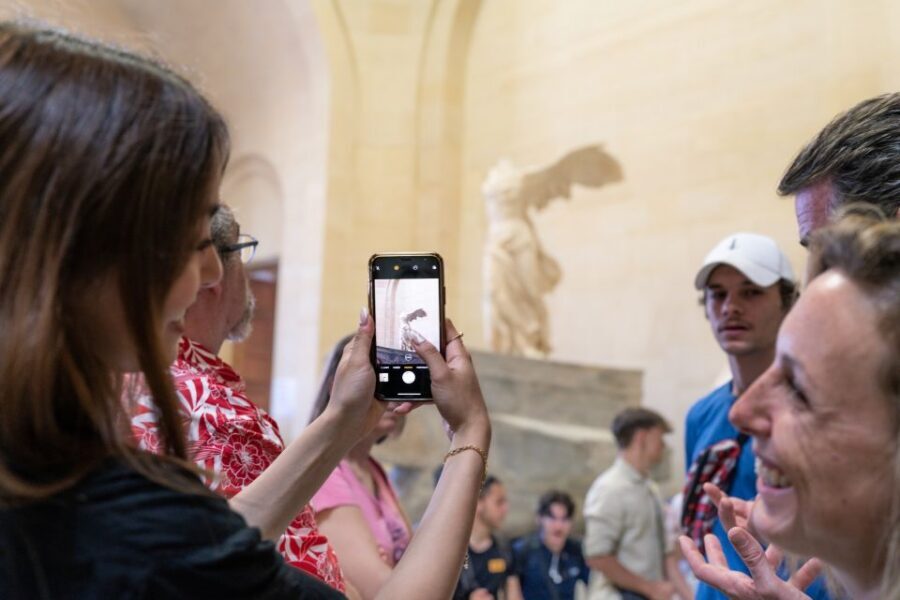
You’ll have pre-reserved entrance tickets, which is the whole point of booking a guided highlights tour versus doing this solo with vague plans. In practice, reserved tickets mean you’re not waiting in the same long ticket lines as everyone else.
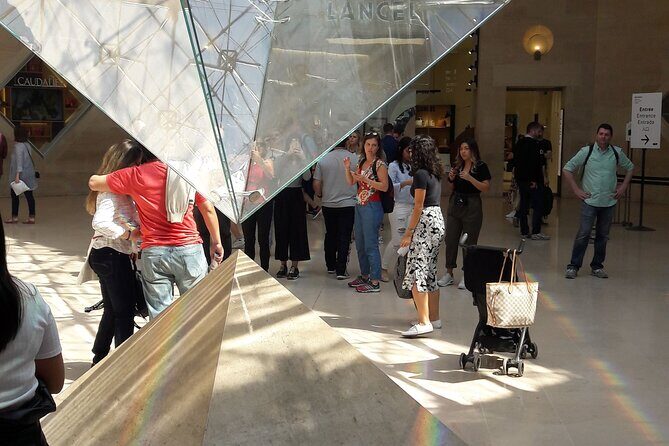
Still, plan for security time. The tour notes that even with pre-reserved tickets, security lines can be up to about 20 minutes during high season. That’s not a deal-breaker, but it shapes how you should mentally budget your time. The Louvre doesn’t start when you buy tickets—it starts when you’re through security and ready to look.
Once you’re in, the value of this tour shows quickly: your guide helps you get to major works efficiently so your time inside doesn’t vanish into navigation mistakes and accidental detours.
The core museum time: how the Louvre highlights route works
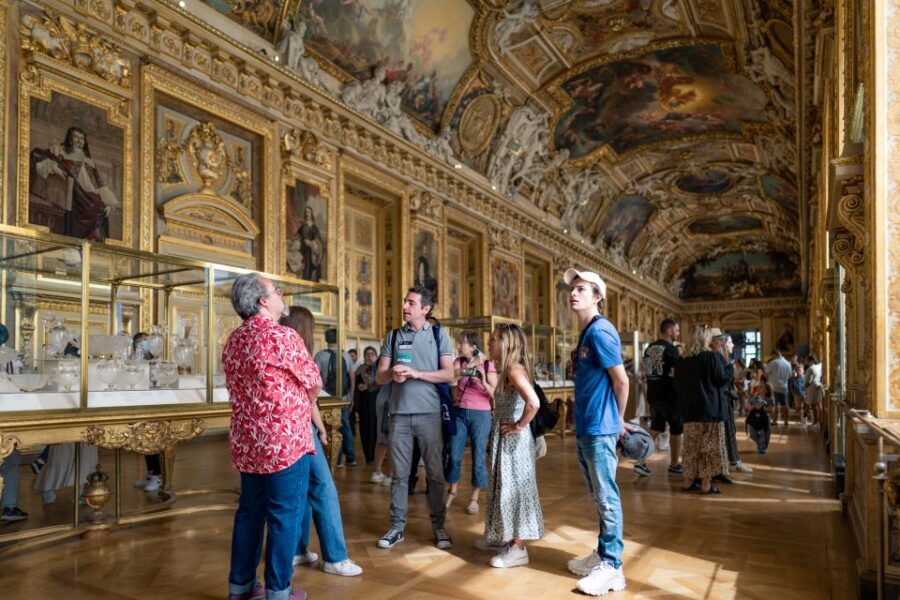
This experience is built around a guided sweep of the museum’s most famous stops in a short window. You’re in the Louvre with your guide for about 1.5 hours of guided time (and the overall activity time is 90 minutes), so the aim is clear: you’ll see the headline works and get enough context to understand why they matter.
The era coverage is a big part of why this tour feels useful. You’ll move across:
- Italian Renaissance (where the Louvre’s style and ambition start to feel very modern in a Renaissance way)
- Ancient Egypt
- Greece and Rome
- 19th-century French painting
That order isn’t just educational—it helps your brain organize what you’re seeing. The Louvre can feel like random chapters from an enormous book. A guided route gives you headings for those chapters, which makes later free exploration easier.
Stop strategy you’ll feel in real time
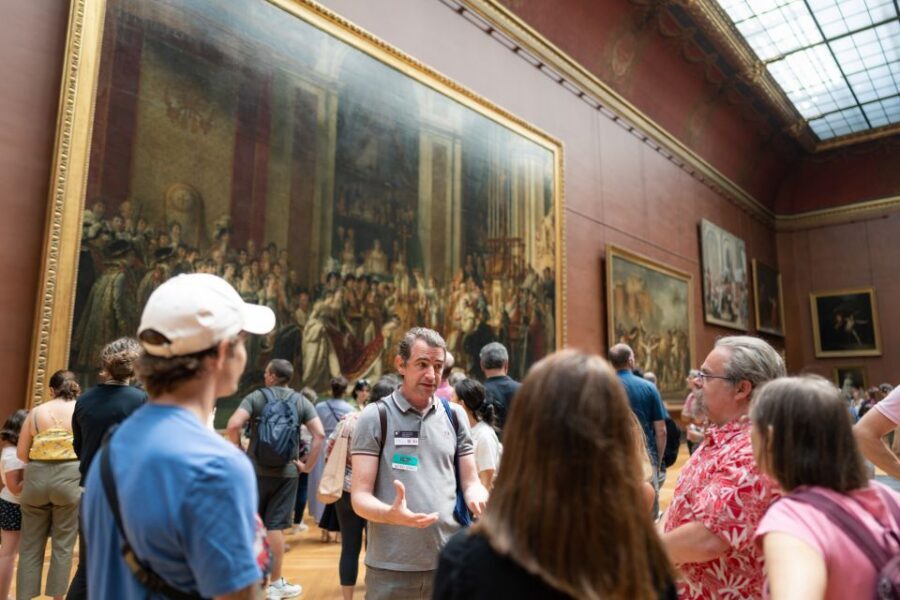
A short highlights tour can go two ways: either it’s a blur, or it’s a focused sequence. The strongest versions of this tour seem to keep moving while still encouraging real attention at each work. The guide uses mini-stories so you’re not just reading plaques while standing in a crowd.
In past sessions, guides have been praised for crowd control and careful pacing—names like Marjolein, Antonio, Anton, Sara, Stan, Anthony, and others show up in the guide feedback. You can expect the same general focus: get you past bottlenecks, keep the group together, and explain what you’re looking at.
Mona Lisa moment: iconic, crowded, and worth the plan
Let’s talk about the elephant in the gallery: the Mona Lisa. It’s one of those paintings where you can stand 10 minutes and learn almost nothing if you’re only staring at the glass and the crowd. This tour is designed to solve that.
With a guide and headsets, you’re more likely to:
- arrive at the right time during the visit (so you’re not stuck in an endless crush), and
- hear the context that helps you notice things you’d normally miss.
One thing I’d watch for at the Mona Lisa: the crowd pressure. Even on a reserved-entry tour, it’s still a famous magnet. You’ll still be in a busy spot. But the tour’s structure is meant to keep you from losing your entire museum visit to one location.
If you come in hoping for a quick photo and a move-on, you might find that disappointing. If you come in willing to take a minute and really look, the guide’s framing turns the moment from spectacle into something closer to understanding.
Other Louvre masterpieces and highlights tours in Paris






Venus de Milo and Winged Victory: why these stops aren’t just “famous”
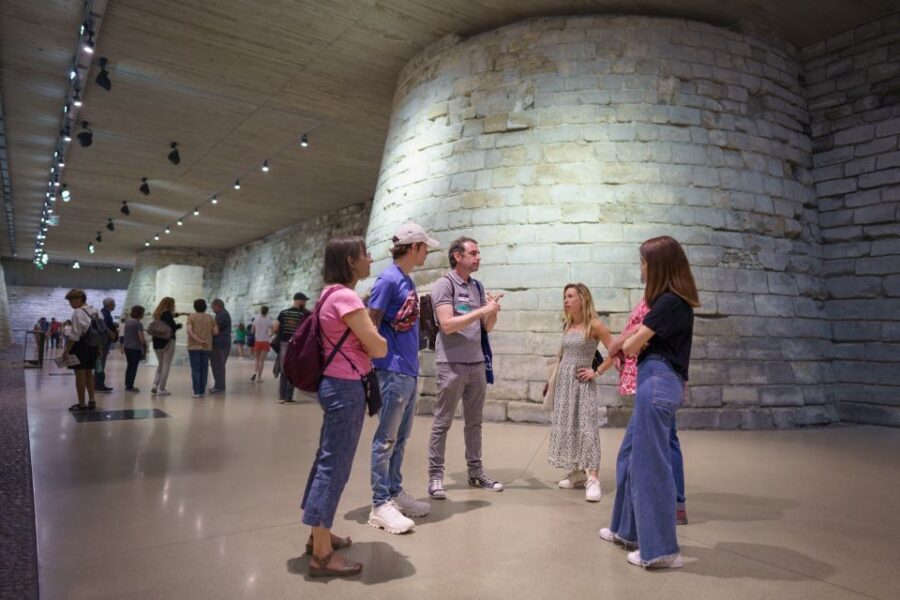
The real trick with the Louvre is that “must-sees” are famous for reasons, and those reasons are often visual, cultural, and political—not just artistic.
Venus de Milo and Winged Victory are a great example. You can walk past sculpture in any museum and still feel detached. Here, a guide’s storytelling usually helps you see what you’re looking at as a product of its time—how form, scale, and symbolism worked for the people who viewed it first.
You’ll also notice a helpful pattern in this tour style: each stop connects to the next. So the works don’t feel like isolated trophies. You start building a sense of what the Louvre collects and why.
The Louvre as a former palace: using stories to make rooms feel alive
One of the tour’s strongest angles is that you’re not only seeing art—you’re also seeing the building as a statement. The Louvre began as a royal palace, and the corridors and rooms you move through were designed for power and spectacle. That palace context makes the museum more than a warehouse of masterpieces.
This matters because it changes how you read the spaces. When you understand the Louvre’s royal past, you’re more likely to notice:
- the drama of the architecture,
- the way grand rooms guide movement, and
- how art displays echo older court expectations.
Guides in this format often lean into that angle, especially when they explain the timeline. You’ll get the sense that you’re traveling through eras, not just hopping between popular objects.
How your guide keeps you from feeling rushed or lost

A highlights tour lives or dies on navigation. The Louvre is famously complex, and without help, you’ll end up doing one of two things:
1) getting stuck in a crowd with no progress, or
2) moving fast enough to see things but not absorb them.
This tour tackles that by combining:
- a guided route that hits the major works, and
- a small-group approach that makes it easier for everyone to stay together.
A practical note from the guide feedback: several guides have been praised for watching the group and handling questions without letting the tour collapse into chaos. You’ll also hear a lot of story-driven context—symbolism, artists, and historical meaning.
If you’re the type who likes to ask why something looks the way it does, you’ll likely appreciate this setup. The headsets also allow you to hear explanations even when you need to reposition in a tight viewing area.
Timing and pacing: the good, the fast, and the realistic
This experience is short by design, so you should treat it like a high-impact introduction. The benefit is efficiency: you leave with a strong sense of what you want to revisit later.
The realism is that you’re moving through a museum where people naturally gather. Even with pre-reserved tickets, some waiting around security is possible. And because the Mona Lisa is a peak crowd zone, you’ll feel that energy even on a guided route.
So here’s the balanced takeaway: if you want to fully absorb every artwork for hours, this won’t be that. If you want the Louvre’s biggest highlights with enough context to guide your next steps, it fits nicely.
What this tour includes (and what you’ll handle yourself)

Included:
- Guided visit of the Louvre
- Pre-reserved entrance tickets
- Expert English-speaking tour guide
- Headsets (so you can hear clearly as you walk)
Not included:
- Hotel pickup and drop-off
You’ll also need:
- a passport or ID card
- comfortable shoes
Not allowed:
- baby strollers
- luggage or large bags
One more thing: the tour is not suitable for wheelchair users based on the provided details. If mobility is a concern, you’ll want to look for a different format designed for easier access.
Value check: is $82 worth it for a 90-minute Louvre hit?
At $82 per person, this isn’t a budget-only add-on. But value isn’t just price—it’s what you buy with that money.
You’re paying for three things that matter in a place like the Louvre:
1) Time savings on entry
Reserved tickets reduce the worst ticket-line time, and the guided flow prevents you from wasting the precious minutes you’ve paid for.
2) A route that stops you from guessing
The museum is so large that guessing is costly. This tour gives you a planned order through major eras and headline works.
3) Context that changes what you see
Seeing the Mona Lisa without explanation can be underwhelming. Hearing what to look for turns it into an experience that sticks.
If you’re in Paris for a short stay, or you already know you won’t want to spend your whole day decoding the Louvre, this price starts to feel fair. If you’re the kind of person who loves wandering without structure and you have several extra hours (and patience for crowds), you might do better with a self-guided plan.
Who should book this tour, and who might not love it
This works best if you:
- want the must-see Louvre hits without getting overwhelmed
- have limited time and want a clear plan
- enjoy art-history stories while you walk, not only at a bench
- want a structured path that still leaves room to return later to favorites
It may not be ideal if you:
- need wheelchair-friendly access (not suitable per the tour details)
- want a slow, gallery-by-gallery experience
- can’t do some walking and crowd navigation
Should you book this Louvre highlights tour?
I’d book it if you want a strong first pass at the Louvre and you value efficiency plus storytelling. The starting point at Arc du Carrousel, reserved tickets, headsets, and a small-group guide route add up to less stress and better payoff in a short time.
If you’ve got more than half a day and you like total freedom, you could skip this. But for a “see the big names, understand the why, and keep moving” Louvre day, this is a solid buy—especially because you’ll likely finish the tour knowing exactly which rooms you want to return to next.
FAQ
How long is the Louvre guided highlights tour?
The tour is listed as 90 minutes total, with the guided museum visit noted as about 1.5 hours.
Where do we meet for the tour?
You meet at the Arc du Carrousel du Louvre, opposite the glass pyramid area.
Does the tour include skip-the-line entry?
Yes. The tour includes pre-reserved entrance tickets to help you avoid the ticket line.
Are headsets provided?
Yes. Headsets are included so you can hear the guide clearly.
What is included in the price?
Included are the guided Louvre visit, pre-reserved entrance tickets, an English-speaking tour guide, and headsets.
Is hotel pickup or drop-off included?
No. Hotel pickup and drop-off are not included.
Is the tour suitable for wheelchair users?
No. The tour is not suitable for wheelchair users based on the provided information.
What can I bring, and what is not allowed?
Bring a passport or ID card and wear comfortable shoes. Baby strollers and luggage or large bags are not allowed.