REVIEW · PARIS
Skip-the-Line Louvre Museum Tour with Artist
Book on GetYourGuide →Operated by That Time in Paris · Bookable on GetYourGuide
Two hours can tame the Louvre. This small-group skip-the-line tour pairs a certified artist-guide with reserved entry, so you spend less time stuck in crowds and more time looking closely at how great paintings are made. I love the tiny group size (no more than 6) and the way your guide connects technique to what you’re seeing, from Mona Lisa to Venus de Milo and Nike.
The main consideration is time: you’re visiting for about 2 hours, so you’re choosing a focused hit list rather than trying to cover the whole museum.
In This Review
- Key things that make this Louvre tour work
- Skip-the-line at the Louvre Pyramid, without the crowd chaos
- Meeting at Le Kiosque des Noctambules by Jean-Michel Othoniel
- What a painter-artist guide changes about how you see art
- Louvre Pyramid start: where the tour gains speed
- Mona Lisa in real life: more than a photo moment
- Nike and the body in motion: reading form like a language
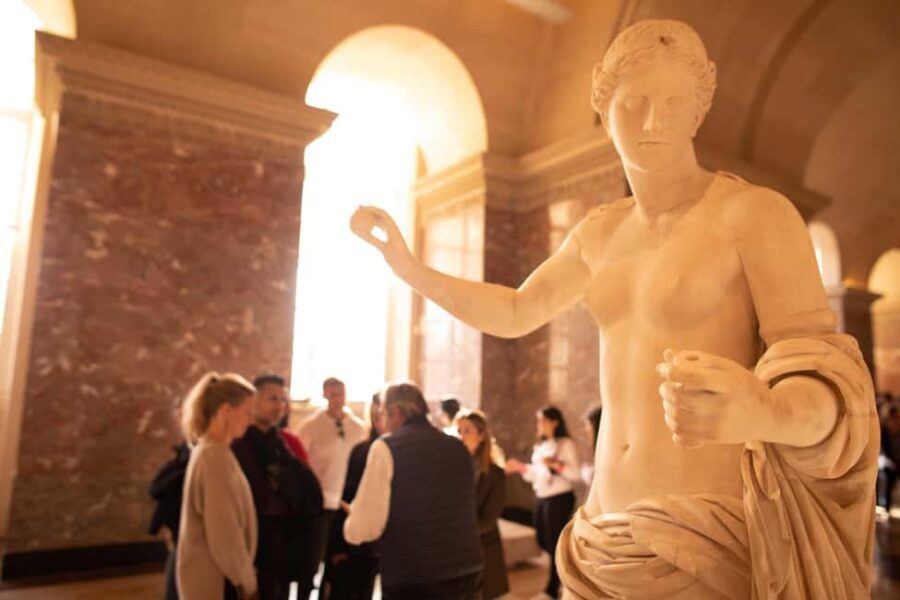
- Venus de Milo: why the silence can be powerful
- How the route teaches art history fast (without turning it into a lecture)
- Group size, pace, and audio headsets that help you hear the art
- Price and value: why $246 can make sense in the Louvre
- Who this Louvre artist tour suits best
- Should you book this Louvre artist tour?
- FAQ
- How long is the Louvre skip-the-line artist tour?
- Where do I meet the tour guide?
- Does the tour include skip-the-line entry?
- What languages are offered?
- Is this a large group tour?
- What should I bring to the Louvre?
- Is the tour wheelchair accessible?
Key things that make this Louvre tour work
- Reserved entry through a separate entrance, so you avoid the main public line scramble
- Certified artist-guide (a painter) who explains how masterworks are built—light, form, and intention
- A tight, highlight-focused route that still feels personal: Mona Lisa, Venus de Milo, Nike
- Small group (up to 6), with room for questions and a pace that doesn’t bulldoze you
- Audio headsets when available, which can help a lot in busy galleries
- A guide who adjusts for real needs, including efforts to minimize stairs for mobility issues when possible
Skip-the-line at the Louvre Pyramid, without the crowd chaos

The Louvre is huge, and the biggest challenge isn’t only seeing art—it’s staying sane while moving between rooms. This tour tackles that with reserved entry and a separate entrance, so you start with forward momentum instead of waiting in line.
Once you’re in, the “museum labyrinth” feeling fades. You’ll have a plan, and you’ll know what you’re looking at as you go. That matters here because the Louvre rewards attention. If you just wander, it’s easy to miss what makes a sculpture’s pose or a painting’s lighting choice meaningful.
One more practical plus: in a museum with heavy security and tight flow, saving time at the entrance can make your entire day feel less stressful.
Other skip-the-line Louvre tickets in Paris



Meeting at Le Kiosque des Noctambules by Jean-Michel Othoniel
You won’t meet at the Louvre itself. You’ll meet at Le Kiosque des noctambules, the Murano glass beads sculpture by Jean-Michel Othoniel, across from the Comédie-Française.
This is a good setup because it gives you an identifiable landmark before you head to the museum. If you’re coming by metro, use Palais Royal – Musée du Louvre and exit at Place Colette. It’s also a calmer starting point than meeting deep inside the museum’s flow.
Bring your ID (or passport). The tour info specifies that you should have an ID card, and a copy is accepted. This is the kind of thing that can otherwise turn a smooth start into a scramble at the gate.
What a painter-artist guide changes about how you see art
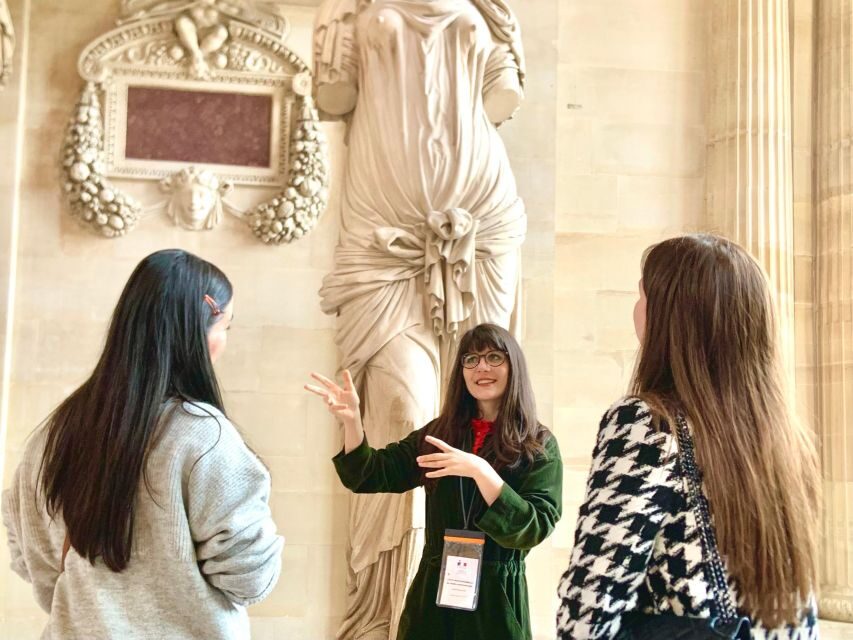
This tour isn’t just a facts-and-dates walkthrough. The big differentiator is that your guide is a certified artist and a painter, which changes the whole viewing experience.
Instead of treating masterpieces like museum labels, you’ll treat them like made objects—shaped by choices. You’ll talk about techniques in an understandable way, like how visual contrast directs your eye or how form and posture communicate meaning. It’s the difference between seeing a sculpture and understanding why that sculpture looks the way it does.
The experience is also designed for different levels. If you’re new to art history, you’ll still get context without feeling talked down to. If you’re more curious, you’ll likely enjoy the chance to ask questions and get stories tied to what you’re staring at. People in the past have highlighted how their guides could answer very specific questions on the spot, including when the tour included kids.
And yes, you’ll hear about famous masters like Da Vinci—but the point isn’t name-dropping. The point is learning what to notice and how to interpret what’s in front of you.
Louvre Pyramid start: where the tour gains speed
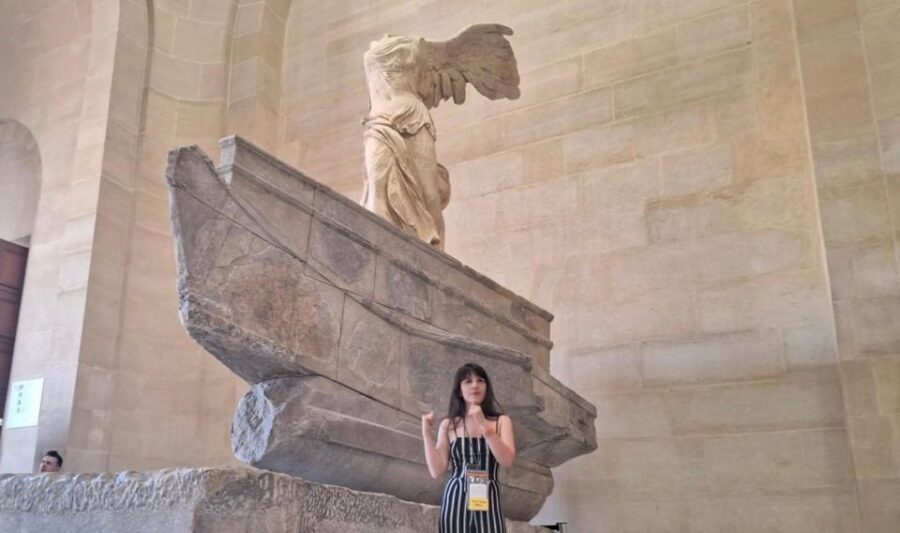
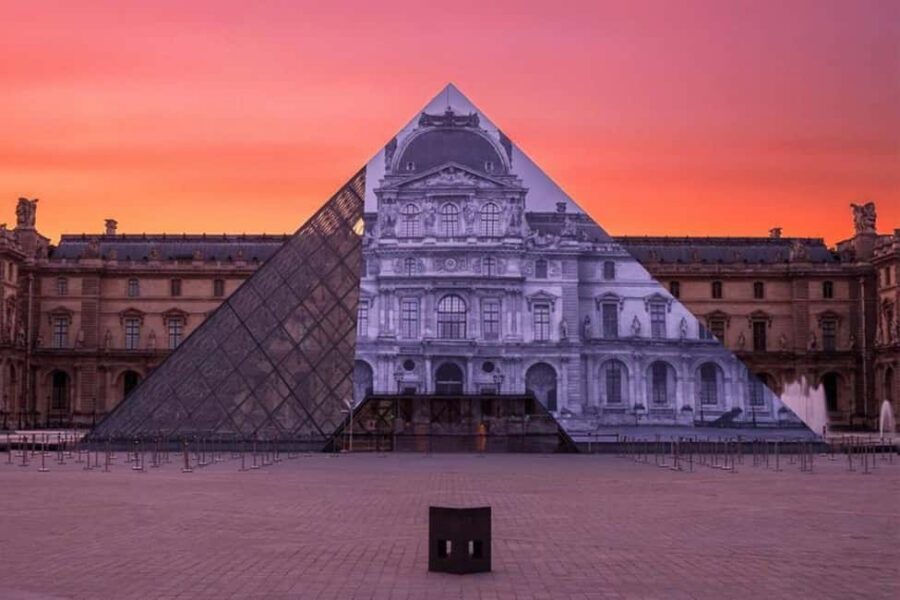
The tour includes a guided stop at the Louvre Pyramid, then you move into the museum with reserved access. This early structure helps you orient fast.
I like starting at a clear, recognizable point before you get pulled into the museum’s internal rhythm. The Louvre is famous for its scale, but a tour like this gives you a “frame” so the first galleries don’t feel random.
You also get your first taste of the Louvre’s variety before the tour settles into the highlights. That helps if your expectations are fuzzy. You’ll quickly learn whether your interest leans more toward paintings, sculpture, or the way ancient themes echo through later art.
Mona Lisa in real life: more than a photo moment
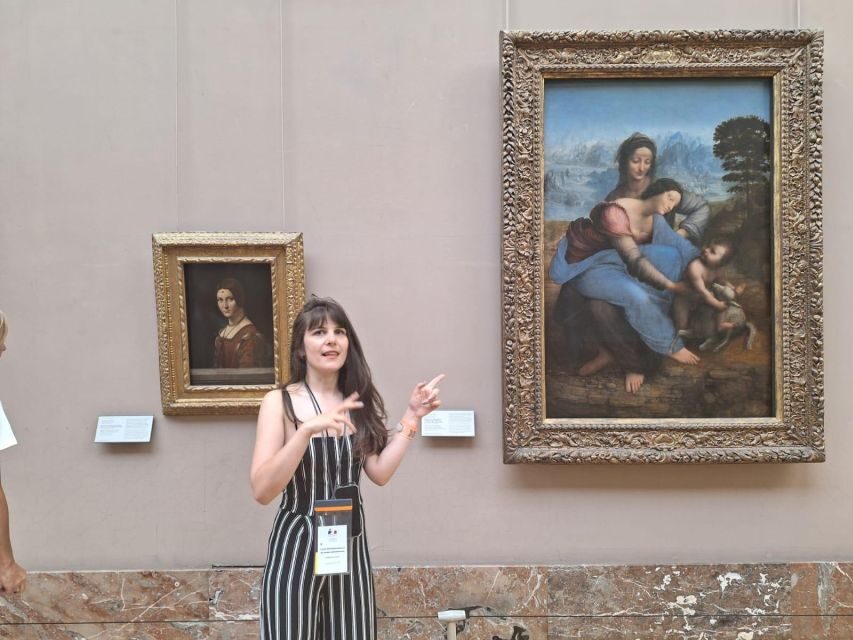
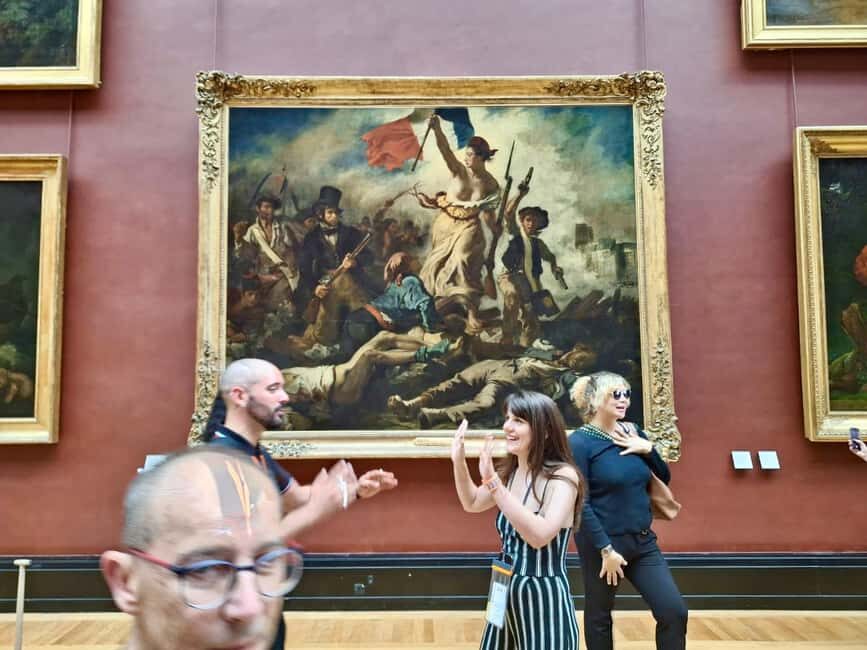
Mona Lisa is the kind of artwork that can feel overhyped until you see it in person. Then it can feel confusing again, because it’s not a painting you fully understand from a distance and a crowd barrier.
This tour helps you break that problem with a guided, close-up focus. You’ll practice interpreting what you’re seeing: facial expression, the balance of light and shadow, and the subtle choices that make the figure feel present even when you’re standing in a packed room.
What makes the experience valuable is that you’ll learn how to talk about the painting without needing to be a scholar. Your guide’s artist lens can make details feel less like trivia and more like clues.
Also, your time is limited. Getting to the right moments, and not losing it to wrong turns, is a big part of why people feel the tour is worth the money.
Other museum experiences in Paris





Nike and the body in motion: reading form like a language
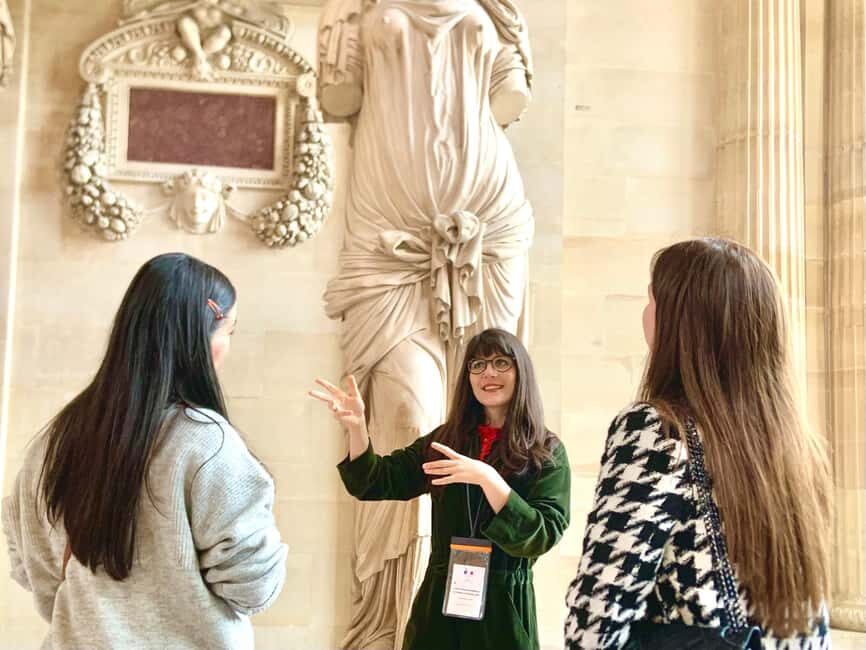
Nike isn’t only beautiful. It’s an argument made in stone—about movement, balance, and drama. The tour is set up to get you close enough to actually notice the “mechanics” of that movement.
You’ll spend time with features like the flowing folds and the way posture creates motion. Your guide will help you decode what those visual elements are doing. For me, that’s where the artist-guide approach really shines: you start seeing how art communicates without using words.
This is also a great stop if you want art history that feels physical. Even if you’re not a gallery person, the form of a sculpture lands fast. And once you know what to look for, you’ll keep seeing that same visual logic elsewhere in the museum.
Venus de Milo: why the silence can be powerful
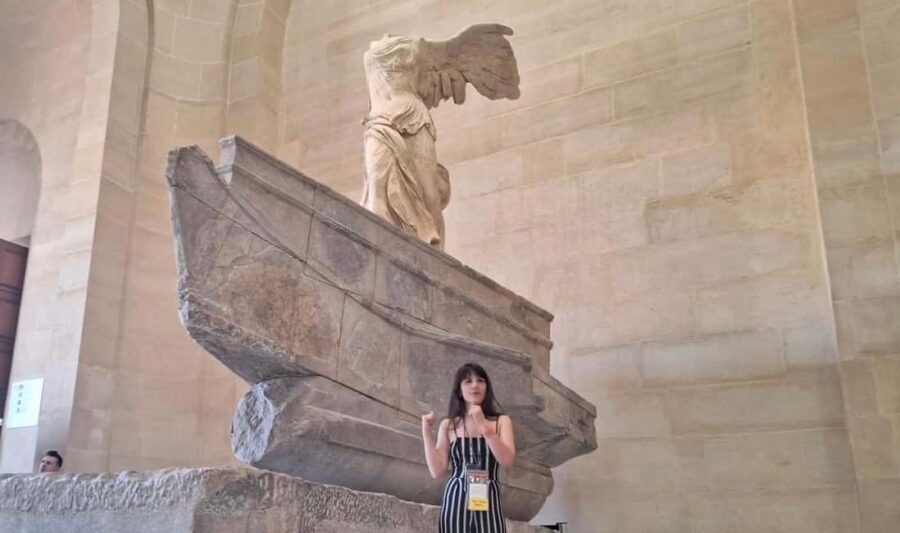
Venus de Milo can look simple from afar, which can trick you into under-looking it. In a guided format, you get a reason to slow down.
Your guide will help you connect the figure’s proportions and pose to broader artistic choices across different eras. Even without getting technical to the point of exhaustion, you’ll walk away with a clearer sense of what makes this work iconic—and why it’s been studied for centuries.
This stop also tends to work well for mixed groups, including families. One of the most consistent themes in past experiences is that guides made the tour feel like a shared experience, with a pace that keeps teenagers and adults engaged.
How the route teaches art history fast (without turning it into a lecture)

The Louvre has more than 35,000 works, which is exactly why a guided tour needs a strategy. Here, the strategy is evolution: moving through major periods so you can see connections instead of getting lost in isolated masterpieces.
You’ll trace art history from Greek Antiquity toward the Italian Renaissance, with explanations that link technique to time period. The focus isn’t on covering everything. It’s on giving you a short timeline in your head that helps you interpret later pieces.
That “timeline effect” matters. After the tour, you’ll likely find yourself using the same noticing skills in other galleries. You might start asking yourself questions like, What changed in how artists represented light? How did form shift from earlier sculpture to later painting?
That’s the real win from a guide who can explain artistic processes in plain language.
Group size, pace, and audio headsets that help you hear the art
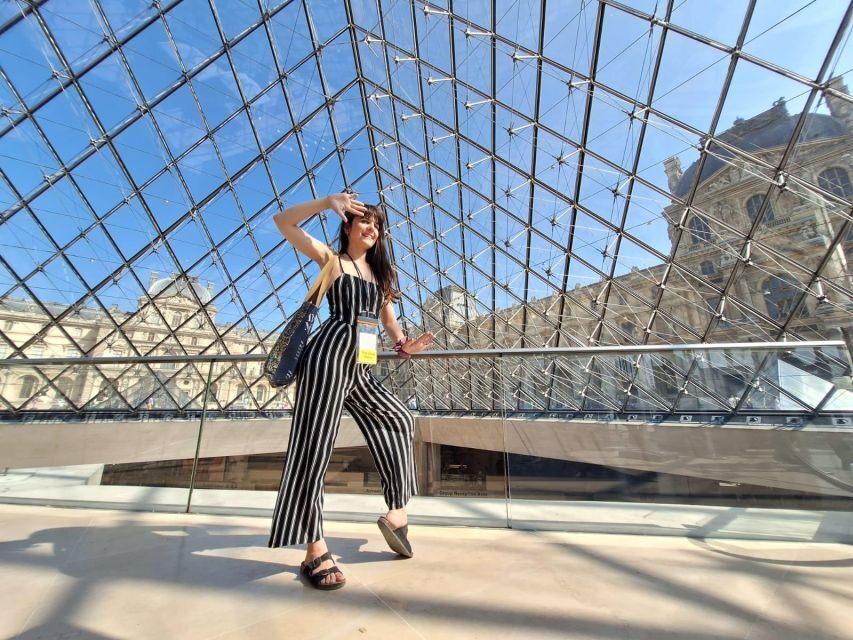
This is a small-group tour limited to no more than 6 visitors, with a private group option available. That’s not just a comfort upgrade. It directly affects the experience quality.
In a museum like the Louvre, larger groups often mean rushing, noise, and less room for questions. A tiny group changes the dynamic: you can stop, look, ask, and move without feeling like you’re part of a conveyor belt.
Audio headsets are included when available, which is a practical detail worth caring about. In busy rooms, even a loud guide can sound muffled from the wrong angle. Better audio makes the explanations land when you’re right in front of the work.
Duration is about 2 hours. That’s short enough to prevent museum fatigue, but long enough for a meaningful sequence. Based on what past visitors praised most, the pace is part of the appeal—slow where it matters, quick where it saves you from wasting time.
Price and value: why $246 can make sense in the Louvre
At $246 per person for 2 hours, this isn’t a budget tour. But in the Louvre, the value isn’t only “a guide.” It’s the combination of access, focus, and how you use your limited time.
Here’s the value logic I’d use before booking:
- Reserved entry is time saved. If you’ve ever queued in a public line in a major museum, you know that time cost adds up fast.
- A certified artist-guide isn’t just reciting facts. You’re paying for an interpretation style that teaches you how to look.
- The small group size limits chaos. That alone can turn a crowded museum day into something that feels manageable.
- The tour targets major highlights like Mona Lisa and Venus de Milo while still giving you technique-based context.
If your plan is to visit the Louvre only once and you’re short on time, paying for a focused guided experience is often cheaper than paying in stress. If you have all day and love wandering, you might skip paid guiding. But if you want to see the right things and understand them fast, this price can feel fair.
Who this Louvre artist tour suits best
I think this works especially well for:
- First-timers who want highlights without getting overwhelmed
- Families with teens who still need context, not just sightseeing
- People who like art more when they understand how it’s made
- Anyone who prefers a structured route through a museum this large
It can also work for visitors managing mobility needs, because at least one guide made an effort to minimize stairs when possible. Still, the tour is not suitable for wheelchair users based on the provided details, so plan accordingly.
Comfort tips are simple: comfortable shoes are a must. You’ll be walking and standing enough that footwear becomes part of the quality of the experience. Also plan to keep water on hand since it’s listed as something to bring, even though food and drinks are not allowed during the tour.
Should you book this Louvre artist tour?
Book it if you want:
- A short, high-impact Louvre experience with reserved entry
- An artist-guide approach that helps you interpret what you see
- A tour that prioritizes major masterpieces while explaining technique and meaning
Skip it if you want:
- The freedom to roam every wing and spend half-days in one department
- A wheelchair-friendly itinerary
If you’re deciding now, I’d lean yes because the setup matches the reality of the Louvre: it’s too large to tackle with vibes alone. And since you can cancel up to 24 hours in advance for a full refund and reserve now with pay later, you can hold your spot while you lock in the rest of your Paris plan.
FAQ
How long is the Louvre skip-the-line artist tour?
The tour runs for 2 hours.
Where do I meet the tour guide?
You meet at Le Kiosque des noctambules by Jean-Michel Othoniel, across from the Comédie-Française. The nearest metro is Palais Royal – Musée du Louvre, and you should use the Place Colette exit.
Does the tour include skip-the-line entry?
Yes. You get reserved entry tickets and skip the line through a separate entrance.
What languages are offered?
The live guide is available in Albanian, English, and French.
Is this a large group tour?
No. The group is limited to no more than 6 visitors per tour. A private group option is also available.
What should I bring to the Louvre?
Bring your passport or ID card (a copy is accepted), comfortable shoes, and a reusable water bottle.
Is the tour wheelchair accessible?
No. It is not suitable for wheelchair users.