REVIEW · PARIS
Guided tour of the Louvre Museum with tickets included
Book on Viator →Operated by Matteo Allavena · Bookable on Viator
Two hours can feel like ten at the Louvre. This guided highlight sprint has skip-the-line entry plus art stories you do not get from a plain walk through the galleries, led by Matteo Allavena in English.
I particularly love how the route stays focused while still moving across big eras, from 13th-century walls to Napoleon-era canvases. One thing to keep in mind: the Louvre is huge, so even with a tight plan, you will still want extra time afterward if you want to wander freely.
In This Review
- Key takeaways for your Louvre highlights sprint
- Meet Matteo Allavena at Le Café Marly and start with a plan
- Skip-the-line entry and a realistic 2-hour pace
- Medieval Louvre walls and the Tanis Sphinx: start with ancient stones
- Greek department power: Athena, Venus de Milo, and Victory of Samothrace
- Galerie d’Apollon: when the museum’s layout becomes part of the story
- Giotto’s St. Francis: the Middle Ages stop that changes how you see painting
- Classicism room: Napoleon’s crown and David’s steel-edged drama
- Romanticism rooms: the Medusa and Delacroix’s Liberty under pressure
- Value check: does $114.93 make sense at the Louvre?
- Who this Louvre tour fits best
- Should you book this Louvre highlights tour?
- FAQ
- How long is the guided Louvre tour?
- Is the tour in English?
- Is the Louvre entrance ticket included in the price?
- Where do we meet for the tour?
- How many people are in the group?
- Is there a refund if my plans change?
- Are service animals allowed?
- Do I get free admission if I qualify by age or residency?
- Will I receive confirmation after booking?
Key takeaways for your Louvre highlights sprint

- Skip-the-line ticket + guided route saves your energy for looking, not waiting
- Max group size of 6 keeps the pacing calm and makes Q&A realistic
- A clear art-eras path: medieval, Greek, Renaissance/Italian painting, Classicism, then Romanticism
- Mona Lisa, but with context instead of just a hurried photo stop
- Ancient-meets-imperial stops that connect the museum building itself to what you’re seeing
Meet Matteo Allavena at Le Café Marly and start with a plan
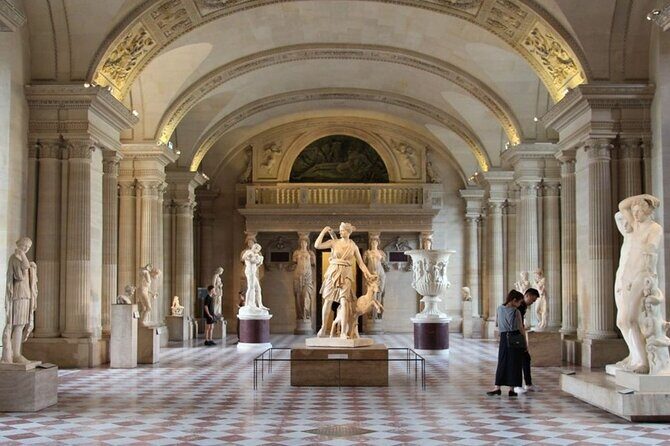
Your tour starts at Le Café Marly, 93 Rue de Rivoli (75001). You meet there, then the experience ends back at the same place. That simple “in and out” setup matters in Paris, where walking even a few blocks can feel like a mini project.
The star here is the guide: Matteo Allavena. He’s the reason this tour works as a highlights visit instead of a checklist. The tour’s structure is built for how your brain actually handles the Louvre: one strong idea at a time, then a few anchor artworks to remember.
Also, the tour is capped at 6 travelers. In a museum the size of the Louvre, that small group size is not a luxury. It’s what lets you keep up with a thoughtful pace and still stop long enough to really look.
One small practical note: Le Café Marly is in a busy area, so show up a bit early. Multiple people will be converging at the same entrance zone, especially when it’s warm.
Other guided Louvre Museum tours in Paris



Skip-the-line entry and a realistic 2-hour pace
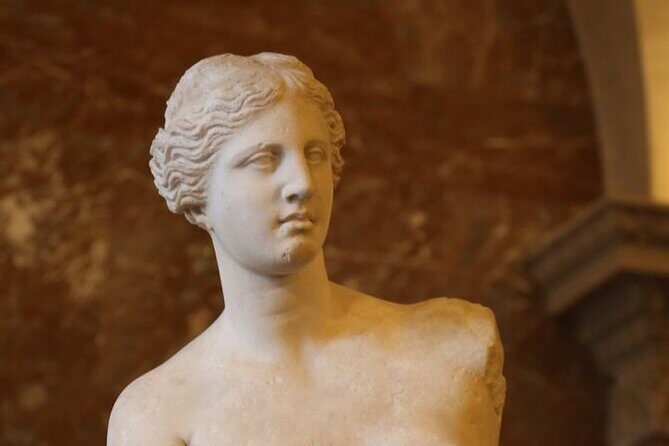
The big promise is straightforward: skip the line and head straight to top highlights. The tour lasts about 2 hours, and that short window is exactly why the route is designed the way it is.
If you try to do the Louvre on your own, your time gets eaten by queues, then you start “wandering by accident.” With a timed guided plan, you trade random wandering for purposeful viewing. You still get time to look, but you’re not spending most of the visit figuring out where to go next.
The other value piece is timing. On average, this tour is booked about 57 days in advance, which is a clue this is one of those “go early or miss out” experiences. If your Paris days are fixed, I’d treat it like a must-do and book ahead.
What you should expect in practice: you’ll be moving through key sections efficiently, then slowing down when the guide explains what to notice. The guide’s job is to help you see details you’d normally skip, like what an image is doing and why it was painted or displayed.
Medieval Louvre walls and the Tanis Sphinx: start with ancient stones
Most people think the Louvre begins with famous paintings. This route reminds you it began as a fortress and a changing palace site.
The tour starts with the Medieval Louvre, including the 13th-century walls. Even if you do not consider yourself a “history person,” this is a smart opener. It gives you a sense of layers. The Louvre is not just a container for art; it’s also part of the story of power, rebuilding, and access.
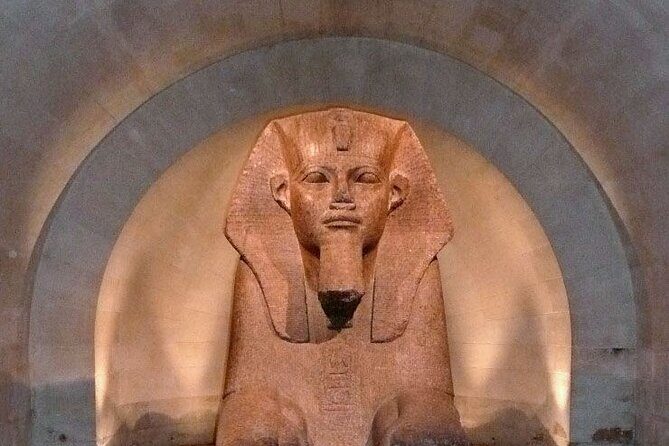
Then you head to the Tanis Sphinx, a 4000-year-old sphinx. This stop is a reset for your eyes. Stone from ancient Egypt looks different from marble and paint. It’s also a great way to start thinking across cultures instead of treating each department like a separate museum.
The main drawback of starting this way is attention span. If you’re tired from travel or you’re in a “skip the walls, see the famous stuff” mood, you might wish you could jump ahead faster. But if you can handle 10 minutes of context, this start makes the rest of the collection click.
Greek department power: Athena, Venus de Milo, and Victory of Samothrace
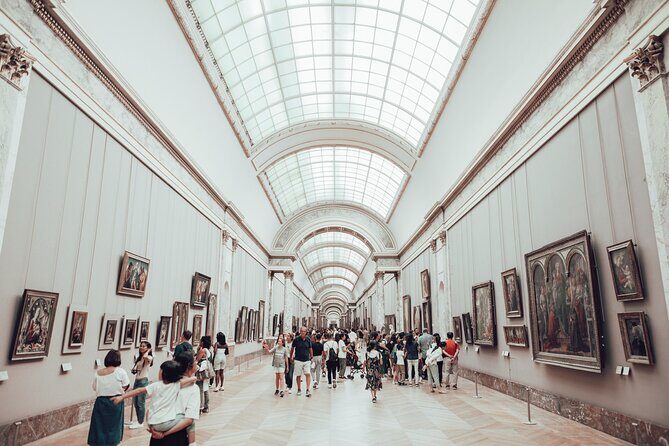
After the early foundations, the tour shifts into the Greek department. This is where the Louvre can feel like a museum inside a museum because the artworks come with their own visual language.
You’ll see major anchor works, including Athena of Velletrie, Venus de Milo, and Victory of Samothrace. The point is not just that they are famous. The point is that the guide helps you look past the postcard view.
Here’s why this stop is so valuable: Greek art at the Louvre is often about balance between ideal beauty and dramatic realism. The works feel “classical,” but the details tell you they’re made to impress specific ideas about gods, power, and human form.
Of those three, Victory of Samothrace is a standout because it feels like motion. It’s hard to photograph the sense of wind and tension, so having a guide who points out what you should notice helps you get more from the viewing time. If you like sculpture but think you’ll only spend a minute here, this tour pushes you to slow down.
Galerie d’Apollon: when the museum’s layout becomes part of the story

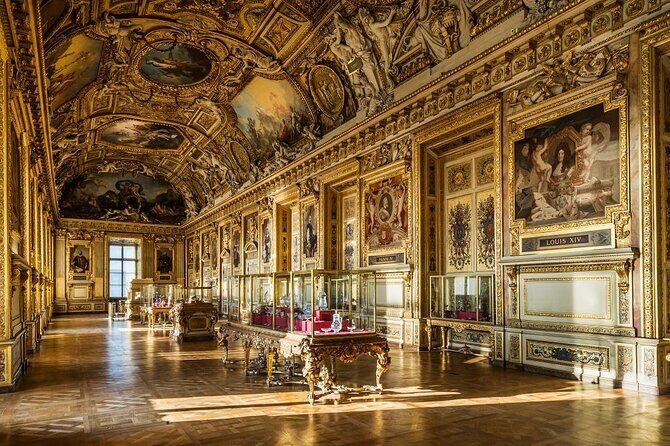
Next comes the Galerie d’Apollon, a legendary space inside the Louvre. This is one of the reasons I like guided routes in big museums: architecture becomes a clue.
The tour connects the gallery to art and political symbolism, including works such as Guirlandao’s L’enfant et l’ancien and Veronese’s Les noces de Cana. Then you also get to Leonardo da Vinci’s MONA LISA inside this overall flow.
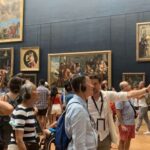
About Mona Lisa: the goal here is not just to stand in front of it. You get context for what surrounds it and why it became an icon. That turns a crowded, quick sighting into a more satisfying experience.
A realistic consideration: even with skip-the-line access, the Mona Lisa area can be busy because it’s the Mona Lisa. You cannot control that crowd energy. What you can control is whether you arrive without a plan, or arrive with a guide who knows how to help you make sense of what you’re seeing quickly.
If you dislike crowds, do not plan to “linger forever.” This tour is designed for looking well in bursts, then moving on.
Other Louvre Museum entry tickets in Paris

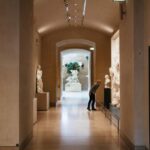


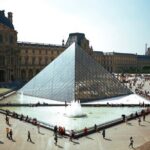
Giotto’s St. Francis: the Middle Ages stop that changes how you see painting
Then the route shifts again, into Italian painting of the Middle Ages, with an explanation of Giotto’s Saint Francis receiving the stigmata.
This is a smart pivot because Giotto is one of those painters who helps you understand a turning point in Western art. You see how religious scenes were communicated with emotion and clarity, not just decoration. The stigmata theme is powerful, but it can be easy to miss if you only glance at the subject.
What makes this stop valuable on a two-hour tour is that it changes your frame. After seeing sculpture and major museum showpieces, you get a moment where painting’s storytelling techniques matter. You start noticing composition and gestures, not only the subject.
If you only care about the top 10 art names, you might wonder why this stop is on a highlights route. But it’s exactly the kind of artwork that makes a guide feel worth the money: you do not leave feeling like you only saw what you already expected to see.
Classicism room: Napoleon’s crown and David’s steel-edged drama
From there, the tour moves into the Classicism room, where you’ll see The Coronation of Napoleon and Leonidas at Thermopylae by Jacques-Louis David.
Classicism at the Louvre can feel like a shift in mood. These works often use crisp structure, bold messaging, and a sense of historical theater. Napoleon-era art is not subtle, and David’s work has that same “designed for impact” quality.
This is a great section if you like art that feels political. Napoleon’s coronation scenes are about legitimacy, spectacle, and control of narrative. Meanwhile, Leonidas and Thermopylae is about heroic endurance and national identity.
One drawback to this room is that it rewards focus. If you treat it as a background stop, you’ll miss what the paintings are doing. The guide helps you see staging, symbolism, and why these subjects resonated beyond the battlefield.
But if you enjoy art that makes an argument, you’ll likely find this part one of the most memorable.
Romanticism rooms: the Medusa and Delacroix’s Liberty under pressure
Finally, the tour heads into Romanticism, with stops including Géricault’s Raft of the Medusa and Eugène Delacroix’s Liberty Guiding the People.
This is where the emotional volume cranks up. Romanticism isn’t about calm ideals; it’s about tension, risk, and human feeling. The Louvre’s Romantic works can hit harder than you expect because they’re visually dramatic and morally charged.
Raft of the Medusa is heavy in subject, and the composition is designed to pull your eye through chaos. The guide’s job here is to help you see why it looks the way it does: how the scene is built to make you feel instability and urgency.
Then Liberty Guiding the People gives you another kind of intensity. It blends real political symbolism with mythic energy. If you only know it from the simplified cultural references, seeing it in person (with a guide framing what you’re looking at) can be a real wake-up moment.
The nice thing about ending on Romanticism is that it gives you a strong “memory landing zone.” You finish the tour with intensity still in your head, which makes it easier to pick what you want to return to after.
Value check: does $114.93 make sense at the Louvre?
At $114.93 per person, this is not a cheap “casual museum” purchase. But it often works out as good value if you take the Louvre seriously.
Here’s the value math that matters:
- The entrance ticket is included (listed as 28 euros).
- You get skip-the-line access, which is usually where your time leaks out fastest.
- You have a focused 2-hour route that reduces decision fatigue.
The Louvre is famous for being overwhelming. That’s not a marketing complaint. It’s practical. You can spend an hour just choosing. This tour cuts the number of choices and replaces them with an expert route.
So the real question is not whether you can buy a cheaper ticket. You can. The question is whether you’ll spend your best Paris energy reading a map, or looking at art with context while someone else handles the routing.
I think this tour is a strong pick if you want: a highlight plan, art history context, and a guided flow from ancient through modern storytelling. If your goal is to wander every room at your own pace, this might feel too structured.
Who this Louvre tour fits best
I’d book this tour if you:
- have limited time and want the most important pieces handled in a clear order
- like explanations that connect art to ideas, not just dates
- prefer a small group where you can ask questions without shouting over other people
- want something that helps kids, teens, or adults feel less lost in a huge museum
I’d think twice if you:
- want to spend long, slow stretches in one gallery
- hate moving from one room to the next
- plan to treat the tour as optional and then skip the guide’s framing
This is built for efficient seeing with narrative structure. You’ll get the most out of it if you lean into that.
Should you book this Louvre highlights tour?
Yes, I’d book it if you want a smart, time-efficient Louvre experience that includes skip-the-line entry and a tight route through major works and eras. The best reason is simple: a guided plan makes the Louvre feel possible, not like a giant maze.
If you can only do one Louvre-focused activity, this is a solid choice. It trades “seeing everything” for “seeing what matters” with context—so you leave with more than photos. You leave with ideas you can actually remember while the rest of the museum keeps whispering in the background.
FAQ
How long is the guided Louvre tour?
It runs for about 2 hours (approx.).
Is the tour in English?
Yes, it is offered in English.
Is the Louvre entrance ticket included in the price?
Yes. The entrance fee is included (listed as 28 euros), and skip-the-line entry is also included.
Where do we meet for the tour?
The meeting point is Le Café Marly, 93 Rue de Rivoli, 75001 Paris.
How many people are in the group?
The tour has a maximum group size of 6 travelers.
Is there a refund if my plans change?
Free cancellation is available. You can cancel up to 24 hours in advance for a full refund.
Are service animals allowed?
Yes, service animals are allowed.
Do I get free admission if I qualify by age or residency?
Free admission applies to visitors under 18 and EEA residents under 26, if you present valid ID and proof of residency.
Will I receive confirmation after booking?
You will receive confirmation at the time of booking.