REVIEW · PARIS
Louvre Essential Private tour
Book on Viator →Operated by AWESOME GUIDE · Bookable on Viator
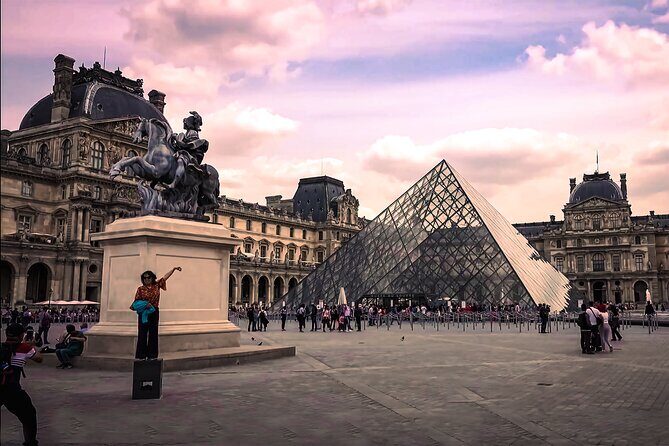
The Louvre can feel like a maze. This Louvre Essential Private tour is a clean way to turn chaos into a clear route, with a guide who knows how to explain what you’re seeing. You start in the center of Paris and end right where you began, after hitting the museum’s biggest hits.
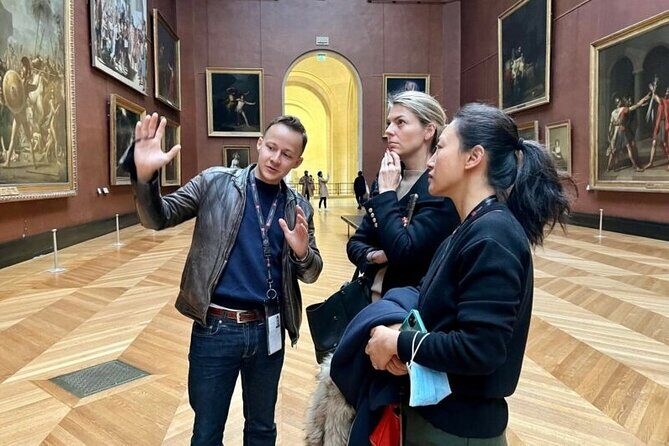
Two things I especially like: you get a professional licensed guide, and the tour is structured around major “rooms and departments” instead of random wandering. Guides named Auriel, Olga, Vincent, and Miguel have been praised for making myth, art, and museum design click fast, so you don’t just look—you understand.
One possible drawback: with only about 3 hours, you’ll focus on the highlights and major departments, not every corner of the Louvre. Also, at $357.42 per person, it’s a premium move compared with going on your own.
In This Review
- Key things to know before you go
- A fast, human way to see the Louvre
- Starting at 2:00 pm near Arc de Triomphe du Carrousel
- From fortress roots to the Louvre’s oldest rooms
- Greek antiquities: Venus de Milo, Samothrace, and the Caryatides room
- The 800-meter Italian gallery and a smarter Mona Lisa plan
- Mesopotamia, Hammurabi, then French paintings on a huge scale
- Dutch masters in a calmer rhythm
- Private by design: custom focus, Q&A, and included entry
- Price and value: is $357.42 per person worth it?
- Who this Louvre Essential tour fits best
- Should you book the Louvre Essential Private tour?
- FAQ
- How long is the Louvre Essential Private tour?
- Is Louvre admission included?
- Is this tour private?
- What time does the tour start?
- Where does the tour meet?
- What languages are available?
- What about mobile tickets?
- Who qualifies for free admission?
- What’s the cancellation policy?
- Are there any limits on participation?
Key things to know before you go
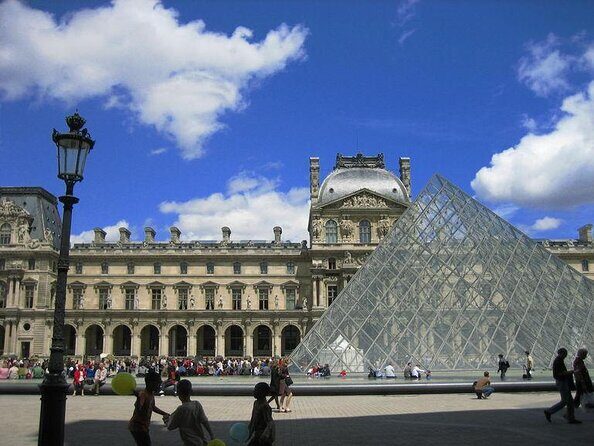
- Private and customizable: it’s just you and your party, with time to shape the focus around what you care about.
- Admission included: Louvre entry tickets are part of the package, so you’re not juggling extra purchases.
- A route built for flow: the tour moves through major areas like Greek antiquities, Italian masters, French painting, Mesopotamia, and Dutch artists.
- Context, not just names: you’ll hear stories that connect artworks to the myth, history, and ideas behind them.
- Guides who manage the pace: you’ll keep a steady rhythm through a museum that’s otherwise exhausting.
A fast, human way to see the Louvre
If you’ve ever faced the Louvre entrance like it’s a final boss, this kind of private tour helps immediately. The goal isn’t to see everything. It’s to see the works that anchor the museum’s story, then understand why they matter.
You’ll spend roughly 3 hours with a guide, which is long enough to get oriented and start making meaningful connections. Short tours can feel like a checklist; this one is paced to feel like a guided walk with explanations you can actually use later.
And since you get Louvre entry tickets included, you avoid the most annoying pre-museum friction. You show up, meet your guide near Arc de Triomphe du Carrousel, and get moving.
Other private Louvre tours in Paris



Starting at 2:00 pm near Arc de Triomphe du Carrousel
The meeting point is Arc de Triomphe du Carrousel (Pl. du Carrousel, 75001 Paris), with the tour starting at 2:00 pm. The activity ends back at the meeting point, which is simple and helpful when you’re planning the rest of your day.
Because it’s near public transportation, you’re not stuck fighting your way across the city in a tight schedule. That matters in Paris: your energy is your most limited resource, especially inside a museum as large as the Louvre.
If you’re booking this, do yourself a favor and plan the rest of the afternoon with a little buffer. Even a well-run tour takes you through lots of galleries and standing time. Wear shoes you’d happily walk in for a few hours without complaint.
From fortress roots to the Louvre’s oldest rooms
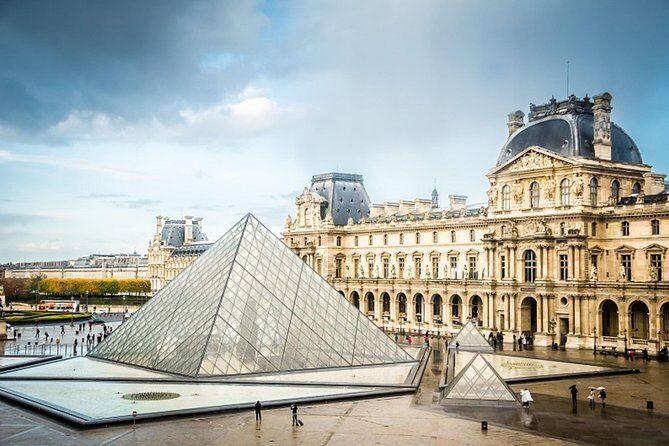
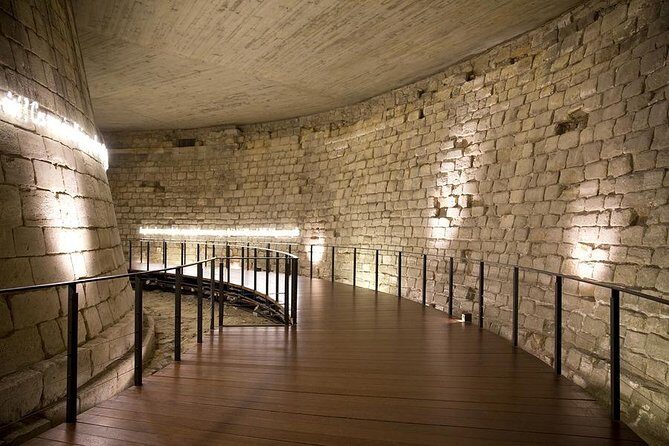
One of the best parts of this tour is that it refuses to treat the Louvre like a timeless picture gallery. You start by seeing how the Louvre began—because it was a fortress before it became a museum.
Your guide will take you to an oldest room that’s almost 800 years old. That detail changes how you see everything else, because suddenly the museum stops being a random container. It becomes a building with layers: medieval to royal to modern.
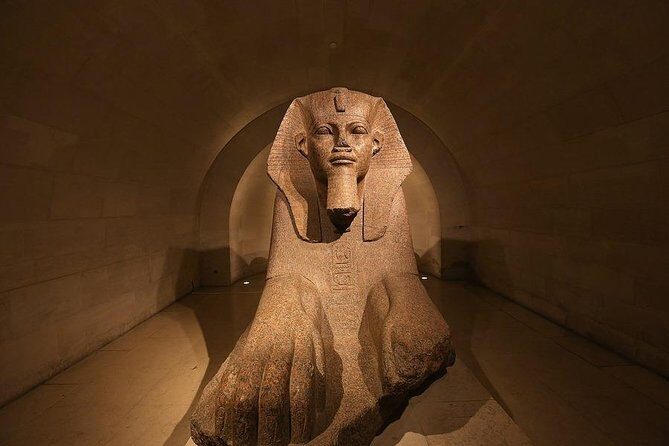
You’ll also get a stop centered on the great sphinx of Tanis. It’s a perfect Louvre-style bridge between civilizations, and it gives you a chance to hear the strong links between Egypt and Paris—how objects traveled, how Europeans collected them, and how those stories ended up shaping what the museum displays.
What I like about this approach is that you’re not just learning names. You’re building a mental map: the Louvre as a place where different worlds meet.
Greek antiquities: Venus de Milo, Samothrace, and the Caryatides room
Next comes one of the Louvre’s strongest “anchor zones”: Greek antiquities. This department is described as one of the richest, and you feel that right away. You’ll see major works that show the museum’s shift from ancient artifacts to art history we recognize today.
Two standouts you’ll encounter are the Venus de Milo and the Victory of Samothrace. If those names are already familiar, great—but you’ll get more than recognition. A guide can point out what’s happening with form, style, and storytelling, so the pieces don’t feel like famous silhouettes on postcards.
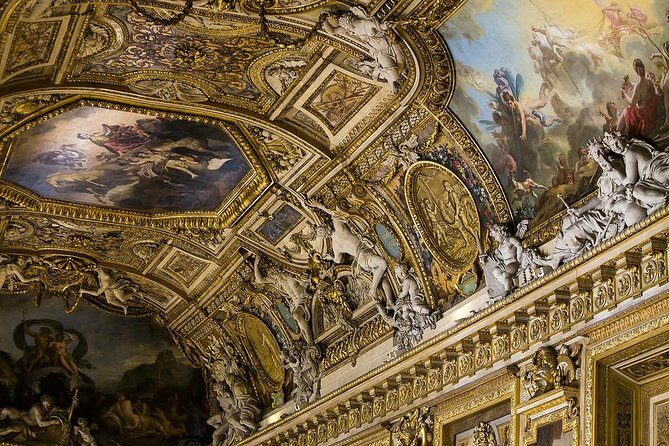
Then you’ll move into the Caryatides room, described as the old ballroom of the castle. That’s a clever twist: the setting matters. When you hear mythology stories in a room like that, the art feels less like a museum exhibit and more like something that once lived in a larger world of ceremonies and power.
Here’s the practical benefit for you: myths can become hard to track if you’re reading on your own. Having the guide explain the mythology as you’re standing there keeps the story straight in your head.
The 800-meter Italian gallery and a smarter Mona Lisa plan
The tour continues into the Italian gallery, noted as about 800 meters long. That’s a lot of space—but it’s also exactly the kind of scale that can ruin self-guided visits. With a guide, it becomes a controlled route through major artists and periods.
You’ll see key Italian masters such as Mantegna, Raphael, Caravaggio, and Veronese. Then, of course, you’ll reach the big target: the Mona Lisa by Leonardo.
A private tour helps here because the Mona Lisa isn’t just a painting. It’s a crowd magnet. With a guide managing your timing and flow, you spend more time actually looking and less time waiting in the wrong spot.
My advice if you’re booking: think of the Mona Lisa as a chapter title, not the whole book. The real value of this segment is that you’ll see how Italian painting developed through different styles and approaches—so the Mona Lisa feels like part of an artistic sequence, not a standalone celebrity.
Other Louvre masterpieces and highlights tours in Paris






Mesopotamia, Hammurabi, then French paintings on a huge scale

One of the tour’s strengths is that it doesn’t let you get trapped in one “lane” of the museum. You’ll also see Mesopotamian sculptures, including the Khorsabad Bulls and the Hammurabi code.
This section is valuable because it broadens the Louvre beyond Europe-only art discussions. The Mesopotamian works also tend to reset your brain: they have different design goals, different cultural context, and they make the museum feel like a global archive rather than a single-country museum.
After Mesopotamia, the focus turns to French painting. You’ll see large works such as Sacre de Napoleon and La Mort de Sardanapale. A useful detail here is the scale: these paintings are bigger than many apartments in Paris, so they hit differently in person.
That scale changes your perception. In photos, you only see composition. In person, you feel the physical presence of the artwork—how it dominates the room and how the painter used size to push emotion and power.
Even if you’re not a painting person, this kind of stop can convert you. It’s hard to stay indifferent when the artwork is large enough to command attention.
Dutch masters in a calmer rhythm
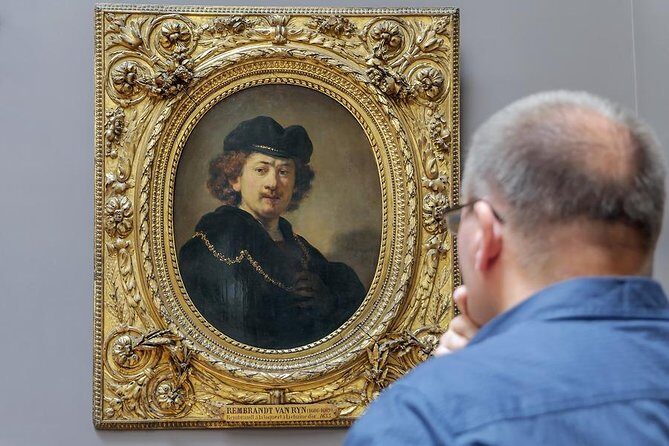
Then comes the Dutch department, including Rubens, Vermeer, and Rembrandt. This part is described as less crowded, which matters more than you’d expect. The Louvre can overwhelm you with visual noise and bodies. Less crowding means you can slow down and actually read what you’re seeing.
You’ll likely appreciate this segment if you’re tired of constant motion. Dutch masters often reward close attention—light, detail, and technique show up more clearly when you’re not squeezed.
This is also a good contrast point after French giants. You go from huge drama to works where subtlety does the talking. If you’ve ever left a big museum feeling like everything blended together, this pacing helps you separate styles in your mind.
Private by design: custom focus, Q&A, and included entry
This is a private, customizable tour for just your party. That matters because the Louvre doesn’t have a single best route. Your interests should drive the day.
During the walk, your guide can tailor emphasis—especially if you tell them what you care about most. The tour structure still covers the main treasures, but you’re not stuck taking every stop in the same order without adjustment.
You’ll also get time for questions. That sounds basic, but in the Louvre it’s huge. When you ask, you’re not learning random trivia—you’re getting explanations connected to what you’re literally standing in front of.
There’s also the practical side: tickets are included and delivered as a mobile ticket. Less hassle before you start means you spend more time inside.
Finally, the tour is offered in English, German, Italian, Spanish, and French. If your group includes different language preferences, it’s worth checking what’s available for your date so everyone can follow comfortably.
Price and value: is $357.42 per person worth it?
At $357.42 per person, this is not a “cheap and cheerful” option. But you’re paying for three things that add up in a place like the Louvre:
- A licensed guide who can explain major works and also connect them to the museum’s building story and themes.
- Time savings and flow: the tour moves through major areas in an orderly fashion so you’re not wasting energy planning.
- Admission included for a set 3-hour visit, with a route that prioritizes key departments rather than random wandering.
If you’re traveling in a group where everyone wants a plan, private time often beats the cost of “everyone go in different directions” chaos. If you’re the type who likes art history but hates feeling lost, this can feel like buying back your attention.
If you’re a solo traveler on a tight budget, you might decide to do the Louvre independently and spend your money elsewhere. But if you want a strong first visit—one that gives you a framework for what you see—this tour is a smart way to start.
Who this Louvre Essential tour fits best
This tour is a strong fit if you:
- want a first trip that quickly turns into context, not just looking
- like art but also care about how museums work as physical spaces
- prefer steady pacing over sprinting through galleries
- want a private experience where you can ask questions and steer the focus
It’s likely a good match for families too, since most travelers can participate. Still, with only about 3 hours, you’ll get highlights rather than a full museum sweep. If your group wants a slow, exhaustive Louvre day, you’ll need more time.
Should you book the Louvre Essential Private tour?
I’d book it if you want the Louvre’s main story told clearly in a short window. The mix of medieval origins, major departments like Greek antiquities, Italian masters, Mesopotamia, and the Dutch collection gives you a framework you can build on later—whether you return or just want your first visit to make sense.
Skip it (or reconsider) if any of these are true for your trip:
- You want to spend the day chasing every single wing on your own.
- Your budget can’t handle a premium per-person price.
- Your group expects a long sit-down museum experience without much standing.
If you do book, tell your guide what you care about before you start. This tour works best when you give the guide real direction—then you get the Louvre tailored to your interests instead of a one-size-fits-all route.
FAQ
How long is the Louvre Essential Private tour?
The tour lasts about 3 hours.
Is Louvre admission included?
Yes. Louvre entry tickets are included in the tour.
Is this tour private?
Yes. It’s private, meaning only your group participates.
What time does the tour start?
The start time is 2:00 pm.
Where does the tour meet?
You meet at Arc de Triomphe du Carrousel, Pl. du Carrousel, 75001 Paris, France.
What languages are available?
The tour is offered in English, German, Italian, Spanish, and French.
What about mobile tickets?
You receive a mobile ticket.
Who qualifies for free admission?
Free admission applies to visitors under 18 and EEA residents under 26, with valid ID and proof of residency.
What’s the cancellation policy?
You can cancel for a full refund up to 24 hours in advance of the experience start time.
Are there any limits on participation?
The experience has a minimum number of travelers. If that minimum isn’t met, you’ll be offered a different date/experience or a full refund.