REVIEW · PARIS
Louvre Late Opening Guided Tiny Group Tour
Book on Viator →Operated by Toorers · Bookable on Viator
The Louvre gets crowded fast, so go when Paris slows down. This late opening tiny group tour keeps things manageable and gives you real guide time, with Patricia and her intern Louise praised for being clear, friendly, and genuinely helpful. I also love that the plan mixes the big-name stops with “why it matters” context, so you’re not just walking past famous art.
The main thing to think about is that 2 hours moves quickly through major highlights. If you want to linger for long reading moments, you’ll likely need a second visit after this one.
In This Review
- Key things I’d bet on before you book
- Late Opening Louvre: Calm Viewing and Better Flow
- Where You Meet: Le Kiosque des noctambules and Then In
- The Modern Architectural Moment You Can’t Skip
- A Landmark Metro-Station Start: Easy to Find, Easy to Follow
- The Main Event: Louvre Museum with an Art Historian Guide
- Medieval times (don’t skip this grounding)
- Egypt and Greece Antiquities (the sculpture powerhouse)
- French & Italian paintings (and yes, the Mona Lisa)
- Hidden gems and palace context
- What 2 Hours Really Means in the Louvre
- Included vs. Not Included: Plan Like a Pro
- Value Check: Is $215.32 Worth It?
- Who This Tour Fits Best (and Who Might Want Something Else)
- Should You Book the Louvre Late Opening Tiny Group Tour?
- FAQ
- FAQ
- How long is the Louvre late-opening guided tour?
- What’s the group size for this tour?
- Is the tour offered in English?
- Is the museum admission included in the price?
- What should I bring if I want drinks during the tour?
- Where do I meet the guide?
- Where does the tour end?
- Is there free entry for some visitors?
- Can I cancel for a full refund?
- How far in advance should I book?
Key things I’d bet on before you book
- Max 6 people means questions are actually possible
- Late opening timing favors quieter galleries and easier viewing
- English art historian guidance for meaning, not just location
- Must-see coverage including the Mona Lisa and world-famous antiquities
- Medieval, Egypt, Greece, then paintings for a smart overview arc
- Friendly, informative team with Patricia and Louise getting standout praise
Late Opening Louvre: Calm Viewing and Better Flow
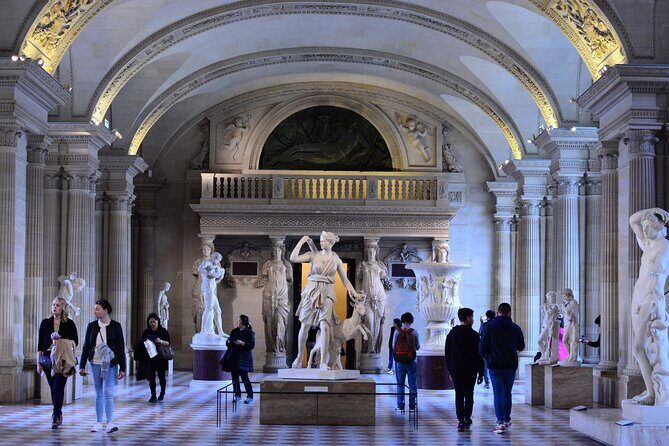
A late opening at the Louvre is not just a scheduling trick. It changes the whole vibe. You’re touring during the hours when big crowds are thinner and the museum feels less like a stampede. For your eyes, it’s easier. For your brain, it’s easier too, because you’re not constantly fighting to get a decent look.
The other big win is the group size. With a maximum of 6 travelers, the guide isn’t stuck doing a one-size-fits-all script. You can ask questions, and if the group wants more focus on one theme, the route can be adapted. That flexibility is rare at major museums, where guides often have to herd people like they’re on a very tight conveyor belt.
The tour is also built around an efficient, “see the essentials” arc. In about 2 hours, you hit major eras and landmarks without pretending you’ll magically master the entire Louvre. Think of it as a smart orientation plus a set of high-impact stops.
Other small-group Louvre tours in Paris



Where You Meet: Le Kiosque des noctambules and Then In
You start at Le Kiosque des noctambules, 12 Pl. Colette (75001 Paris), and the tour ends back at the same meeting spot. That return-to-start detail matters more than you’d think. The Louvre can feel like a maze, and having the tour centered on one meeting point reduces the stress.
The meeting area is also described as being near public transportation, which is handy. If your day in Paris includes museum-hopping or you’re coming in from another neighborhood, you’ll appreciate that you’re not forced into complicated last-mile logistics.
You’ll get a guided start that includes quick orientation moments outside the museum core as well. That helps you get your bearings before you’re dropped into the Louvre’s huge floorplan.
The Modern Architectural Moment You Can’t Skip
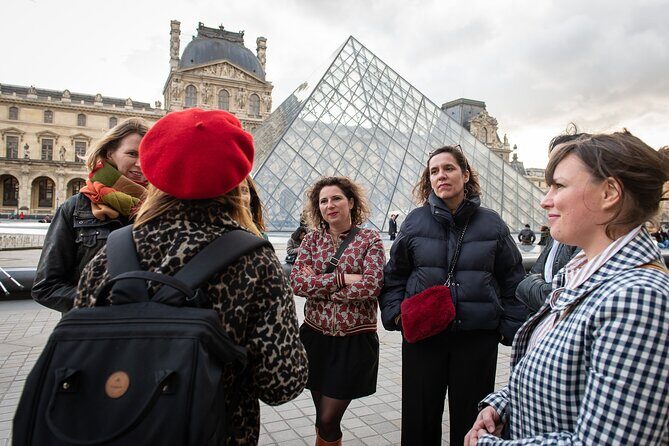
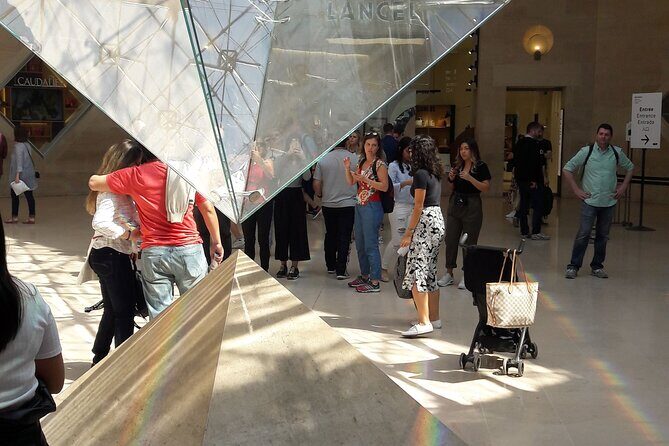
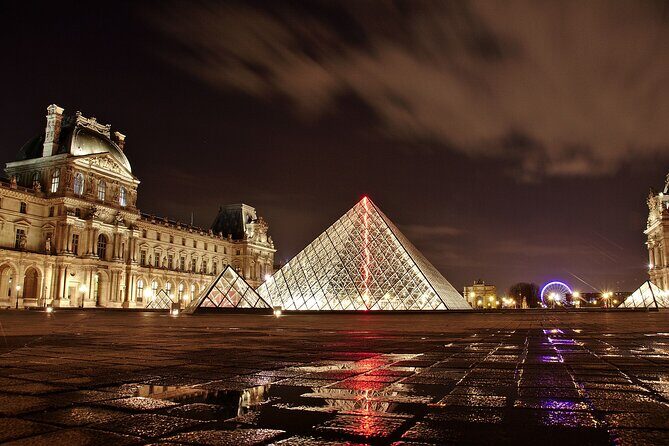
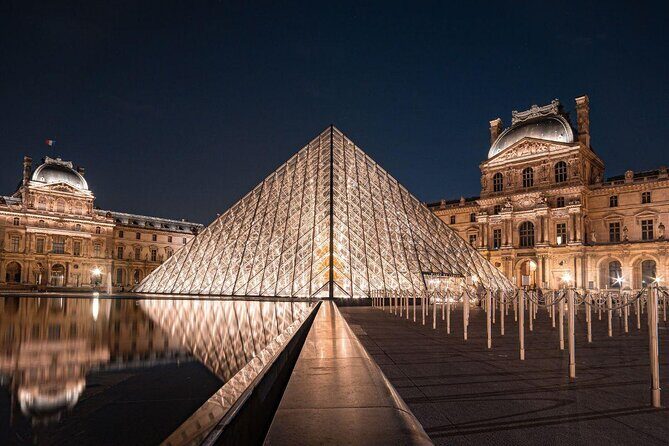
Before you get deep into galleries, the tour includes a stop where you won’t miss a modern architectural feature on Louvre grounds. Even if you’ve only seen photos, it’s worth experiencing it in person because it frames how the Louvre evolved from palace to museum.
Why it’s useful: it gives you an immediate visual reference point. When you later pass older wings and medieval-to-classical rooms, you’ll mentally separate “this is palace-era” from “this is museum-era design.” That kind of mental sorting makes the rest of the visit feel more understandable.
One caution: early on, you may take photos and try to absorb where you are. Just don’t let the photo stop eat too much time. This is a “you’ll cover a lot” tour, and the museum highlights come next.
A Landmark Metro-Station Start: Easy to Find, Easy to Follow

Another outside stop includes a magnificent metro station that’s an icon in its own right, which starts your guided tour. This is the kind of detail that sounds small, but it helps in two ways.
First, it makes your meeting less abstract. You’re not just arriving at an address; you’re arriving at a recognizable Paris landmark. That reduces confusion and makes it easier to stay together.
Second, it sets a tone. You’re already doing a guided “Paris experiences” blend: architecture on the way in, then art inside. If you like travel days that feel like they have momentum, this format fits.
No station name is given with the information you provided, so I’d treat the metro stop as a visual wayfinding element rather than a specific target. If you’re sensitive to meeting delays, arrive a bit early so you can settle in before the group moves.
The Main Event: Louvre Museum with an Art Historian Guide
Once inside the museum, the core value is the guide. You’ll be led by an experienced art historian who connects the dots between eras and themes. That matters at the Louvre because it’s huge and famous. Without guidance, it’s easy to see masterpieces and still miss the big ideas.
Here’s the main sweep you should expect, in an organized way:
Other evening and night Louvre tours in Paris






Medieval times (don’t skip this grounding)
The tour specifically notes you should not miss the medieval period. This is a smart inclusion because it provides context for the Louvre’s transformation. Even if you’re mainly here for the big painting names, the medieval pieces help you understand that this museum isn’t just a single art style—it’s centuries of collecting and building.
If you’re the kind of person who likes to know what you’re looking at, this segment gives you a starting framework. You start to recognize how different periods reflect different priorities—power, religion, collecting, and taste.
Egypt and Greece Antiquities (the sculpture powerhouse)
Next comes Egypt and Greece Antiquities, with world-famous sculptures called out, including Venus de Milo and Samotrace’s Victory. These works are iconic for a reason, but what the guide adds is the “why they matter” piece—how these figures fit into ancient art and how their fame has carried forward.
This is also one of the most satisfying parts of a guided Louvre visit, because sculpture viewing benefits from explanations. A quick pointer on symbolism, style, or historical placement can turn a 30-second look into a more meaningful one.
And because it’s a tiny group, you can ask questions without the guide having to repeat themselves for a line of people. That’s a quality-of-life upgrade.
French & Italian paintings (and yes, the Mona Lisa)
The tour then transitions into French & Italian paintings, and it explicitly includes without skipping the Mona Lisa. That’s important because the Mona Lisa is both essential and tricky. It attracts crowds and can become an exercise in standing around.
The guide’s job here is to help you see it in the context of the surrounding collection and help you keep moving intelligently instead of getting stuck. In a 2-hour tour, that efficiency is the difference between “we saw it” and “we got something from it.”
Hidden gems and palace context
Finally, the tour mentions many hidden gems and highlights tied to the museum’s former palace. This matters because the Louvre isn’t only about what’s framed on a wall. It’s also about architecture, space, and how the museum presents art.
Even if you’re not a “go look at the building” person, this is a chance to connect the art to the setting. It also helps you feel like you saw more than the standard checklist.
What 2 Hours Really Means in the Louvre
A 2-hour Louvre tour is plenty of time to hit major works, but it’s not time to casually wander. You’ll be moving between eras and sections designed to create an easy overview. So if your goal is deep study—microscopic details, long audio-guide reading, sketching—this won’t replace a slower visit.
What it will do: it can help you avoid the most common Louvre mistake—trying to do everything alone and learning halfway through that you missed your “top 10.”
Instead, you’re getting a guided storyline across medieval, antiquities, and paintings, plus the big names. Then you can decide what deserves a second, slower return.
Included vs. Not Included: Plan Like a Pro
This tour includes museum admission for adults: €22 entrance ticket. That’s a key part of the value because major museums don’t come cheap, and late opening tickets can be especially in-demand.
What’s not included is also clearly listed: coffee and/or tea, bottled water, and private transportation. That means you should plan simple personal basics:
- Bring water if you know you run warm in museums
- Skip the search for a café at the exact time you’ll want it
- If you’re sensitive to fatigue, consider a small snack before you go
No private transportation is included, so you’re responsible for getting to the meeting point. The good news: the start location is near public transportation.
You’ll also get a mobile ticket, which is helpful for reducing paperwork and keeping everything in one place on your phone.
Value Check: Is $215.32 Worth It?
At $215.32 per person for an approximately 2-hour guided experience, you’re paying for three things:
- The museum ticket value (€22 for adults, included)
- A specialist guide (art historian level, not just a basic host)
- The tiny-group format (max 6), which is what allows real questions and a more personal pacing
For comparison, the Louvre is famous for “cheap” tickets and expensive time. When you pay for a small-group guide, you’re buying time saved: less wandering, fewer dead ends, and more focused viewing.
I’d call it good value if you want structure and meaning, not just access. If you already know your Louvre eras and you enjoy self-guided wandering, you might prefer a self-planned route and audio guide. But if you’re excited by the idea of understanding why the museum collects what it collects, this price starts to make sense.
Who This Tour Fits Best (and Who Might Want Something Else)
This guided late-opening format is a strong match if:
- You love major masterpieces and want help understanding them
- You prefer small groups over crowded meeting points
- You want an organized overview that covers multiple eras in one go
- You’re traveling with a schedule and can’t spend half a day guessing your path
It’s less ideal if:
- You want long, slow viewing of just a handful of works
- You’re okay with getting less context and just seeing the highlights on your own
It’s also a solid option for most people, since it’s described as suitable for most travelers. The information also notes free admission rules for certain visitors: free entry applies to visitors under 18 and EEA residents under 26 with valid ID and proof of residency. If you fall into those categories, you might want to compare the guide cost to other options that also include or exclude admission.
Should You Book the Louvre Late Opening Tiny Group Tour?
Yes, if you want a calmer, smarter Louvre visit that hits key eras without you having to build the plan yourself. The late opening timing plus the tiny-group limit makes it feel more like a guided walk through the museum’s best story beats rather than a crowded line-up of famous names.
I’d book it especially if you value an art historian’s framing and you appreciate staff who show up as friendly and informative. The praise for Patricia and Louise is a good sign that you’ll get more than rote facts—you’ll get a guide who’s happy to explain.
FAQ
FAQ
How long is the Louvre late-opening guided tour?
It’s approximately 2 hours.
What’s the group size for this tour?
The tour has a maximum of 6 travelers.
Is the tour offered in English?
Yes, it’s offered in English.
Is the museum admission included in the price?
Yes. Adults’ admission ticket to the museum is included (listed as €22).
What should I bring if I want drinks during the tour?
Coffee and/or tea and bottled water are not included, so bring water or plan to buy something separately if you need it.
Where do I meet the guide?
You meet at Le Kiosque des noctambules, 12 Pl. Colette, 75001 Paris, France.
Where does the tour end?
The tour ends back at the meeting point.
Is there free entry for some visitors?
Yes. Free admission applies to visitors under 18 and EEA residents under 26, if they show valid ID and proof of residency.
Can I cancel for a full refund?
Yes. You can cancel up to 24 hours in advance for a full refund.
How far in advance should I book?
On average, this tour is booked about 56 days in advance, so booking earlier can help you get the time slot you want.