REVIEW · PARIS
Louvre Museum: Mona Lisa Without the Crowds Last Entry Tour
Book on GetYourGuide →Operated by Walks France-Spain · Bookable on GetYourGuide
Mona Lisa feels human at last entry. This 3-hour Louvre tour pairs skip-the-line access with an art historian so you hit major wings without wasting time, then you reach La Joconde when the room is calmer. The big win for me is the chance for real viewing at the painting, not just a quick squeeze for a photo. The one drawback is simple: it’s a walking tour at a moderate pace and it isn’t suitable for wheelchairs, strollers, or mobility impairments.
If you like small groups, this one is for you. You’ll move with headsets, an English guide, and a max group size of 15, which makes it easier to hear the stories and keep up in a place as big as a small city. Just plan on joining from the meeting point outside, near the Arc de Triomphe du Carrousel.
In This Review
- Key things I’d plan around
- Late-entry timing: why Mona Lisa is easier at closing time
- Meeting at Arc de Triomphe du Carrousel: starting location details that matter
- Skip-the-line entry and headsets: how you save real time in the Louvre
- The highlights route: how the stops build meaning (not just famous names)
- Louvre foundations at the moat
- Classical Greek sculpture: where Venus and Victory do their work
- Cupid & Psyche and Michelangelo’s Slaves
- Delacroix and French history in plain sight
- Painting stops: Caravaggio, Raphael, and da Vinci
- Géricault’s Raft of the Medusa and the Romantic mood
- A room sparkling with Crown Jewels
- Arriving at La Joconde: close-up viewing without the scramble
- The art historian factor: what makes the tour feel worth it
- Price and value: is $97 for 3 hours a smart buy?
- Before you go: comfort, timing, and what you can’t bring
- Who should book this Mona Lisa last-entry tour
- Should you book this tour or do the Louvre on your own?
- FAQ
- How long is the Louvre Mona Lisa without the crowds last entry tour?
- Where does the tour start?
- Is there skip-the-line entry?
- Is the tour in English?
- What is the group size?
- What do I need to bring?
- Is it suitable for wheelchairs or strollers?
Key things I’d plan around
- Last-entry timing for a calmer Mona Lisa room: you spend focused time at closing time, not peak daylight crush.
- Skip-the-line + headsets: faster entry and clearer commentary inside a huge museum.
- A tight highlights route: Greek sculpture to French Romantic painting, without turning it into a marathon.
- A 30-minute Mona Lisa slot: plus a photo stop, so you don’t feel rushed.
- Small group size (max 15): easier pace, better hearing, fewer bottlenecks.
- Not stroller-friendly, not wheelchair-friendly: comfortable shoes matter more than you’d think.
Late-entry timing: why Mona Lisa is easier at closing time
The Louvre is famous for two things: priceless art and very serious foot traffic. This tour leans into the best strategy for your sanity. You go in near the end of the day, when some galleries thin out and the crowd rhythm changes.
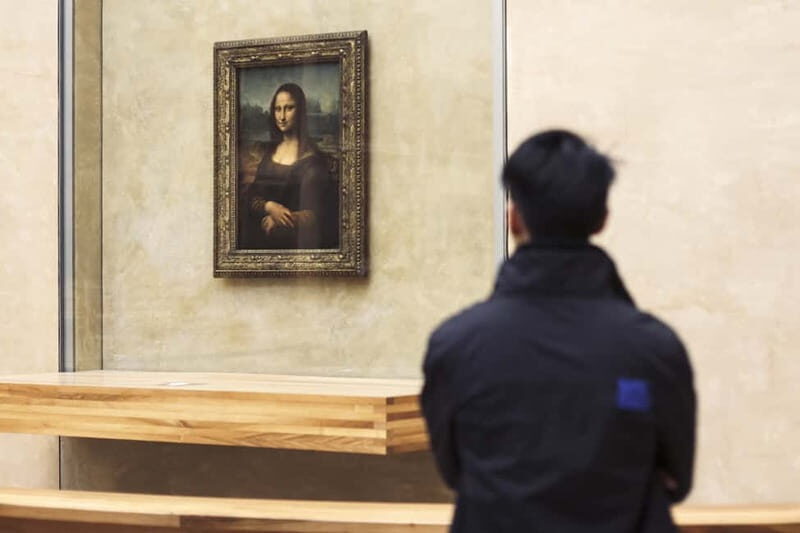
The payoff comes at the end. You’ll head to the Mona Lisa room for a dedicated 30 minutes, including a photo stop, and then you get freedom to stand close and take your time as the doors prepare to close. That’s where the tour earns its name. It’s not about avoiding every visitor. It’s about having enough room to actually look—eyes up, details in focus, and time to think about why her expression drives people a little bit mad.
If you’ve ever seen the Mona Lisa from a distance like it’s a distant planet, this is the antidote. The guide’s job isn’t just to point at her. It’s to help you notice what makes the painting so endlessly discussed, from her subtle expression to the way light and composition guide your attention.
Just know the trade-off: late timing means you may feel the museum fatigue in your legs. Bring good shoes and accept that this is a walking-focused experience, not a sit-and-stare museum stroll.
Other Mona Lisa tours at the Louvre


Meeting at Arc de Triomphe du Carrousel: starting location details that matter
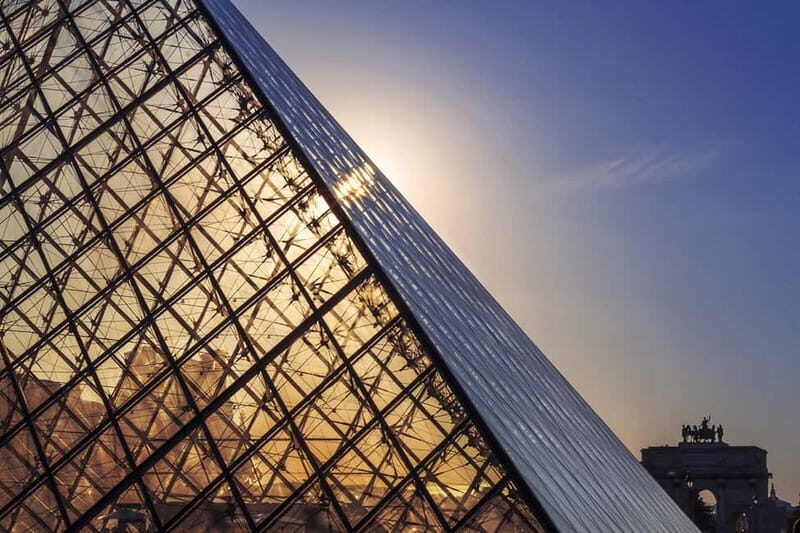
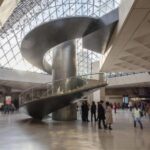
Where you start matters here because the Louvre area has multiple landmarks that look similar at first glance. You meet at the statue next to the Arc de Triomphe du Carrousel, in front of the Louvre Museum and opposite the pyramid entrance at the Tuileries Gardens.
There’s one easy “don’t get it wrong” detail: it is not the Arc de Triomphe de l’Etoile up on the Champs-Élysées. The correct spot is the one by the Tuileries side, close to the Louvre’s main approach.
Arrive 15 minutes early. Your guide will be holding a green Walks sign. From the arc, face it and look for the winged statue on the left. That’s your meeting point.
This is also one of those tours where arriving on time helps the whole group. A smooth start means fewer delays and a better chance of staying on schedule as you move through security and galleries.
Skip-the-line entry and headsets: how you save real time in the Louvre
Skip-the-line isn’t just marketing here. The Louvre has layers of queuing—ticket checks, security checks, and then the slow grind of people funneling into popular galleries. Your tour includes skip-the-line entry to get you inside more quickly, and the group stays together so you aren’t hunting your place once you’re through.
Inside, you’ll also have headsets, which is a big deal in a museum like the Louvre. The guide can talk clearly while you keep moving. You won’t have to stop every ten feet to ask what you missed. In practical terms, it means more listening and less tugging at your group’s pace.
The tour is in English and led by an art historian. That combination is what turns a list of famous paintings into a sequence you can understand. You’re not just collecting names. You’re learning what each work is doing in its own moment and why it later mattered to artists who came after.
You’ll also be in a small group setting with a max of 15 guests. That keeps the guide’s instructions workable, and it helps you avoid that classic big-tour problem: hearing less and standing more still than you want to.
The highlights route: how the stops build meaning (not just famous names)
You’ll tour about 2.5 hours with a focused sweep through essential areas, with smart stops that connect art to ideas. The order helps. It moves from the Louvre’s physical history into sculpture, then into painting and French events—so the museum feels like a story instead of a scrapbook.
Louvre foundations at the moat
The tour begins by looking at the palace’s foundations at the moat. Even if you came for the art, this stop is a nice reset. The Louvre isn’t only a gallery. It’s also a monument that changed shape over centuries. Seeing its foundations early helps you understand why the building feels layered, with different eras stacked on top of each other.
Other evening and night Louvre tours in Paris



Classical Greek sculpture: where Venus and Victory do their work
Next comes the classical Greek statues. This is the part that often surprises people because it’s not what they think they’re paying for. But it’s important. These works teach you how Renaissance and later artists thought about proportion, pose, and idealized beauty.
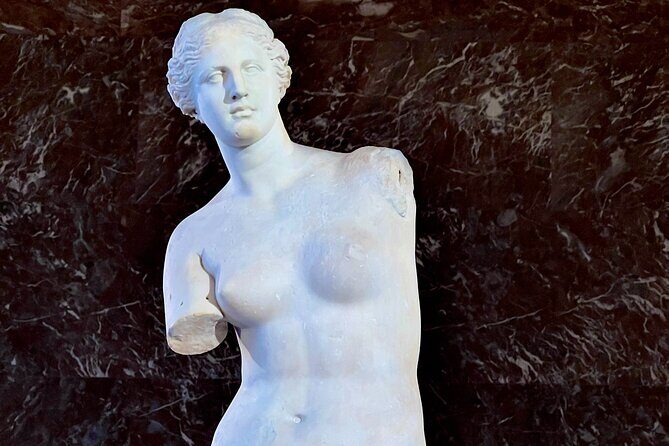
You’ll spend time finding and seeing Venus de Milo and the Winged Victory of Samothrace. The best part here is not just spotting them. It’s that the guide’s explanations help you read the sculpture’s language: motion, balance, and the drama in the details.
Cupid & Psyche and Michelangelo’s Slaves
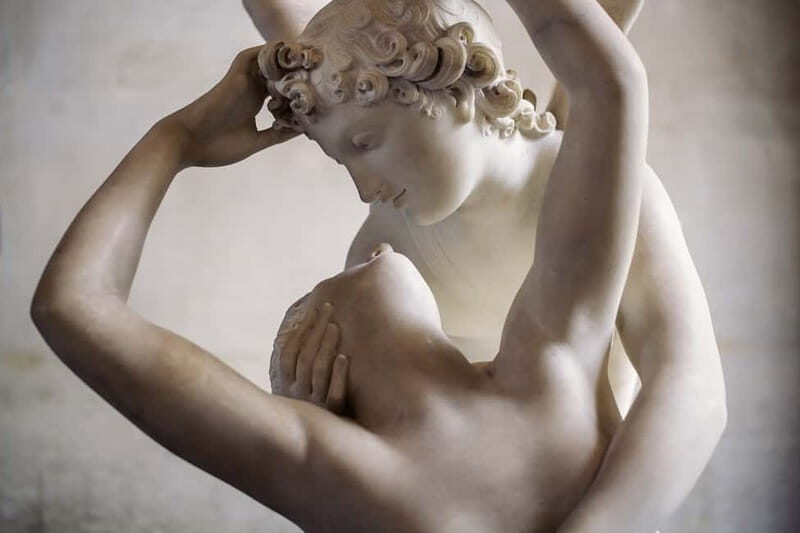
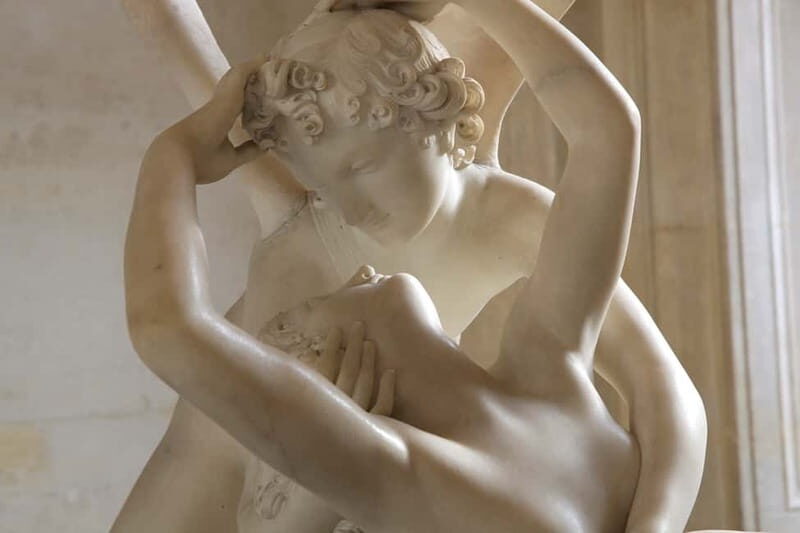
From Greek sculpture, the route shifts into works that show how artists kept borrowing from older ideals while also pushing different emotions. Cupid & Psyche is a great example of myth turned into visual persuasion: love, tension, and storytelling in the way bodies interact.
Then you’ll see Michelangelo’s Slaves. If you’ve ever wondered why those figures look like they’re straining to get free, here’s your answer: the sculptures are built around the drama of constraint. The guide helps you look longer than you would alone.
Delacroix and French history in plain sight
Then comes Delacroix’s Liberty Leading the People. This painting isn’t just famous because it’s dramatic. It’s famous because it links art to political energy. When you’re seeing it on a timed tour, you get the useful context fast, so it hits with full force instead of just being a recognizable image.
Painting stops: Caravaggio, Raphael, and da Vinci
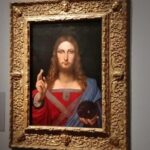
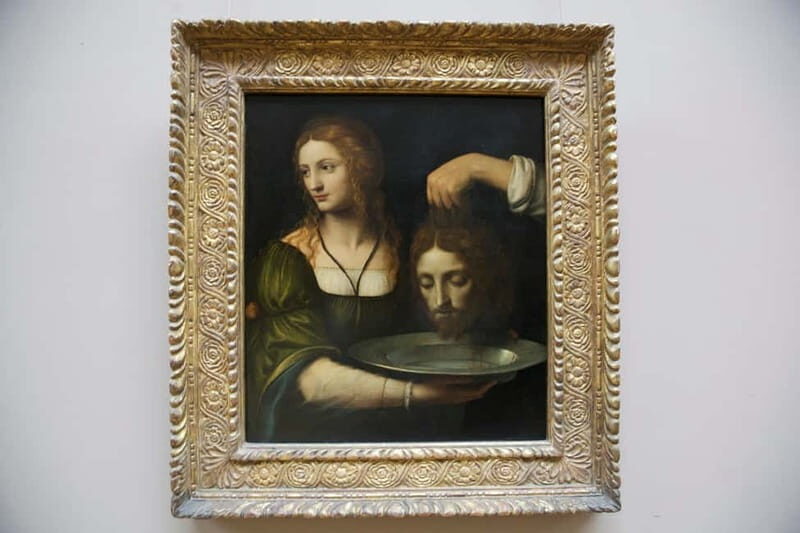
You’ll also cover major painting names—Caravaggio, Raphael, and da Vinci—in the flow of the tour. This is where you start to see how styles talk to each other across time: contrast, composition, light, and how artists guide your eye through the frame.
If your museum instinct is to rush from one headline to the next, let the guide slow you down for the right moments. This is one of the tours where the commentary makes the difference between seeing art and actually understanding what you’re looking at.
Géricault’s Raft of the Medusa and the Romantic mood
The route includes Géricault’s The Raft of the Medusa. Romantic painting can feel like a mood more than a lesson. The guide helps you connect that mood to the historical event behind it and why the work became a kind of emotional record.
A room sparkling with Crown Jewels
You’ll also venture inside a room with Crown Jewels. The museum has a way of shifting gears here—from deep artistic technique to the visual spectacle of power made portable. It’s a fun tonal change before your big finale.
And then, yes, you end with the Mona Lisa.
Arriving at La Joconde: close-up viewing without the scramble
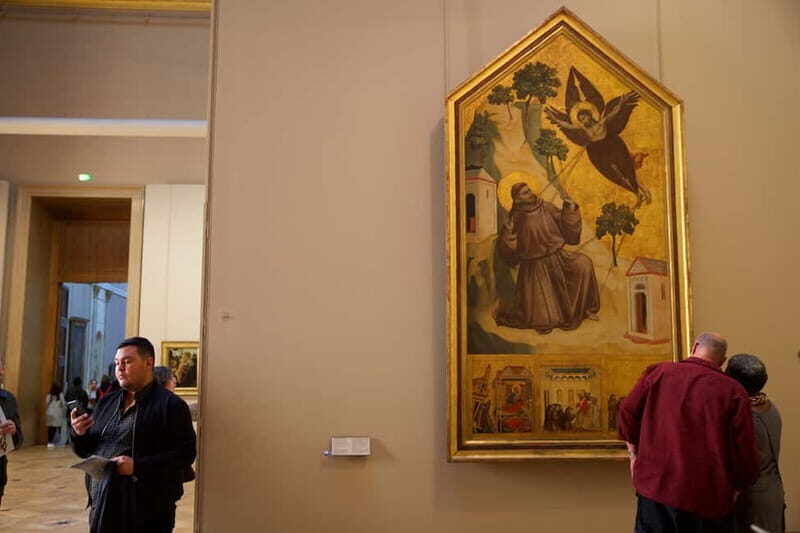
The Mona Lisa room is usually where people lose all control. They shove forward, take a shot from far away, and then drift back because they’re tired or blocked.
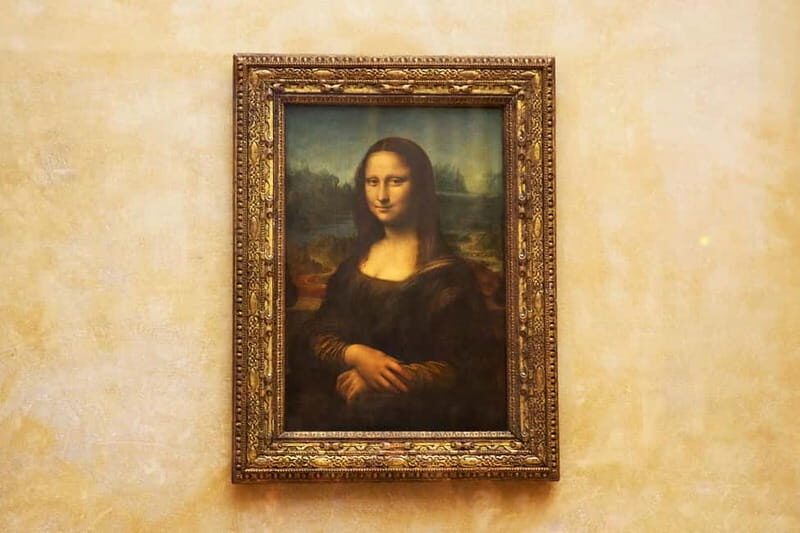
On this last-entry tour, the goal is different. You reach the Mona Lisa room at the quieter point of the day, and you get a dedicated 30 minutes that includes a photo stop. After that, you’re not forced into a rapid conveyor-belt exit. You can stand closer, step back, and re-center your gaze.
That freedom is the whole point. Mona Lisa’s magic is subtle. Her expression is ambiguous on purpose, and the more you look, the more you notice tiny shifts in how your eyes interpret her. In a crowded room, your eyes can’t settle. Here, you’re more likely to actually spend time.
I also like that the guide frames what to look for before you reach her. So you arrive with a plan, not just awe. It makes the experience feel personal, not chaotic.
When you’re done, you’ll leave the museum and say goodbye to the guide. It’s an ending that feels like a conclusion, not a restart.
The art historian factor: what makes the tour feel worth it
The loudest praise for this tour is the guide experience. People consistently highlight guides with a story-first approach, humor, and the ability to connect art to the moment it came from.
Names that often show up in guide-led versions of this tour include Hugo, Laurence, Violette, Lee, Bel, Claire, Daniel, Antoine, Adam, Manuel, and Abby. Across those guides, the common thread is how they explain what you’re looking at and why it mattered—social context, artistic technique, and the historical events wrapped around the artwork.
You’ll also feel how a small group changes the vibe. With max 15 guests, your guide can give clearer directions, keep people from getting lost, and answer questions without the tour turning into a shouting match.
A practical bonus: headsets let you keep listening while you move. That helps you avoid that awful museum feeling where you stop to ask a question and then lose your place for the next work.
And the pace is designed for a 3-hour window. That means it’s intense enough to feel effective but not so long that you completely burn out before reaching the Mona Lisa.
Price and value: is $97 for 3 hours a smart buy?
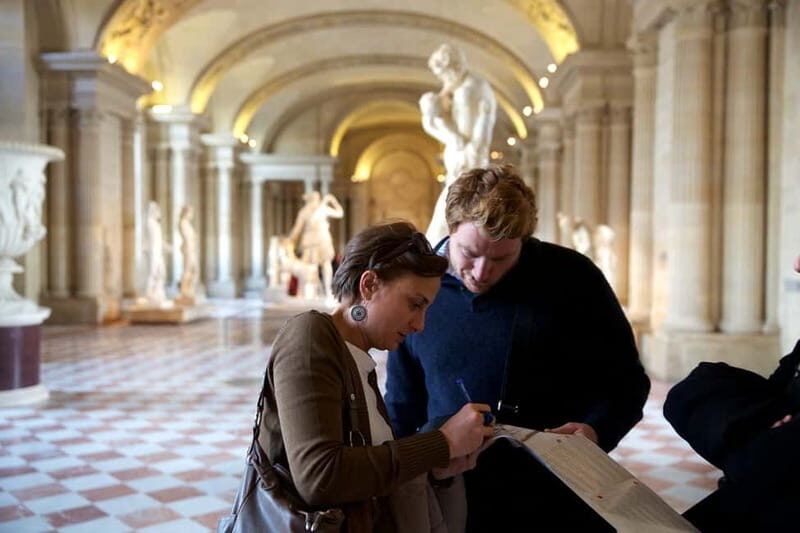
At $97 per person for a roughly 3-hour guided experience, you’re paying for three things that add up in the Louvre:
- Skip-the-line entry, which can save you the most painful part of the day.
- An art historian guide, which turns “famous painting” into something you can actually understand.
- A tight, timed route with headsets and a small-group size that helps you move efficiently.
If you’re doing the Louvre on your own, you still have to build your own route, deal with the same security and entry maze, and hope you pick the right order. This tour essentially handles the planning for you and concentrates on the essentials, including a long enough Mona Lisa moment to matter.
Also consider the timing. Late-entry options are often cheaper than you’d expect for prime-world sites, but here the value is more about comfort. You’re buying a better viewing environment, not just tickets.
You won’t get hotel pickup or drop-off, so factor in your own transport to the meeting point. That’s normal for this kind of tour, but it’s still a real cost in time and effort.
Before you go: comfort, timing, and what you can’t bring
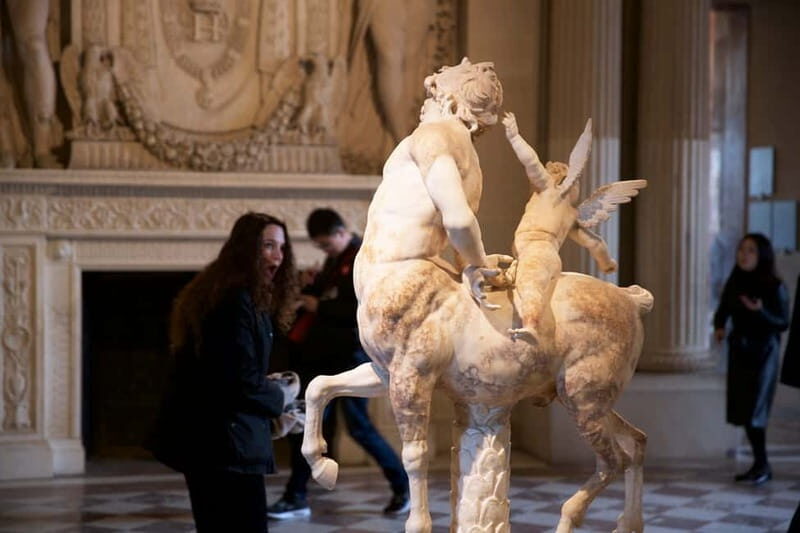
This is a walking tour. You should be able to walk at a moderate pace without trouble. Bring comfortable shoes because you’ll be moving through multiple museum areas in a limited time window.
You also need a passport or ID card. For a museum stop like the Louvre, that’s the kind of detail that can ruin your day if you forget it.
Some items are not allowed: baby strollers and luggage or large bags. If you travel light, you’ll have an easier time at entry and within the galleries. If you’re used to bringing a big daypack, you may need to rethink it.
This tour also isn’t suitable for people with mobility impairments or wheelchair users, and it’s not set up for strollers. If you need an accessible option, it’s worth looking for a different format.
Finally, note that areas visited can be subject to closure. Your guide may modify the route on the day. That’s not a flaw in the plan—it’s how a massive museum works.
Who should book this Mona Lisa last-entry tour
I’d point you toward this tour if you fit one of these profiles:
- You have limited time in Paris and want the Louvre essentials without spending hours building your own route.
- You care about art context, not just seeing the headline works.
- You hate standing shoulder-to-shoulder at crowded masterpieces.
- You like small-group tours where the guide can guide, not just lecture.
You might skip it if you’re looking for a slow, open-ended museum day. This isn’t that. It’s a planned highlights route built for a 3-hour window and a focused finish.
Should you book this tour or do the Louvre on your own?
Book this tour if your main goal is to see the Mona Lisa with breathing room and also understand why the works around it matter. The last-entry timing plus skip-the-line entry is a strong combo, and the small group size makes the experience feel manageable inside a huge museum.
Do it yourself instead if you want to roam freely, chase specific wings at your own rhythm, or you’re not up for a walking-based schedule. The Louvre can reward slow wandering, but you’ll trade that freedom for longer lines and a tougher time reaching the Mona Lisa without a crowd squeeze.
If you’re still deciding, here’s the simple rule: if your feet are up for a focused 3-hour push, this tour is a smart way to get close to La Joconde and leave feeling informed, not just overwhelmed.
FAQ
How long is the Louvre Mona Lisa without the crowds last entry tour?
It lasts 3 hours in total.
Where does the tour start?
You meet at the statue next to the Arc de Triomphe du Carrousel, opposite the pyramid at the entrance of the Tuileries Gardens. When facing the arc, meet at the winged statue on the left.
Is there skip-the-line entry?
Yes. Skip-the-line entry to the Louvre Museum is included.
Is the tour in English?
Yes. The live tour guide speaks English.
What is the group size?
This is an intimate small group with a maximum of 15 guests.
What do I need to bring?
Bring a passport or ID card and wear comfortable shoes.
Is it suitable for wheelchairs or strollers?
No. The tour is not suitable for guests with mobility impairments or wheelchair users, and baby strollers are not allowed.