REVIEW · PARIS
Paris Louvre Guided Tour To Mona Lisa
Book on Viator →Operated by Adventour · Bookable on Viator
Mona Lisa, but with actual context. I like the small-group setup that helps you ask questions and actually hear the guide, and I also like that your Louvre admission is included (the adult ticket is listed as €22). One possible drawback: with a 1–2 hour pace, the explanations have to be short, so you may want extra time in the museum afterward if you crave deep detail.
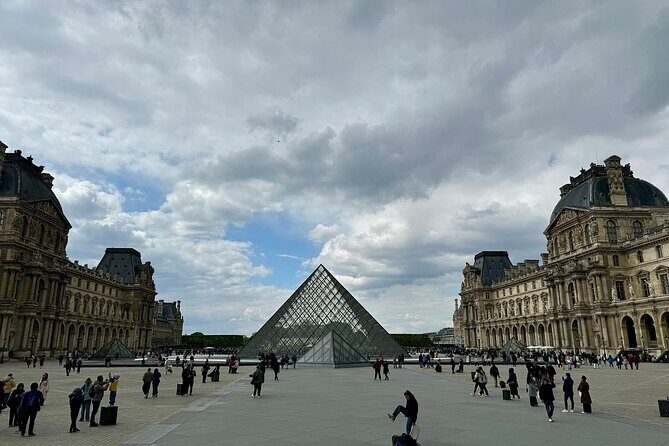
This is an English tour capped at 25 travelers, starting at Arc de Triomphe du Carrousel (Pl. du Carrousel, 75001 Paris) and ending back there. If you get a strong guide and the day runs smoothly, it’s a very practical way to tackle the Louvre without losing hours to confusion.
In This Review
- Key Things I’d Bet On
- Price and Logistics: What You’re Really Paying For
- Getting Inside the Louvre: A Fast Start That Helps
- Stop One: Mona Lisa and the Art You’ll Spot Right Away
- Venus de Milo: Why This Sculpture Still Holds Attention
- Winged Victory (Nike) and the Feel of Motion
- Napoleon’s Coronation and Liberty: Two Big Paintings in One Breath
- The Raft of the Medusa: Emotion, Aftermath, and Why It Matters
- Ancient Egypt at the End: The Large Sphinx of Tanis
- How the Guide (and Audio) Affects Your Enjoyment
- Time Management: How to Get Value in 1–2 Hours
- Who This Tour Is For (and Who Might Prefer DIY)
- Safety Net: When Things Go Wrong
- Should You Book This Louvre Guided Tour?
- FAQ
- How long is the Louvre Mona Lisa guided tour?
- Where does the tour start and end?
- Is the Louvre admission ticket included in the price?
- What languages is the tour offered in?
- What’s the maximum group size?
- Who qualifies for free admission to the Louvre?
- Can I cancel for a full refund?
Key Things I’d Bet On
- Small-group size (max 25) makes it easier to stay together and get personal attention.
- Mona Lisa is paired with other “must-sees” like Venus de Milo and the Winged Victory of Samothrace.
- Egypt shows up in a real way with the Large Sphinx of Tanis from the museum’s collection.
- You get ticket + tour in one package, so you’re not hunting for entry details mid-trip.
- Audio devices may depend on group size, and in one case a very small group didn’t have headsets.
- Guide quality can swing, with at least one standout guide named Violet earning high praise.
Price and Logistics: What You’re Really Paying For
At $95.03 per person for about 1–2 hours, you’re paying for two things: a guided route through a huge museum and a bundled entry ticket. The adult Louvre admission is listed as €22, and the tour includes all fees and taxes, so the price feels more “all-in” than many add-on tours.
Is it cheap? No. But it can be good value if you’re the type of visitor who wants to see specific works without spending your energy figuring out where to go next. The Louvre is easy to overplan, and then you realize you’ve spent most of your trip standing in the wrong hallway.
The meeting point is clear and central: Arc de Triomphe du Carrousel in the 1st arrondissement. The tour ends back at the meeting point, which is handy because you can plan the rest of your day without guesswork.
One practical consideration: the museum opening time can affect lines. In one situation, late opening meant larger crowds and some extra waiting at entrances. That’s not something you can control, but it’s worth knowing that your “skip-the-line” experience can still vary when the Louvre is running behind.
Other guided Louvre Museum tours in Paris



Getting Inside the Louvre: A Fast Start That Helps
The tour’s whole advantage is what it saves you from. The Louvre is enormous, and even with a map, you can burn time just getting your bearings. With a guided start, you’re essentially buying a head start.
This tour is designed as a concentrated highlights visit, not a slow wander. You’ll move from major painting and sculpture moments to an Egyptian stop, staying focused on pieces people actually remember.
The group limit of 25 helps you keep momentum, too. If the group is smaller, it’s easier to pivot when you hit a bottleneck or the guide needs to reroute around temporary crowd flow.
Stop One: Mona Lisa and the Art You’ll Spot Right Away
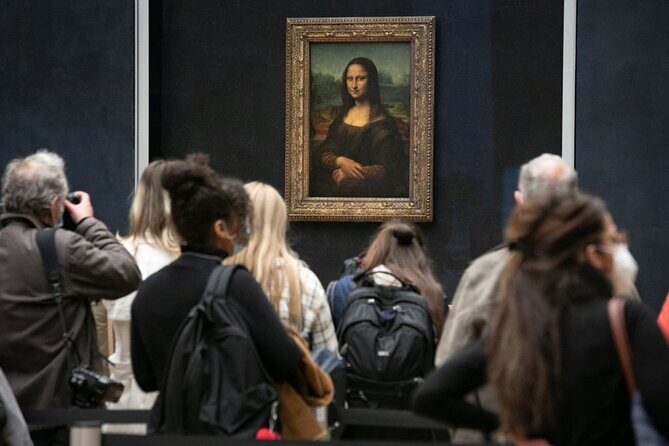
Yes, Mona Lisa is the magnet. The guide will bring you to La Joconde, Leonardo da Vinci’s portrait with its famous smile and strong “how did they do that?” factor. Even if you’ve seen images online, the real painting is smaller than many people expect, and that’s why seeing it in a guided flow works well: you’ll know what to look for and you won’t lose time just staring at the crowd.
The important part for your experience isn’t the painting itself—it’s how the tour frames it within the Louvre’s broader mix of eras. You’re not just checking off a famous face. You’re getting a quick sense of why the Louvre attracts people for centuries.
From there, the tour also moves quickly into sculpture territory, which helps because sculpture has a different “read” than paintings. When you switch mediums in a short window, your brain stays alert.
Venus de Milo: Why This Sculpture Still Holds Attention

Next up is Venus de Milo, an ancient Greek statue often linked to Aphrodite, famously missing her arms. It’s one of those works where the absence becomes part of the story.
With a guided stop, you’ll get more than the basic identification. You’ll typically be pointed toward what makes the statue compelling: the pose, the proportions, and how your eye travels across the figure even without the details people expect.
If you tend to rush through sculptures on your own, this is a good way to train your eye fast. You’ll likely feel yourself slowing down at least a bit, because you’re not alone in deciding what to notice.
Winged Victory (Nike) and the Feel of Motion
The Winged Victory of Samothrace is all about movement. It’s Hellenistic sculpture depicting Nike standing on the prow of a ship, and the setting makes the whole work feel dramatic even before the guide explains anything.
This stop is a nice contrast to the Mona Lisa. Paintings often demand close viewing and then you step away; this kind of sculpture is different. You can often understand it better by adjusting your position slightly, like standing a little to the side and looking at the angle.
A short guided visit here is useful because you’ll learn what to focus on: how the drapery reads as wind, how the figure’s stance conveys balance, and why the “ship prow” context matters.
Other Mona Lisa tours at the Louvre






Napoleon’s Coronation and Liberty: Two Big Paintings in One Breath
Then the tour shifts into paintings with dramatic national themes. You’ll see Jacques-Louis David’s The Coronation of Napoleon (Le Sacre de Napoléon), which is grand and theatrical in its composition, and Eugène Delacroix’s Liberty Leading the People (La Liberté guidant le peuple), linked to the July Revolution of 1830.
Here’s where a guide can make or break the experience. These two paintings are dense with symbolism, and without interpretation they can feel like you’re standing in front of impressive images that you don’t fully understand. If your guide is strong, you’ll walk away with at least one clear takeaway—like what the figures represent, why the arrangement matters, and how art became political language.
Based on one high-rating guide experience (Violet), a great guide can genuinely turn these moments into something you remember. Based on a less satisfying experience, some guides may keep the commentary very brief and focus more on getting you to each stop. That doesn’t make the art less impressive, but it affects your confidence that you got value beyond sightseeing.
The Raft of the Medusa: Emotion, Aftermath, and Why It Matters
Next is Théodore Géricault’s The Raft of the Medusa (Le Radeau de la Méduse), which depicts the aftermath of a shipwreck. This is the kind of painting that hits emotionally fast, because the scene feels chaotic and human.
Even in a short stop, you can usually get something out of it: you’ll notice composition, expressions, and how the painting pushes viewers to feel urgency rather than distance. The guided component is helpful if the guide explains the context so you understand the painting isn’t just dramatic storytelling—it’s also commentary.
If you’re the type who likes to connect art to real events, this is one of the most worthwhile stops on the route.
Ancient Egypt at the End: The Large Sphinx of Tanis
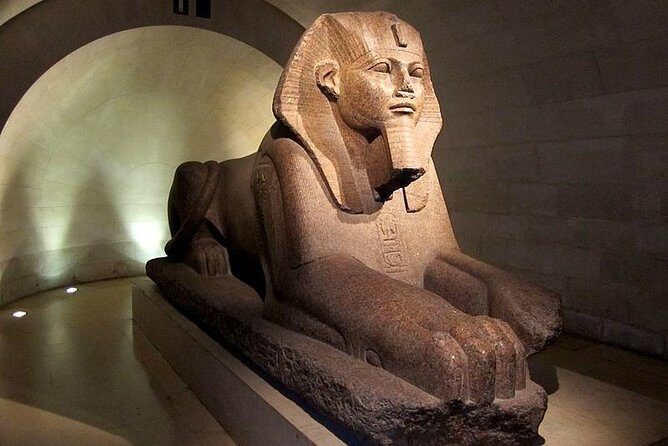
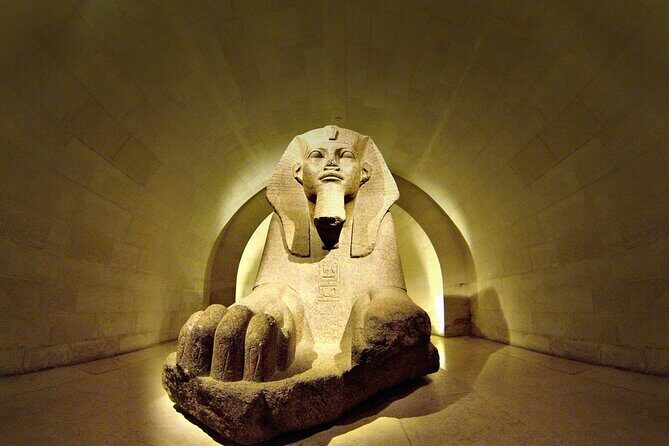
The tour doesn’t end at paintings. It also includes an ancient Egyptian sculpture: the Large Sphinx of Tanis. This is where the Louvre’s scale really shows—one museum, many worlds.
A sphinx can be visually impressive even without context, but what makes the stop valuable is the museum connection. You’ll get a sense that the Louvre isn’t just European “high art” on repeat—it has a long, serious Egyptian presence.
The tour describes this piece as showing off the museum’s Egyptian collection. For you, that means you’re getting a wider slice of the Louvre’s identity in a tight timeframe.
How the Guide (and Audio) Affects Your Enjoyment
This tour experience is only as good as its human factor, and the reviews point to two repeat themes: attention level and audio clarity.
One person praised Violet as an amazing tour guide and said they’d happily spend the whole day with her. That tells me this tour can be more than a race to photos if your guide is willing to talk and adapt to the group.
On the other hand, there have been disappointments where the tour felt more like a quick escort to the Mona Lisa with limited explanation. If you want more interpretation, it helps to arrive with at least a few questions in mind. Ask things like why a painting is arranged the way it is, or what detail people often miss.
Audio devices are another practical point. There’s an important detail: audio devices are provided for groups more than five people, but for a group of four, no headset was used and the response said you could hear the guide well. So if you’re sensitive to sound in a crowd, aim for a time/date when the group size is likely larger—or just position yourself closer to the guide.
Also note that on days with late openings, entrance lines can spike. In one instance, people were directed to different entrances and it cost time, even though the tour included fast entrance expectations. That’s a reminder that crowds aren’t a “tour company problem” only—they’re a Louvre problem.
Time Management: How to Get Value in 1–2 Hours
This tour is a sprint with guided landmarks. You’re not going to “see the whole Louvre.” You’re going to see a targeted set of works that represent big categories: portrait painting, classical sculpture, Hellenistic energy, revolutionary and imperial politics, and Egyptian antiquity.
That can be perfect if your plan includes other Paris stops that actually require time (food, walks, neighborhoods, day trips). But if you’re a slow museum reader, this tour can feel like you barely started.
Here’s how I’d make it work for you: treat it as your orientation and highlights filter. After the tour, you can return on your own to linger where something genuinely grabbed you—maybe the painting that hit emotionally, or the sculpture you kept thinking about.
Who This Tour Is For (and Who Might Prefer DIY)
I’d recommend this tour if you meet at least two of these:
- You want specific works without spending your prime museum time navigating.
- You enjoy short, guided context rather than hour-long lectures.
- You’re traveling on a tight schedule and want the Louvre checked off efficiently.
- You’d rather pay for someone to manage crowd flow than roll the dice with a self-guided route.
You might hesitate if:
- You’re expecting deep, extended commentary on every artwork.
- You need constant audio support in crowded spaces (headsets may depend on group size).
- You’re the type who wants to linger for long stretches and read every label.
In other words, it’s well suited for “I want the main hits, explained just enough” days.
Safety Net: When Things Go Wrong
Once in the feedback, a guide was reportedly escorted out of the Louvre shortly after entering due to a forgotten license, and a full refund was mentioned in the provider response. That’s rare, but it’s a reminder to keep expectations realistic: museum operations and staff rules can affect tours.
If you run into problems on the day, stay calm and document what happens with the tour operator through the proper messaging channels you’ll use for your booking. Then follow up promptly so you have a record of timing and communication.
Should You Book This Louvre Guided Tour?
Book it if you want a high-impact overview: Mona Lisa plus major sculpture and painting stops, with the Louvre ticket handled for you and a small group that can lead to real interaction. The price can feel fair when you factor in the included ticket and the time saved in a museum that’s easy to overcomplicate.
Skip it or consider a different option if you strongly value long explanations at each stop. This tour is built for efficiency, and some experiences can feel like you’re moving from one famous artwork to the next. If you go, go with the mindset of highlights and orientation, then plan your longer lingering moments on your own right after.
If you’re lucky with your guide—like Violet appears to be—this can turn a crowded must-see into a much more meaningful visit.
FAQ
How long is the Louvre Mona Lisa guided tour?
It runs about 1 to 2 hours.
Where does the tour start and end?
The meeting point is Arc de Triomphe du Carrousel, Pl. du Carrousel, 75001 Paris, France, and the tour ends back at the meeting point.
Is the Louvre admission ticket included in the price?
Yes. The tour includes a Louvre admission ticket (listed as a €22 entrance ticket to the museum for adults).
What languages is the tour offered in?
The tour is offered in English.
What’s the maximum group size?
The tour/activity has a maximum of 25 travelers.
Who qualifies for free admission to the Louvre?
Free admission applies to visitors under 18 and EEA residents under 26, with valid ID and proof of residency.
Can I cancel for a full refund?
Yes. You can cancel up to 24 hours in advance for a full refund.