REVIEW · PARIS
Paris: Louvre Guided Tour with Skip-the-Line Entry Tickets
Book on GetYourGuide →Operated by HISTORY GROUP 1 · Bookable on GetYourGuide
Your Louvre shortcut starts at Arc du Caroussel. This skip-the-line Louvre tour gets you into the museum faster with an English live guide, starting at the Arc du Caroussel.
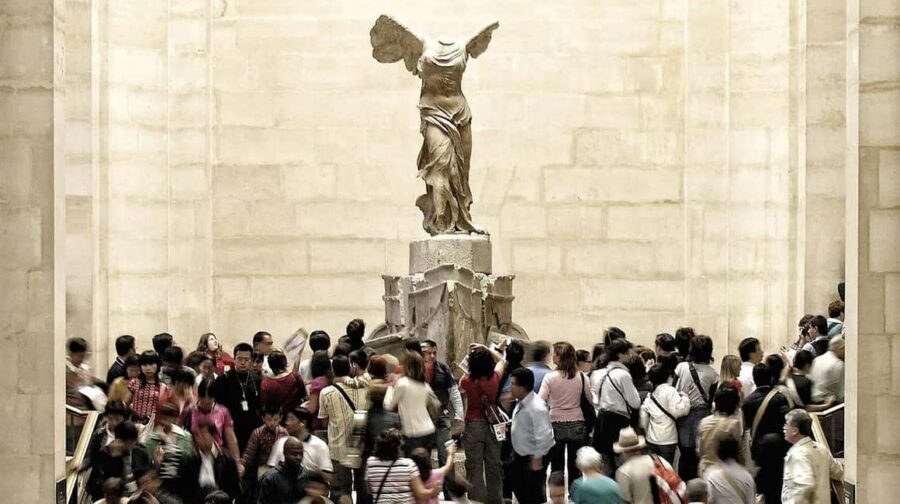
What I like most is the chance to see the big names without wandering in circles: Mona Lisa and the Winged Victory of Samothrace are built into the route. I also appreciate how a guide helps connect art styles across eras, so the museum feels like a story instead of a room full of frames.
One thing to think about: if it’s very crowded, the group can feel harder to manage and you may need to stay alert to keep hearing your guide.
In This Review
- Key highlights to know before you go
- Skip-the-Line Entry at Arc du Caroussel: Time Saved, Less Stress
- Two Hours Inside the Louvre: How the Tour Rhythm Works
- Mona Lisa and Winged Victory: The Stops That Make the Ticket Feel Worth It
- The Guide’s Job: Turning Art History Into Something You Can Follow
- Practical Stuff That Actually Affects Your Visit
- Price and Value: Is $87 a Good Deal for the Louvre?
- Who This Tour Suits Best (and Who Might Prefer Something Else)
- Should You Book This Louvre Tour?
- FAQ
- Where do I meet the guide?
- How long is the Louvre guided tour?
- Is the guide English-speaking?
- Does this tour include skip-the-line entry?
- Can I stay in the Louvre after the guided portion ends?
- What should I bring with me?
- Are big bags allowed in the museum?
- Can I take photos or film during the tour?
- What is the cancellation policy?
Key highlights to know before you go
- Skip-the-line entry via a separate entrance so you spend less time queueing at security and more time looking at art
- English live guide who explains what you’re seeing and why it mattered
- Major masterpieces included like Mona Lisa and the Winged Victory of Samothrace
- Art-style timeline approach from ancient civilizations through later periods
- About 2 hours on the clock, with some natural pauses built into the pace
- After the tour, you can stay inside as long as you want
Skip-the-Line Entry at Arc du Caroussel: Time Saved, Less Stress
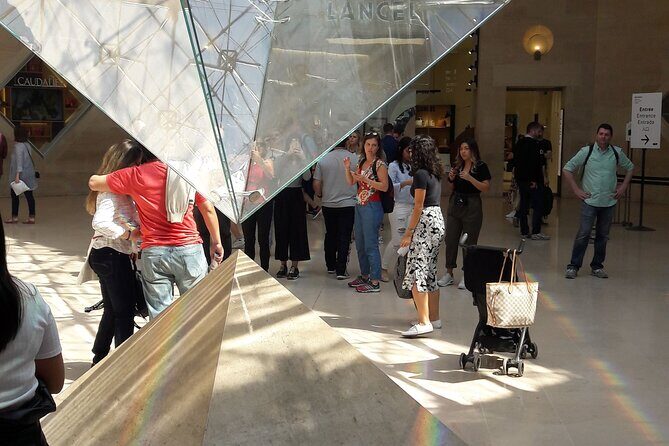
This tour starts at the Arc du Caroussel, which is a helpful anchor point in a museum area that can feel chaotic. The big practical win is the skip-the-line entry. Instead of spending your morning stuck behind other visitors trying to get through the same bottleneck, you use a separate entrance designed for the tour group.
That matters because the Louvre’s “line” isn’t one simple line. It’s a mix of security checks, crowd control, and people moving at different speeds. If you’re traveling with limited time, skip-the-line access is the difference between a satisfying highlights visit and a rushed scramble.
A small heads-up: in peak season, security checkpoints can take longer simply because there are so many people. So even with a separate entrance, I’d still expect a bit of waiting once you’re in the system—just not the long, dead-still queue you’re trying to avoid.
Other guided Louvre Museum tours in Paris



Two Hours Inside the Louvre: How the Tour Rhythm Works
The tour runs for 2 hours with a live English guide. In that time, you’re not trying to see everything the Louvre has to offer. Instead, the format is built to help you focus on the most recognizable masterpieces and the connections between them.
Here’s what that typically feels like: you’ll walk through sections of the museum with your guide, stop at key works, and get explanations that you can actually use. One review mentioned downtime, which is a good sign that the pace isn’t just sprint-and-point. Museums can be physically exhausting, and a little breathing room can help you absorb what you’re seeing.
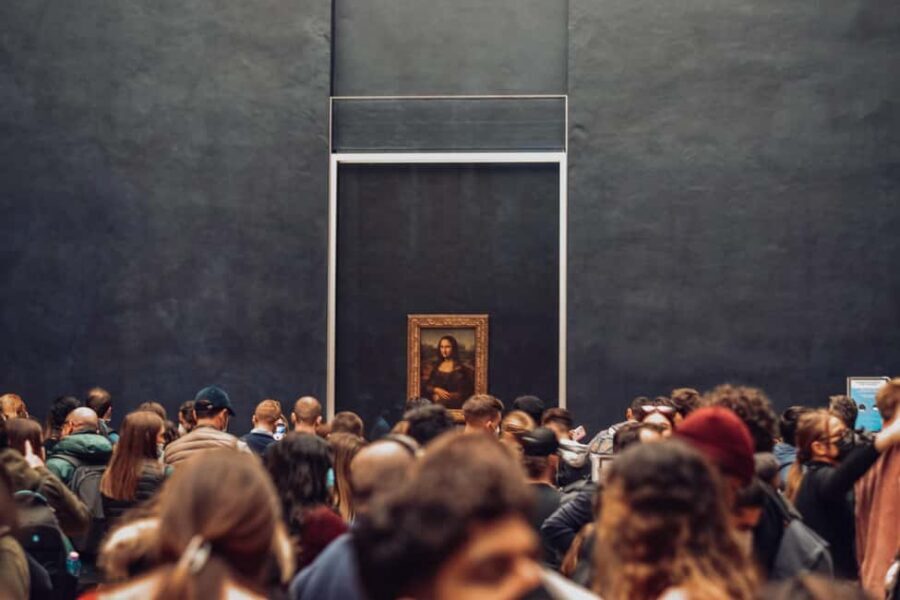
Another consideration: some groups can get noisy or hard to hear in heavy crowds. If your guide is moving the group along quickly, you’ll want to stay close enough to hear. If you’re hard of hearing or know you’ll struggle with crowd noise, choose your spot in the group carefully and keep your attention on the guide, not just the paintings.
Mona Lisa and Winged Victory: The Stops That Make the Ticket Feel Worth It

Let’s talk about the two names that pull most people toward the Louvre in the first place.
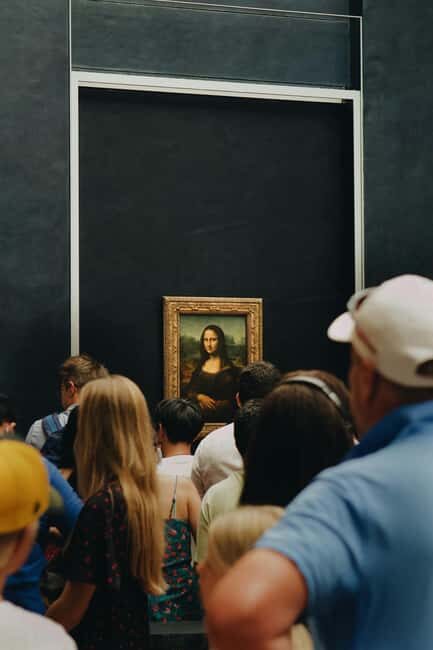
You’ll see the Mona Lisa, and that’s not just a tourist-box check. With a guide, you’re more likely to understand why it’s famous and what to look for besides the face—like how the painting’s mood and technique affect your perception. In a museum where everything is visually intense, having context helps you slow down for even a minute or two.
Then there’s the Winged Victory of Samothrace. This is one of those sculptures that looks impressive from far away, but turns into something special when you understand its historical style and the impact of the pose. The guide-led explanations help you read the sculpture as an artwork from a specific time period—not just a dramatic statue you pose next to.
If you’re the type who gets overwhelmed by museum scale, these major anchors are a lifesaver. You leave with images you actually remember, plus a few clear takeaways about how art changed over time.
The Guide’s Job: Turning Art History Into Something You Can Follow

One reason this tour works for many people is the “art across centuries” approach. Instead of treating the Louvre like a list of masterpieces, your guide connects works to broader shifts in how people made art.
Expect to hear about the evolution of art styles—from ancient civilizations through later periods like the Renaissance and beyond. That framework helps you notice patterns. You start seeing differences in technique, symbolism, and what artists were trying to communicate in their own historical moment.
In one experience, the guide named Ghida was described as well prepared and kind. That matters because good museum explaining isn’t just facts—it’s pacing. A strong guide knows when to give context, when to point out a detail, and when to let you look for yourself.
Also, this tour encourages questions and discussion. If you like to interact—if you want to ask what a symbol means or why a style looks the way it does—this format supports that. You’ll usually get more out of the time if you show up curious rather than just trying to “finish” the museum.
Practical Stuff That Actually Affects Your Visit
A great guided tour can still fall apart if the logistics trip you up, so here’s what you need to plan around.
Bring essentials: You’ll want a passport or ID card. Wear comfortable shoes. The Louvre involves lots of walking and standing, and your feet will be the first thing to complain.
Bag and item limits: Any item exceeding 55x35x20 cm isn’t permitted in the museum. If you travel with a larger bag, it’s worth planning ahead so you don’t get stuck deciding what to store at the last minute.
Security timing: During peak season, security checkpoints may take longer due to visitor volume. This is one reason skip-the-line helps but doesn’t guarantee a zero-wait entry.
Photography rules: Photography and filming are strictly prohibited in the temporary exhibition room. The data you have doesn’t say whether other areas allow it, so the safest approach is to treat it as “ask and watch” once you’re inside—especially near any special displays.
After the tour: Once your guided portion ends, you can stay at the Louvre as long as you like. That’s a big deal. If you finish the highlights and want to linger—especially around the areas you just learned about—you’re free to do it.
Other Louvre Museum entry tickets in Paris






Price and Value: Is $87 a Good Deal for the Louvre?
At $87 per person for a 2-hour guided experience with skip-the-line tickets, this isn’t a bargain, but it’s also not priced like a luxury tour. The value depends on what you’re optimizing for: time, clarity, or cost.
Here’s the value math I’d use:
- If you’re short on time and know you’d otherwise lose hours queuing, the skip-the-line component can be worth most of the price by itself.
- If you get more from a museum when someone explains what you’re seeing, the guide adds real value. Without that, you can still enjoy the Louvre—but you’ll likely spend more time guessing what matters and why.
- If you love free-form wandering and don’t need structure, you might prefer a self-guided visit, because you’ll have more control over pacing.
Also, the overall rating is 3.5 with 73 reviews, which suggests experiences can vary. That doesn’t mean it’s bad—it means group comfort and crowd conditions matter. If you go in expecting a highlights-focused route and staying flexible with the pace, $87 tends to feel fair.
Who This Tour Suits Best (and Who Might Prefer Something Else)
This Louvre tour is a strong fit if you want three things:
- Big-ticket artworks like Mona Lisa and the Winged Victory of Samothrace
- A clear storyline about how art evolves across history
- A plan that reduces waiting so your day doesn’t get swallowed by lines
It can be less ideal if you dislike group pacing. If you know you’ll have trouble hearing instructions in a noisy environment, or you prefer slow gallery-by-gallery exploration, you may feel a bit rushed in a 2-hour format.
If you’re traveling with friends who all want different parts of the museum, this tour may also help as a shared starting point. You can learn what’s worth chasing afterward, then split up after the guided portion while still feeling oriented.
Should You Book This Louvre Tour?
I’d book it if you’re the kind of person who wants the essentials with context. The combination of skip-the-line entry, an English guide, and guided stops at Mona Lisa and the Winged Victory of Samothrace is exactly how you turn a huge museum into something manageable.
You should think twice if you’re extremely sensitive to crowded group logistics. In very busy conditions, it’s possible to feel like you’re competing with the crowd for attention. If that’s you, consider going earlier in the day when lines are usually more manageable, and position yourself to hear your guide.
If you do book, do yourself a favor: wear comfortable shoes, bring an ID/passport, keep your bag within the size limit, and plan to treat the 2 hours as the Louvre’s greatest-hits orientation. Then use the extra time after the tour to explore at your own pace.
FAQ
Where do I meet the guide?
Meet your guide at the Arc du Caroussel.
How long is the Louvre guided tour?
The tour lasts 2 hours.
Is the guide English-speaking?
Yes, the live tour guide is English.
Does this tour include skip-the-line entry?
Yes. You get skip-the-line entry through a separate entrance.
Can I stay in the Louvre after the guided portion ends?
Yes. After the tour, you can stay in the museum as long as you like.
What should I bring with me?
Bring your passport or ID card, and wear comfortable shoes and comfortable clothes.
Are big bags allowed in the museum?
Items exceeding 55x35x20 cm are not permitted in the museum.
Can I take photos or film during the tour?
Photography and filming are strictly prohibited in the temporary exhibition room.
What is the cancellation policy?
You can cancel up to 24 hours in advance for a full refund.