REVIEW · PARIS
Private Tour with Tickets to the Louvre Museum & Crepes
Book on Viator →Operated by Bonjour Local Tours · Bookable on Viator
Paris moves fast, but this plan slows it down. You get a smart mix of big sights around Île de la Cité plus a timed-entry Louvre ticket, so you spend less time waiting and more time seeing. Then you finish with the kind of Paris break that feels like a reward, not an afterthought: crepes and a drink.
What I especially like is (1) the way the tour uses timed Louvre access to help you manage crowds, and (2) the private pacing with a guide who keeps the day organized while you connect the dots between monuments. One possible drawback: the tour includes a guide for the walking parts and timed entry, but it does not include a guide inside the Louvre itself, so plan to rely on the audioguide once you’re in.
In This Review
- Key highlights worth building your day around
- The flow: how this 4-hour plan actually feels
- Starting on Île de la Cité: the Paris origin story, in real locations
- Pont Neuf: the old bridge that still anchors the view
- Place Dauphine: a triangular square with royal roots
- Conciergerie: where French Revolution drama left its footprint
- Sainte-Chapelle: Gothic power made of light
- Notre-Dame’s area: a cathedral façade you can read like a diagram
- The Left Bank detours: books, churches, fountains, and streets
- Fontaine Saint-Michel and Rue de la Huchette: classic Paris evenings start here
- Église Saint-Séverin: old parish church, stylish Gothic rebuilds
- Shakespeare and Company: literature you can browse without rushing
- Saint-Julien-le-Pauvre: a church with Eastern Catholic ties
- Flower market views (Marché aux fleurs): a colorful pause with real policy changes
- Back toward the Louvre: city hall, a surviving tower, and the Palais-Royal galleries
- Hôtel de Ville: a city landmark shaped by conflict and rebuilds
- Tour Saint-Jacques: what’s left of a demolished church
- Palais-Royal garden: calm walking in the middle of the center
- Bibliothèque nationale (Richelieu site) and Galerie Vivienne: Paris indoors and on purpose
- The Stravinsky Fountain crepe stop: a break that feels like part of the day
- Getting to the Louvre Pyramid: the landmark entrance moment
- Louvre entry: timed access plus an audioguide, but no guide inside
- A tip for making the audioguide work for you
- Metro tickets and mobile access: small logistics, big payoff
- Price and value: does $174.60 make sense in real time?
- Who this tour fits best
- Should you book this Louvre and crepes private tour?
- FAQ
- How long is the Louvre Museum and crepes private tour?
- Is Louvre museum entry included?
- Do I get a guide inside the Louvre?
- What food is included during the crepe stop?
- What language is the tour offered in?
- Is this tour private or shared?
- Do I receive metro tickets and a mobile ticket?
- Where does the tour start and end?
- Can I cancel and get a full refund?
Key highlights worth building your day around
- Timed entry to the Louvre plus an audioguide in your language, so you’re not stuck guessing where to start.
- A crepe-and-drink stop arranged into the route right near the Stravinsky Fountain area.
- A private guide for the walking tour—you don’t have to match your pace to strangers.
- Big landmarks in a short loop: from Pont Neuf and Notre-Dame’s area to the Louvre Pyramid.
- Mobile ticket and metro tickets included, which keeps logistics simpler in the city.
The flow: how this 4-hour plan actually feels
This is a short, concentrated Paris experience. Four hours goes quickly, but it’s built to keep you moving in a way that still feels relaxed because you’re not doing it alone. You’ll start on the Île-de-France side of central Paris (75001) and finish at the Louvre Museum (also 75001), which is a big deal: it reduces the backtracking that often eats up museum time.
The route is heavy on landmark sightlines and quick stops—think bridges, squares, and iconic facades—then it funnels you into the Louvre moment with a timed ticket. That means you’re not just checking boxes. You’re setting context first, then using that context when you step into the museum. The best part is that you get to keep your own momentum; a private guide can adjust for your group’s speed while still hitting the key photo points.
Since the tour is offered in English and is private (only your group), it’s especially good if you want a guided plan but dislike the chaos of large groups.
Other private Louvre tours in Paris


Starting on Île de la Cité: the Paris origin story, in real locations
You kick off in the area where Paris has been forming and reforming for centuries. Even if you’ve seen photos of this part of the Seine, it hits differently when you’re standing on the ground.
Pont Neuf: the old bridge that still anchors the view
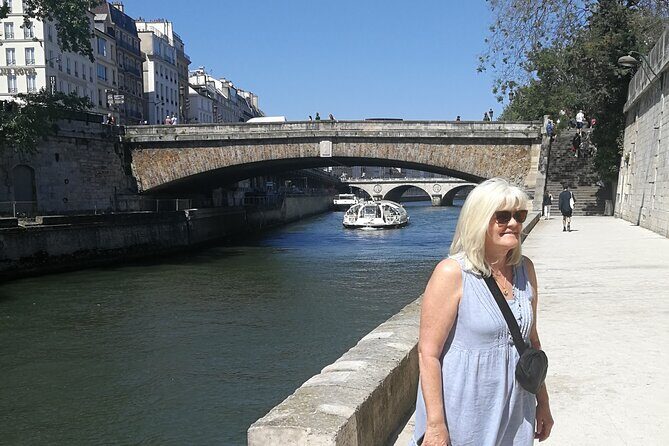
Pont Neuf is the oldest standing bridge across the Seine. You’ll stop near Île de la Cité, where Paris’ story goes way back—this island area was tied to early settlement and the later medieval heart of the city. It’s also a great opening because it gives you a wide sense of the river’s shape and the island’s role in the city.
Place Dauphine: a triangular square with royal roots
Next comes Place Dauphine, initiated by Henry IV in 1607, named for the future Louis XIII. This stop is short, but it’s one of those places where the architecture and street geometry matter. You get an easy sense of the neighborhood’s layout before you move into the cathedral-and-palace orbit.
Conciergerie: where French Revolution drama left its footprint
At the Conciergerie, the setting carries real weight. It served as a former courthouse and prison, and during the French Revolution, Marie-Antoinette was among prisoners held there before being sent to execution sites. Even if you don’t go deep into the exhibits, the building’s role helps you understand why this area became so symbolic.
Other Louvre Museum entry tickets in Paris



Sainte-Chapelle: Gothic power made of light
Sainte-Chapelle is a Gothic royal chapel, started after 1238 and consecrated in 1248. It’s famous for its soaring design and for the Passion relics connected to King Louis IX, including Christ’s Crown of Thorns—relics that later influenced where these treasures were housed. One practical reason I like this stop: it trains your eye for Gothic details before you ever reach the Louvre, so you’re noticing more than just “pretty churches.”
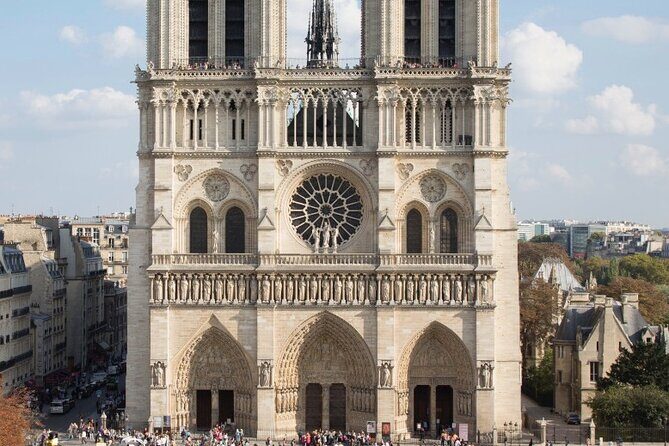
Notre-Dame’s area: a cathedral façade you can read like a diagram
Notre-Dame de Paris is one of the most recognizable buildings in the world, but here you get the specific architectural points: rib vaulting and flying buttresses, rose windows, sculptural decoration, and even the presence of large bells and organs. You’re not expected to memorize it, but you’ll be better prepared to spot features when you’re looking up.
If you’ve got limited energy for interiors, this is still valuable. The stops are structured so you see the meaning in the exterior form.
The Left Bank detours: books, churches, fountains, and streets
After the Île de la Cité core, the tour shifts toward the Left Bank vibe—more neighborhood texture, with landmark stops that feel less “monument museum” and more “Paris in motion.”
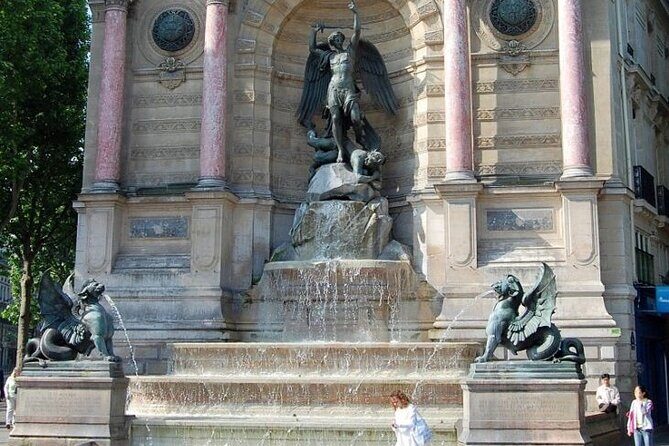
Fontaine Saint-Michel and Rue de la Huchette: classic Paris evenings start here
You’ll pass by Fontaine Saint-Michel, a monumental fountain built in the mid-1800s (1858–1860). It’s listed as a monument historique, so it’s not just decorative. The timing of the stop also matters because Place Saint-Michel is naturally central to walking energy.
Then Rue de la Huchette: one of the oldest streets along the Rive Gauche, today known for its pedestrian feel and restaurant cluster—Greek specialties are common here. It also has an active pub and bar scene. If you’re the kind of person who likes to experience the city as people actually live it, this segment adds that texture without taking the whole day hostage.
Église Saint-Séverin: old parish church, stylish Gothic rebuilds
Église Saint-Séverin began in 1230 and was rebuilt after a fire, with expansions in the 15th to 17th centuries. It’s described as Flamboyant Gothic in parts and is one of the oldest remaining churches on the Left Bank. This stop is a nice reminder that Paris’ old layers weren’t all royal palaces and grand cathedrals.
Shakespeare and Company: literature you can browse without rushing
Shakespeare and Company has been an English-language bookstore since 1951 (opened by George Whitman). It’s named after Sylvia Beach’s earlier bookstore and today offers a mix of new and second-hand books plus an on-site reading library open to the public. This is a good detour for slower travelers. Even if you don’t buy anything, it makes the day feel less like a checklist.
Saint-Julien-le-Pauvre: a church with Eastern Catholic ties
Église Saint-Julien-le-Pauvre is a Melkite Greek Catholic parish church, begun in Romanesque style in the 12th century with most of it becoming Primary Gothic. It’s smaller than originally planned, and it changed communities over time (granted to the Melkite community in 1889). This is the kind of stop that helps you understand Paris wasn’t only Catholic Latin rites—it was also a place of changing worship communities.
Flower market views (Marché aux fleurs): a colorful pause with real policy changes
You’ll also stop at the Reine-Elizabeth-II flower market, formerly tied to flowers and birds. The information you’re given notes that caged bird sales on Sundays were forbidden for animal welfare and that changes are expected after renovations scheduled from 2023 to 2025. Even if you don’t stop to shop, it adds color and a sense of what’s actively changing in the city.
Back toward the Louvre: city hall, a surviving tower, and the Palais-Royal galleries
You work your way toward the Louvre with stops that connect “Paris power” and “Paris strolling.”
Hôtel de Ville: a city landmark shaped by conflict and rebuilds
The Hôtel de Ville (City Hall) is described as having wings built under François I, Henry IV, and Louis XIII. It was burned by the Paris Commune in May 1871, along with city archives, then rebuilt outside following the original design and enlarged later. Standing near it, you get a clearer sense of why Paris buildings often carry dramatic timelines, not just decorative ones.
Tour Saint-Jacques: what’s left of a demolished church
Tour Saint-Jacques is all that remains of the former Saint-Jacques-de-la-Boucherie church, demolished in 1797 during the French Revolution. It’s a 52-meter Flamboyant Gothic tower. This is a quick stop, but it’s great for photo lovers because towers are easier to frame even in short breaks.
Palais-Royal garden: calm walking in the middle of the center
Palais-Royal is a former royal palace area now serving as public park space, with shops along arcades. The garden gives you breathing room, especially since you’ll later shift into museum time. It’s also directly opposite the Louvre, so your brain starts “mapping” the city around the museum area.
Bibliothèque nationale (Richelieu site) and Galerie Vivienne: Paris indoors and on purpose
You also pass the BnF Richelieu site and then head into Galerie Vivienne, a covered passage registered as a historical monument. These are useful stops even if you’re not shopping. Paris passages can feel like a miniature city corridor—cooler air, softer pace, and a different kind of architectural detail.
The Stravinsky Fountain crepe stop: a break that feels like part of the day
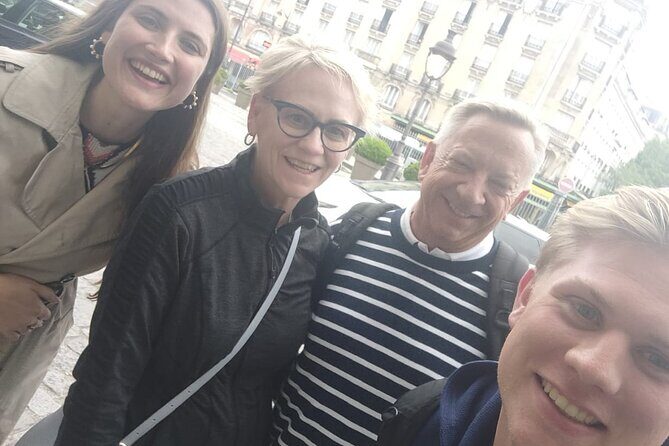
The crepe meal happens at a stop near the Stravinsky Fountain, right near Place Stravinsky next to the Centre Pompidou. The fountain is whimsical, made in 1983 by Jean Tinguely and Niki de Saint Phalle, and features multiple sculptural works with moving water.
Then you get the important part: a crepe menu with one savory crepe, one sweet crepe, and a drink. This matters for two reasons.
First, it’s structured so you don’t hunt for food right before the museum. Second, it’s enough fuel for Louvre time without feeling heavy. Crepes are also easy to eat while staying on schedule, which is exactly what a short 4-hour experience needs.
In other words: you’re not eating just because it’s included. You’re eating because the tour was designed around how you’ll feel later.
Getting to the Louvre Pyramid: the landmark entrance moment
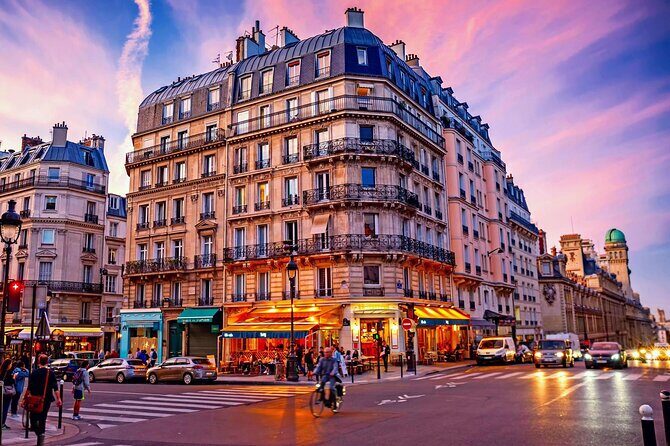
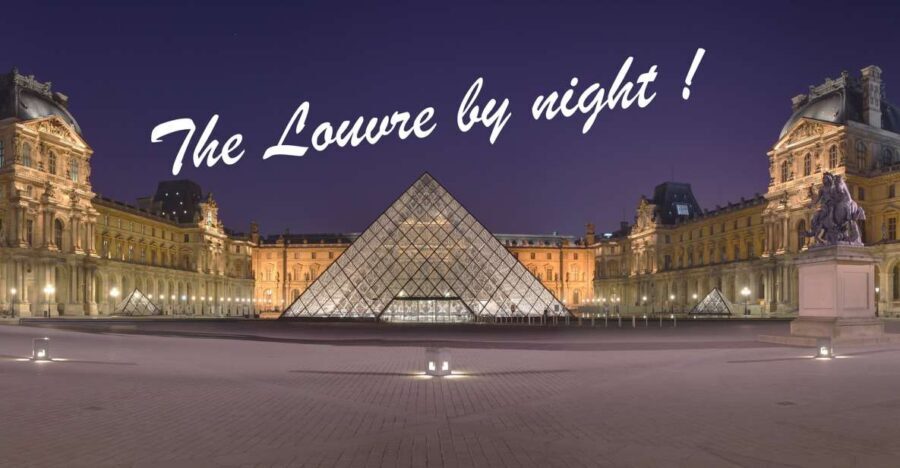
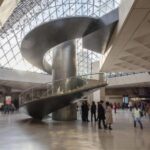
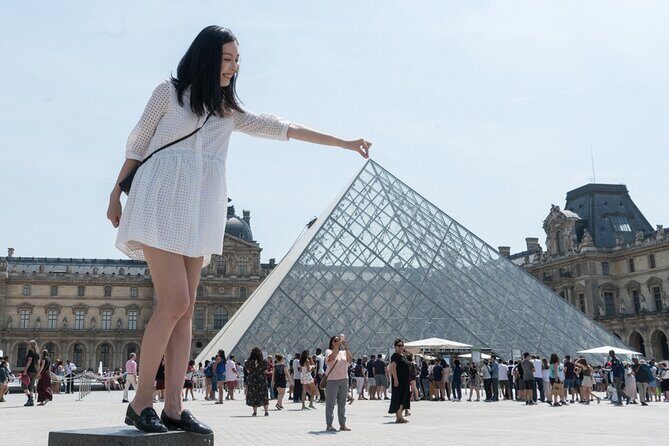
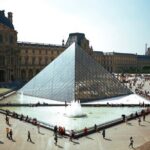
The route finishes by bringing you to the Louvre Pyramid (Cour Napoléon), designed by I. M. Pei and completed in 1988 as part of the Grand Louvre project. It’s a landmark—glass and metal—surrounded by three smaller pyramids, and it serves as the main entrance.
This stage is valuable even before you step inside because you’re orienting yourself. If you’ve ever walked up to the Louvre without a plan, you know how quickly the building can overwhelm. Here, you approach it with context from the earlier stops and with the next step already set: timed-entry tickets.
Louvre entry: timed access plus an audioguide, but no guide inside
Inside the Louvre, what you’re given is important: you have timed-entry tickets plus an audioguide in your language. That’s a practical combo because you can move at your own speed while still getting prompts and explanations.
What’s not included is a guide inside the museum. So if you want someone to point out specific paintings and map your route through the galleries step-by-step, you might find the audioguide does enough—or you might feel like you’re self-navigating for the main highlight period.
That said, the private tour format helps you “arrive ready.” The outside walking part gives you an architectural and city-history framework, then the audioguide helps you translate the museum collection into something less random.
A tip for making the audioguide work for you
When you use an audioguide, don’t try to listen to everything. Pick a few themes you care about and let the rest be background. With a short timed window, focus keeps the experience satisfying instead of scattered.
Metro tickets and mobile access: small logistics, big payoff
The tour includes metro tickets and uses a mobile ticket. Even if you’re an independent walker, those details matter because Paris public transit can be great and stressful in the same hour. Having tickets handled for the tour reduces the chance that you lose time on payment machines or mobile activation issues.
Also, the tour is close to public transportation. That makes a difference if you’re arriving from a hotel not far from the Seine.
Price and value: does $174.60 make sense in real time?
At $174.60 per person for about 4 hours, this tour is not the cheapest way to see Paris landmarks. But it is a good value for people who care about time, want a private guide for the walking segments, and don’t want to spend half the day sorting out tickets.
Here’s what you’re effectively paying for:
- Louvre timed entry (the big time-saver)
- Audioguide included
- A private guide for the walking tour
- Crepes and a drink
- Metro tickets
If you were to book these parts separately, you’d spend more time coordinating—and you’d still face the same crowd problem at the Louvre. The guided loop also helps you see more of the central area around the museum without wandering yourself into dead ends.
Big caveat: the price value depends on your group. Since this is private, the per-person cost makes the most sense if you split the cost with companions or if you strongly value not waiting and having a guide steer the day.
Who this tour fits best
This works best for:
- Couples or small groups who want a private experience but still want structure.
- First-timers to Paris who want the major landmarks and a realistic museum plan in a half-day.
- People who like history tied to place names—bridges, squares, courthouses, and churches—rather than just museum facts.
- Anyone who wants a crepe break that’s baked into the route, not an optional detour.
If your priority is spending a long, uninterrupted time inside the Louvre with a full inside guide, you may want a different option that includes in-gallery guidance. Here, the guide support is for the walking and orientation parts, while the museum experience leans on the audioguide.
Should you book this Louvre and crepes private tour?
I’d book it if you want a clean, efficient half-day that combines orientation with timed-entry relief and a proper Paris food stop. The standout value is the balance: you get to see a compact slice of central Paris with context first, then you step into the Louvre with the museum already planned enough to keep your time from melting away.
Skip it or adjust expectations if you’re the type who needs someone to walk beside you inside the Louvre with a curated route. Since no guide inside is included, you’ll rely more on your own preferences while using the audioguide.
If you want a smart first Louvre day without the hassle, this is the kind of plan that feels like Paris doing you a favor.
FAQ
How long is the Louvre Museum and crepes private tour?
It runs for about 4 hours.
Is Louvre museum entry included?
Yes. The tour includes timed entry tickets to the Louvre Museum.
Do I get a guide inside the Louvre?
No. A private guide handles the walking tour, but there is no guide included inside the Louvre Museum.
What food is included during the crepe stop?
You get 1 savory crepe, 1 sweet crepe, and a drink.
What language is the tour offered in?
The tour is offered in English.
Is this tour private or shared?
It’s private. Only your group participates.
Do I receive metro tickets and a mobile ticket?
Yes. Metro tickets and a mobile ticket are included.
Where does the tour start and end?
It starts in Île-de-France 75001 Paris, France, and ends at the Louvre Museum 75001 Paris, France.
Can I cancel and get a full refund?
Free cancellation is available up to 24 hours before the experience start time for a full refund.