REVIEW · PARIS
Small-Group Louvre Museum Masterpieces Tour with Access
Book on Viator →Operated by City Wonders Ltd · Bookable on Viator
The Louvre gets manageable fast. This small-group highlights tour in English covers major masterpieces in about three hours, with audio headsets so you can actually hear the stories. I love the tight focus (it’s not aimless wandering) and the way the route connects royal power to art you thought you already knew. One possible drawback: plan for crowds, lots of walking, and stairs, especially if you move slowly.
After the guided portion, you’re not stuck on a leash. You’ll finish the tour and can keep exploring the museum at your own pace, which is a smart way to handle a place as huge as the Louvre.
In This Review
- Key things to know before you go
- Where You Meet: Arc de Triomphe du Carrousel to the Louvre
- Getting In Faster: Mobile Ticket, Security Lines, and Headsets
- The 3-Hour Masterpiece Route: What You See and Why It Matters
- Medieval foundations, then Venus de Milo
- Apollo Gallery and the power of crowns
- Canova’s Psyche and Cupid: romance with a sculptor’s eye
- Delacroix’s Liberty Leading the People: art as political fuel
- Michelangelo in the Italian sculpture halls
- Leonardo’s Mona Lisa: the most famous portrait, explained in plain terms
- Crowds, Stairs, and Pace: The Real-Life Experience Gap
- Small-Group Size: Why 12 People Feels Different
- After the Tour: How to Use Your Free Time
- Price and Value: What You’re Really Paying For
- Morning vs Afternoon: Picking the Slot That Fits Your Day
- Who Should Book This Louvre Masterpieces Tour?
- Should You Book This Tour?
- FAQ
- How long is the Louvre tour?
- Is museum admission included in the price?
- How big is the group?
- What language is the tour?
- Are audio headsets provided?
- Where do I meet the tour?
- Where does the tour end?
- Is hotel pickup included?
- What time does the tour start?
- You can cancel for a full refund if you cancel in time?
Key things to know before you go
- Small-group cap (12 or fewer): you get more attention and fewer people cutting in front of you.
- English + audio headsets: hearing the guide’s explanations is built in.
- Premium entry included: you pay for access and spend less of your time waiting.
- A tight highlights path: medieval roots, Venus de Milo, Apollo Gallery, Canova, Delacroix, Michelangelo, and Mona Lisa.
- Choose morning or afternoon: pick the slot that fits your day in Paris.
- Rare group-merging can happen: if a guide is unavailable, groups may combine, which can make the experience feel less private.
Where You Meet: Arc de Triomphe du Carrousel to the Louvre
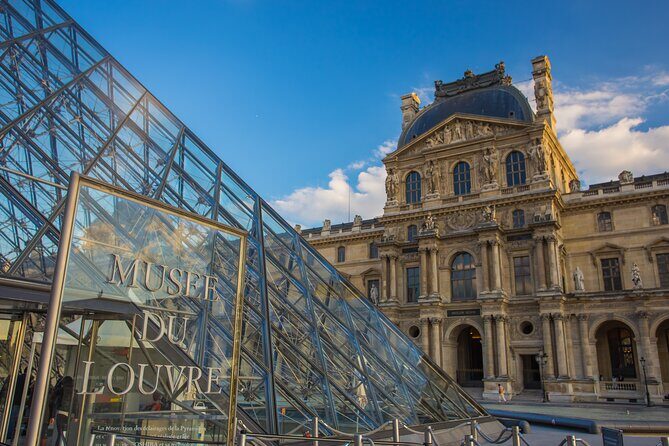
You meet at the Arc de Triomphe du Carrousel, on Pl. du Carrousel (75001). That’s a useful starting point because it’s a recognizable landmark area and it’s served by public transport.
Two practical tips help a lot:
- Arrive early enough to handle the real-world delays of finding the exact meeting spot and getting through the first security checks.
- Bring the confirmation details you received at booking on your phone. A mobile ticket is included, and it also helps if you need to show anything quickly.
Also, there’s no hotel pickup. This is a walk-to-the-museum day. If you like structured plans, you’ll enjoy that. If you hate trains/metro/last-mile walking, you’ll want to plan your route in advance.
Other Louvre masterpieces and highlights tours in Paris


Getting In Faster: Mobile Ticket, Security Lines, and Headsets
This tour includes the museum admission (the adult entry ticket is priced at €22) plus a reservation fee, and you also get audio headsets. Translation: you’re paying not just for a guide, but for reduced friction getting inside and for clearer storytelling while you’re moving.
Still, don’t expect a frictionless day. The Louvre has mandatory security checks. The tour info notes delays can happen there, and in practice, crowds are part of the deal.
Here’s why the headsets matter. Even if you’re standing a few steps back, you can hear the guide clearly. Several guides are specifically praised for pacing and for making sure the group stays together, and the headsets make that easier.
The 3-Hour Masterpiece Route: What You See and Why It Matters
This is a “highlights with context” plan. You’re not trying to see everything. You’re trying to leave feeling oriented—able to return later and understand what you’re looking at.
The route is built to move through major themes of the Louvre:
- the palace turning into a museum,
- myth and religion,
- revolutionary French history,
- and the big-name Italian geniuses that everyone comes for.
Medieval foundations, then Venus de Milo
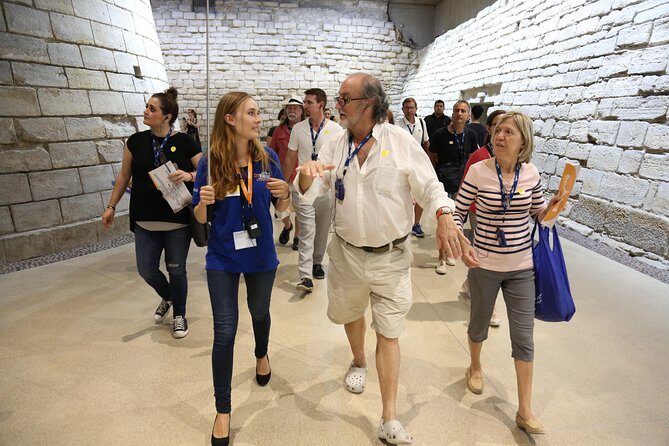
The tour starts by grounding you in the Louvre’s earlier, royal setting—its medieval foundations. That sounds like a history lesson, but it actually helps you “read” the building as you move through it.
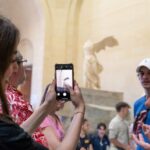
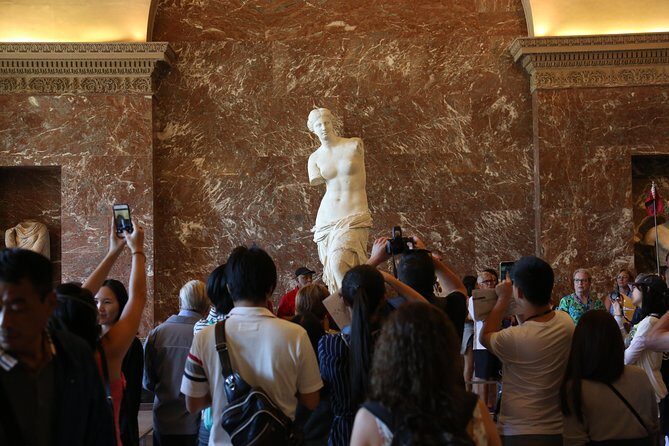
Then comes Venus de Milo. You’ll stop for the famous moment, but the guide’s job is to connect the sculpture to the broader artistic world it came from and the lasting appeal of idealized form. If you’ve only seen Venus in photos, this is where the scale and the craftsmanship click.
Apollo Gallery and the power of crowns
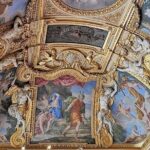
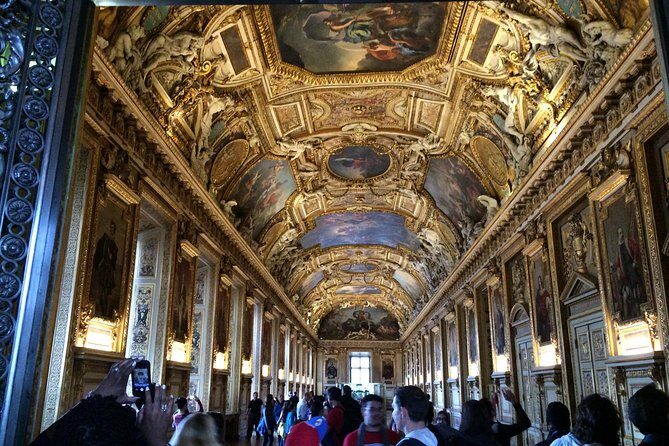
Next is the Apollo Gallery, where you’ll see the ornate royal crowns connected to Napoleon and King Louis XV. This is where the Louvre feels like more than a collection. It’s a timeline of authority, display, and national image-making.
A good guide here does two things:
- shows you what you’re actually looking at (the objects, placement, visual details),
- then explains why those items matter in the story of France.
Other small-group Louvre tours in Paris



Canova’s Psyche and Cupid: romance with a sculptor’s eye
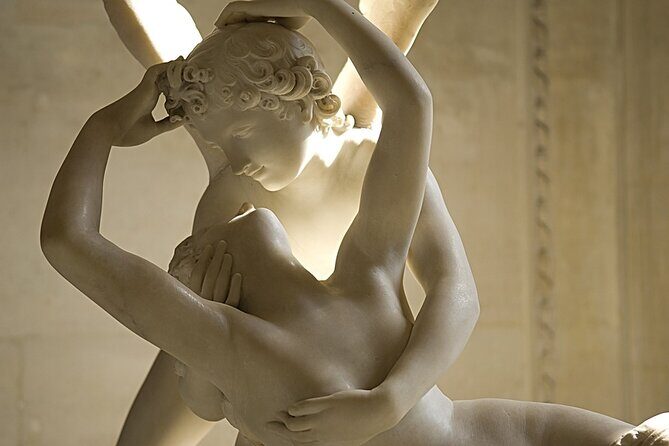
Then you’ll find Canova’s Psyche and Cupid. This is a tonal change from the political drama of crowns. Instead of power, you get intimacy—emotion expressed through pose, surface, and composition.
The value in this stop is timing. It gives your brain a break. You’ve been dealing with crowd pressure and fast movement; now you slow down visually, even while you’re still in “tour mode.”
Delacroix’s Liberty Leading the People: art as political fuel
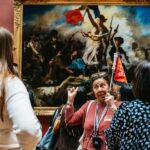
You’ll also see Liberty Leading the People by Delacroix, tied to the French struggle for freedom. This painting works as a kind of cultural shortcut. Even if you don’t know every historical detail, you’ll feel the energy: the symbolism, the urgency, and why the work became so influential.
One practical thing: when you’re at a famous painting, you often see it from the side or through shoulder gaps. A strong guide helps you reposition for better viewing so the crowd is less of a wall between you and the art.
Michelangelo in the Italian sculpture halls
You’ll reach Michelangelo in the Italian sculpture area. This is a “hands and weight” moment. Sculpture is easier to respect when you understand what makes it feel solid rather than just decorative.
If you’ve ever wondered how museum labels translate into real meaning, this stop is a good test. The guide’s commentary turns the name into an experience.
Leonardo’s Mona Lisa: the most famous portrait, explained in plain terms
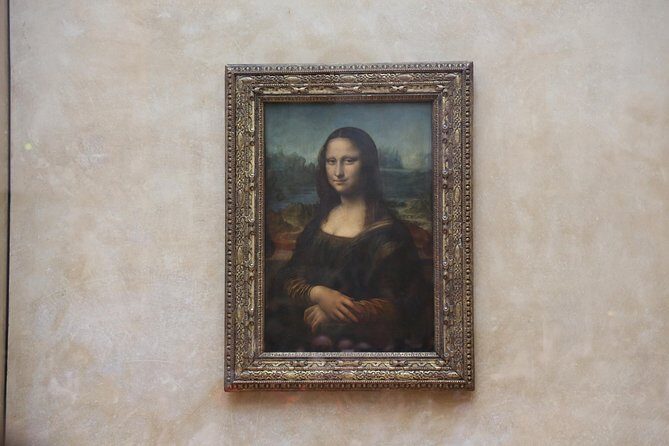
Finally, you’ll get to Leonardo da Vinci’s Mona Lisa. Expect a mob scene; the tour doesn’t pretend that isn’t true. The win here is not skipping crowds. The win is understanding the painting enough to get something out of your minute in front of it.
In the feedback I read, guides like Nazli are praised for navigating the crowd so the group gets the best possible view in a chaotic area. That skill matters. At Mona Lisa, your angle and timing can make the difference between a quick glance and actually noticing brushwork, expression, and atmosphere.
Crowds, Stairs, and Pace: The Real-Life Experience Gap
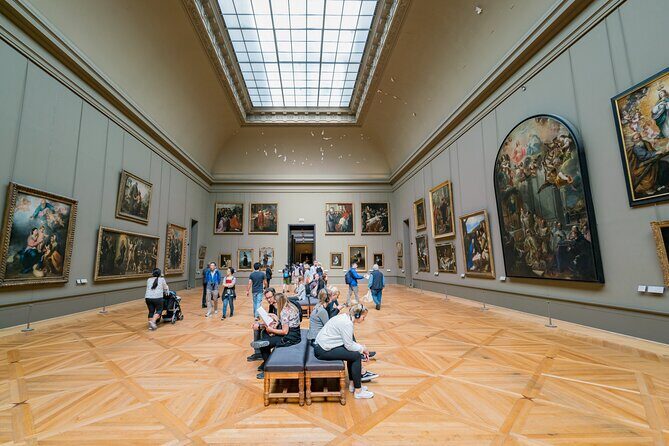
The Louvre is huge. Your time is limited to three hours, so pace is part of the deal. Several guides are mentioned for moving smartly through the museum, and some tours note the stairs can be a lot.
Here’s what I’d plan for:
- You’ll be standing for parts of the tour.
- You’ll walk between galleries.
- You may need to climb stairs more than you expect.
If you have mobility concerns, don’t just ask if the tour is technically possible. Think about how long you can stand, how your knees handle stairs, and how comfortable you are in crowded corridors. One guide, Toni, is praised for noticing when someone went slower and for pointing out benches, and another guide (Florence) is praised for slowing the experience so everyone stayed comfortable. That’s the good scenario.
But you should still go in with eyes open: this is not a slow-moving, museum-stroll pace.
Small-Group Size: Why 12 People Feels Different
The tour is capped at 12 travelers or fewer for the semi-private experience. That’s where this tour earns its value.
With a small group:
- You’re not lost inside the crowd.
- The guide can answer questions instead of talking into space.
- You get repositioning help when a room fills up.
- You’re more likely to notice small details that labels alone won’t explain.
In the feedback, guides are described as personable and attentive—such as Maryam and Florence being called out for making sure the group stayed happy and included. Hamish gets credit for guiding you through both the signature pieces (like Winged Victory and Venus de Milo) and some less obvious works, with just enough information to feel informed without feeling overloaded.
And when the group stays compact, you’re also more likely to move through the Louvre efficiently, which helps because the museum is so big it can overwhelm you quickly.
After the Tour: How to Use Your Free Time
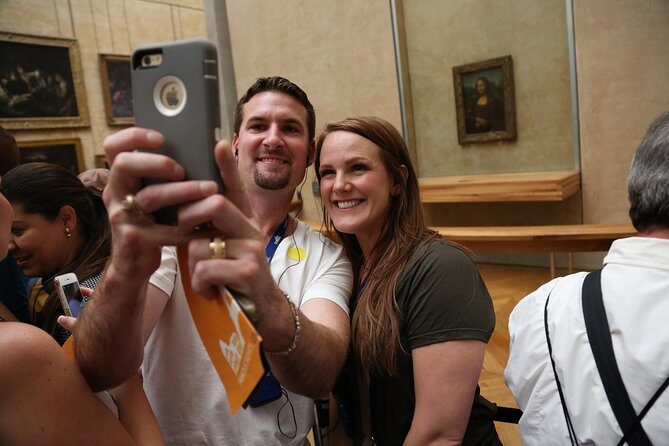
One of the smartest parts of this experience is that you’re not done after three hours. You can roam the Louvre on your own once the tour ends.
That matters because the Louvre is like a buffet. Guided highlights help you:
- learn where key rooms are,
- understand what to look for next,
- and decide what you actually want to spend more time on.
If you want a simple plan, do this:
1) use the guided tour to build a mental map,
2) then return to 1–2 areas that called to you (instead of trying to “see everything”).
Some guides are even praised for helping people find better exits or elevators when the tour wraps up, which is a big deal when you’re navigating a maze at the end of a long museum day.
Price and Value: What You’re Really Paying For
The price is $118.27 per person, and it includes:
- an English-speaking expert guide,
- museum admission for adults (€22),
- audio headsets,
- and a reservation fee for the group.
When I look at that total, the value isn’t only the ticket. It’s the time saved and the interpretation. The Louvre is famous, but it’s also chaotic. Paying for a guided plan is paying for your sanity plus better chances of seeing the pieces you came for.
Also, booking timing matters. The tour is often booked about 79 days in advance on average. That tells me demand is strong. If you’re traveling in peak season or have a fixed schedule, booking early is usually the safer move.
One more value note: the tour information says free admission applies to visitors under 18 and to EEA residents under 26 with valid ID and proof of residency. If you qualify, it can change what you’re getting for your ticket cost. Since the tour includes adult entry as part of the package, you should check with the operator on how eligibility is handled.
Morning vs Afternoon: Picking the Slot That Fits Your Day
You can choose a morning or afternoon tour. The meeting time listed for the start is 10:30 am for the version shown, so the morning option likely follows that schedule, while an afternoon version runs separately.
How should you choose?
- If you like starting earlier and avoiding later-day energy drains, go morning.
- If you want to sleep in or line up the Louvre with other plans, pick afternoon.
Either way, expect the same basic reality: crowds and security checks can slow entry. The guide and the premium access help, but they can’t eliminate the Louvre’s rules or visitor volume.
Who Should Book This Louvre Masterpieces Tour?
This tour is best for you if:
- It’s your first time at the Louvre and you want a smart map of the must-sees.
- You want a guided story, not just photos and guesswork.
- You like a firm time limit that keeps you from spending an entire day on one room.
- You’re traveling with kids old enough to enjoy short stops and explanations. In the feedback, a family with two children aged 9 and 11 is described as having a great time for exactly this reason: they weren’t left bored or lost.
You might consider skipping it (or pairing it differently) if:
- Your mobility is limited and stairs are an issue. The tour can involve lots of walking and climbing.
- You want a slow, deep museum experience. This route is focused, so you won’t linger for hours at each room.
Should You Book This Tour?
If you’re trying to get value out of limited time, I’d book it. The combination of small group size, audio headsets, and a tight route through the Louvre’s biggest names is a strong way to avoid the most common first-timer problem: getting overwhelmed and seeing less than you hoped.
The main thing to get right is your expectations. This isn’t a gentle stroll for everyone. It’s an efficient highlights plan with lots of crowd energy. If that matches your travel style, you’ll come away feeling oriented and ready to explore more on your own.
FAQ
How long is the Louvre tour?
It runs about 3 hours.
Is museum admission included in the price?
Yes. Adult museum admission is included (listed as €22).
How big is the group?
It’s limited to a maximum of 12 travelers.
What language is the tour?
The tour is offered in English.
Are audio headsets provided?
Yes. Audio headsets are included so you can hear the guide.
Where do I meet the tour?
The meeting point is at Arc de Triomphe du Carrousel, Pl. du Carrousel, 75001 Paris, France.
Where does the tour end?
It ends at the Musée du Louvre, 75001 Paris, France.
Is hotel pickup included?
No. Hotel pickup and drop-off are not included.
What time does the tour start?
A listed start time is 10:30 am for the morning option, and the tour is also offered in the afternoon.
You can cancel for a full refund if you cancel in time?
The tour allows free cancellation up to 24 hours in advance for a full refund.