REVIEW · PARIS
Louvre Museum & Mona Lisa Semi-Private Guided Tour (Max 6 People)
Book on Viator →Operated by The Tour Guy · Bookable on Viator
The Louvre can swallow a full day. This semi-private tour keeps you moving with guaranteed entry and expert context from an English guide. You’re in a max 6-person group, so it feels less like herding cats and more like learning your way through the museum.
I especially like how the tour’s highlights hit the famous anchors: Mona Lisa and the Venus de Milo. You also get a route that carries you through major galleries like ancient Greece and Rome, plus big French masterpieces you’d otherwise bounce past.
One thing to plan for: the Mona Lisa area is extremely crowded. Even with a guide, you may feel the crush, so if you’re claustrophobic, you’ll want to brace yourself.
In This Review
- Key things to know before you go
- Starting at the Glass Pyramid: where the Louvre tour actually begins
- Guaranteed entry and small-group pacing: the real value
- Your 2.5-hour route: what you’ll see and why it’s chosen
- Louvre Museum stop: the tour’s main highlights
- Mona Lisa reality check: crowds, patience, and how to cope
- How the guide changes the experience (and what to watch for)
- Movement, restrooms, and the comfort factor
- Price and value: does $102.12 make sense?
- Who this tour suits best
- Practical details that affect your day
- Should you book this Louvre semi-private tour?
- FAQ
- How long is the Louvre Museum & Mona Lisa semi-private guided tour?
- What group size is this tour?
- Does the tour include museum admission?
- Is the tour guided in English?
- Where does the tour start?
- Where does the tour end?
- Is hotel pickup or drop-off included?
- Are food and beverages included?
- What’s the cancellation policy?
- Do children or certain residents get free admission?
- Is confirmation provided when booking?
Key things to know before you go
- Max 6 people means questions get answered and you’re not just staring at your feet.
- Guaranteed entry helps you start without losing time to the longest lines.
- A single planned route takes you from the Glass Pyramid to major showpieces.
- English-speaking art-history guidance makes the museum feel less random.
- You’ll see more than paintings—sculptures and dramatic French works are built into the walk.
- Mona Lisa crowds are real, even when the tour is well organized.
Starting at the Glass Pyramid: where the Louvre tour actually begins
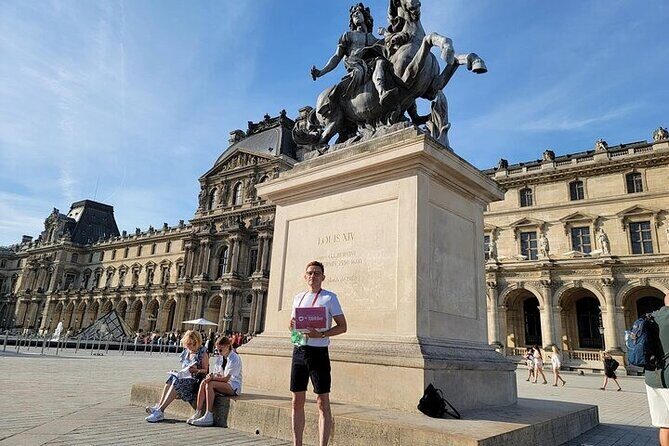
Your tour starts at a specific point in Cour Napoléon, right by the Louvre’s Glass Pyramid. The meeting marker is the sculpture called Louis XIV sous les traits de Marcus Curtius (copie), which is a very specific landmark—useful, because the Louvre is easy to misread when you’re stressed and trying to look “casual.”
Once your small group gathers, you kick things off at the Glass Pyramid and then work into the museum. This matters more than it sounds. The Louvre has a way of turning first-time visitors into line-standers. Starting in the right spot helps you get your bearings fast and keeps your morning (or afternoon) from sliding away.
Also note the tour is designed for an easy pace through highlights, not a marathon across every wing. You’ll be guided, but you’ll still be walking a lot. Wear comfortable shoes—your feet will do most of the “museum seeing” even when your eyes want to linger.
Other private Louvre tours in Paris



Guaranteed entry and small-group pacing: the real value
This tour is built around guaranteed entry. That’s a big deal in the Louvre. Even when you have tickets, you can still lose time and energy to entrances, security lines, and crowd flow. Guaranteed entry helps you spend your attention on art instead of logistics.
The other value lever is the group size—up to 6. In a museum this size, “small group” isn’t just a feel-good label. It changes the experience. Your guide can adjust when people pause, ask questions, or slow down near a specific work. You’re not stuck watching someone sprint ahead while you trail behind like a lost backpack.
Expect a guided route that focuses on recognizable masterpieces and the stories that connect them. The goal isn’t to teach you everything the Louvre contains. It’s to help you understand what you’re seeing and why it matters, so you leave with a clearer sense of the museum rather than just photos of crowds.
Timing is about 2 hours 30 minutes. That’s long enough to cover the major beats, but short enough to avoid the “I can’t see straight anymore” phase.
Your 2.5-hour route: what you’ll see and why it’s chosen
The tour’s flow is built like a guided highlights reel—starting with the Louvre’s iconic entrance, then moving through a sequence of famous objects that are spread across major themes.
Louvre Museum stop: the tour’s main highlights
You’ll spend the bulk of the time inside the Louvre seeing a carefully selected set of masterpieces, including:
- Mona Lisa
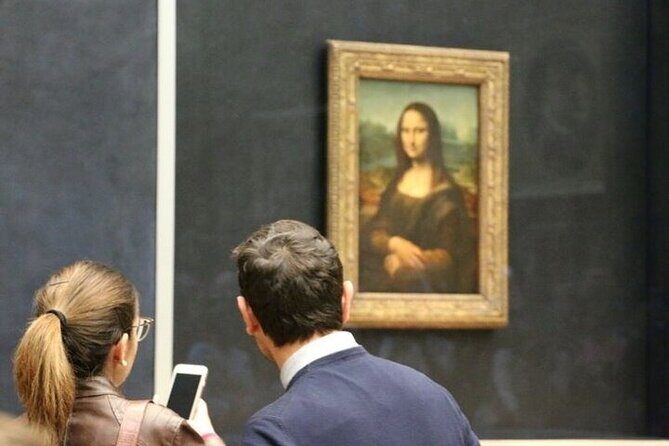
This is the one everyone comes for. It’s also the one that’s hardest to enjoy peacefully, because the space around it is packed. Your guide’s job here is not magic. It’s helping you locate what you need quickly, understand the work’s significance, and manage the crowd reality without turning the visit into a wrestling match.
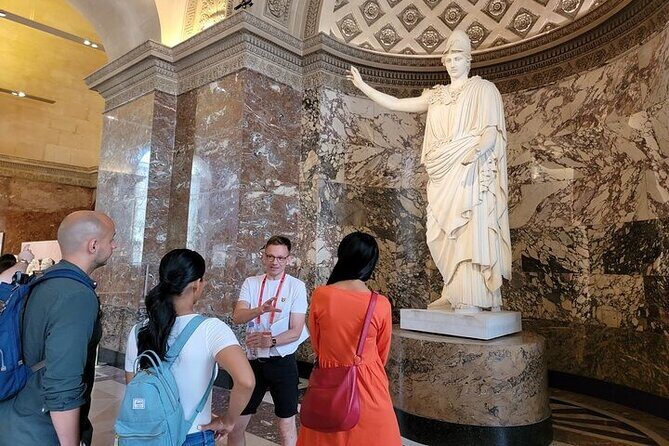
- Venus de Milo
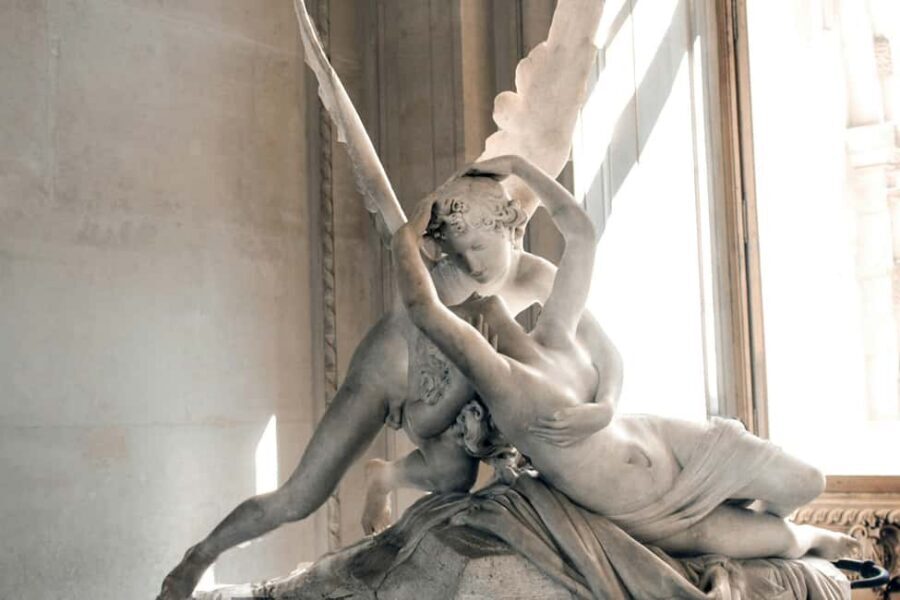
This sculpture is a go-to for a reason: it’s instantly memorable, and it’s easy to appreciate even if you’re not a sculpture person. Expect guidance that points out details you’d likely miss if you were just scanning from a distance.
- Winged Victory of Samothrace
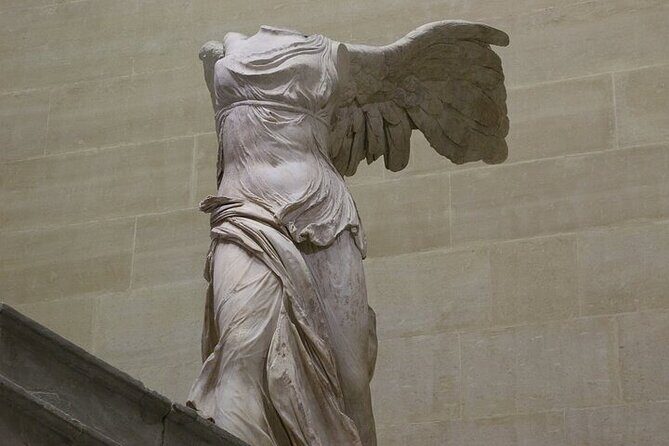
This is the “wow” piece for many first-timers. It’s a sculpture that feels like it’s caught mid-action. Having it explained as you approach helps you look beyond the silhouette and notice what makes the pose so striking.
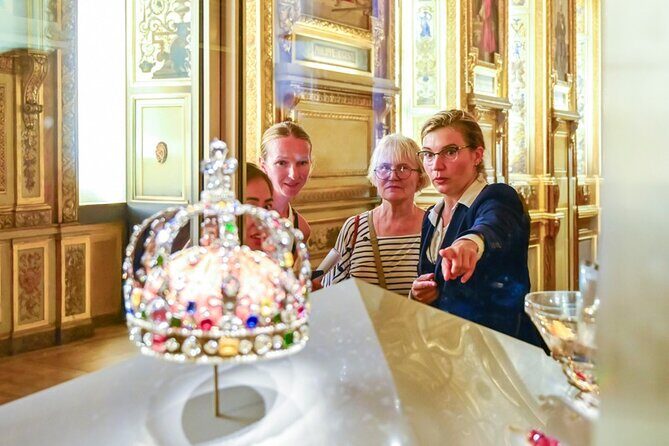
- French crown jewels
These objects shift the tone from classical antiquity to a very different kind of power display. Even if you’re mostly there for painting and sculpture, these pieces are often the part people remember later because they feel so tangible and historical.
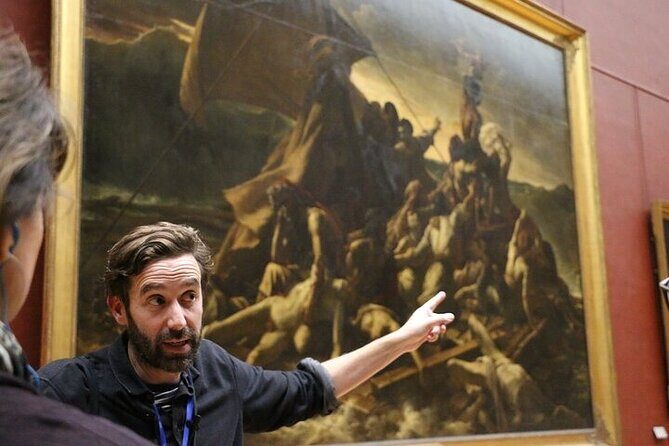
- Raft of the Medusa
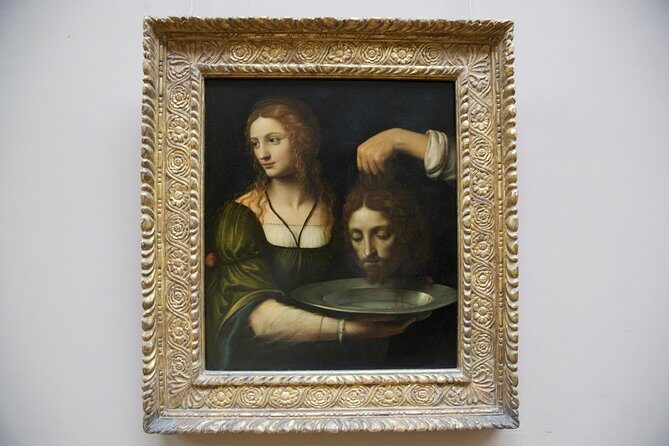
This one leans dramatic and emotional. A guided stop here is useful because the story behind the work changes how you read the image. Instead of seeing chaos, you start to see structure—who’s in motion, who’s trapped, and why the composition hits so hard.
- Liberty Leading the People
This is a monument to political change, and it’s also a test of how quickly you can understand a scene. A guide helps connect the symbolism so you’re not stuck decoding it alone while people funnel past you.
- The Coronation of Napoleon
Ending with this big, historical set-piece gives your tour a strong finish. It also helps the final moments feel like more than just another room: you leave with a sense of how the Louvre can cover propaganda-level grandeur and artistic ambition in the same sweep.
That’s the core arc: art across eras, with the guide steering you through the museum so you don’t wander randomly.
Mona Lisa reality check: crowds, patience, and how to cope
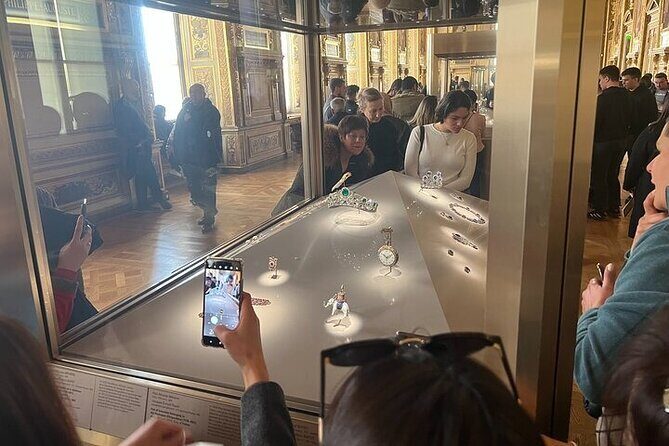
Let’s be honest: the Mona Lisa is famous for a reason, but it’s also where the Louvre feels most stressful. Even on a guided route, the area can turn into a crush—lots of bodies, little space to stop, and constant shoving just to inch forward.
If you’re claustrophobic, this is the part where you should be prepared to manage expectations. You might prefer viewing it briefly, from the edges, rather than trying to stay close for a long stare.
If you’re not claustrophobic, still don’t plan on “slow museum time” here. Treat it like a quick, high-impact stop: look for a few key details your guide points out, take your photos from a position that doesn’t block others, then move on. The tour’s real strength is that it doesn’t end with the crowd. After Mona Lisa, you still get major sculpture and French masterpieces that are easier to appreciate without the same level of crush.
Other guided Louvre Museum tours in Paris






How the guide changes the experience (and what to watch for)
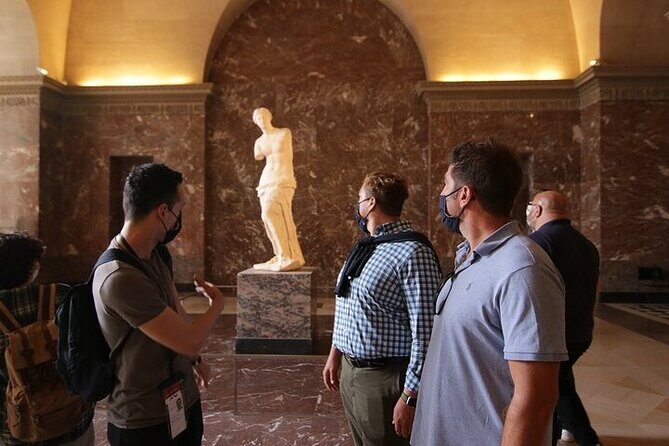
This tour is led by an English-speaking guide with art-history expertise. That matters because the Louvre can feel like a giant storage room of masterpieces if you’re left on your own.
In past tours, guides such as Deli and Will have been praised for making the history behind recognizable works feel clear and memorable. Others like Joanna and Carmina are noted for guiding an efficient route through centuries of art and showing how the pieces connect.
What does that look like in real life?
You’ll generally get three things:
- Where to look (not just what to look at).
- A short story that gives the work meaning.
- A sense of order so the Louvre stops feeling like noise.
Headphones aren’t mentioned as part of the standard tour setup. If you’re worried about audio, bring your patience. You’ll want to stay close enough to hear the guide clearly, especially during busy moments like Mona Lisa.
Movement, restrooms, and the comfort factor
The Louvre is large enough that small comforts add up. One review-style detail worth taking seriously: the tour includes access that can help with group restroom access with less congestion than you’d expect on your own.
That’s not glamorous, but it’s practical. When you’re inside a giant museum, restroom timing can become a whole extra plan. Having a guide-led rhythm helps you avoid the panic loop of trying to find a bathroom while your group floats in the distance.
You’ll also want to pay attention to pacing. Some people love how fast the highlights move; others feel the tour can be quick. If you prefer a slower art conversation, consider going in with the mindset that this tour is a structured route. You can always come back later with a second visit plan for the works that truly hook you.
Price and value: does $102.12 make sense?
At about $102.12 per person for roughly 2 hours 30 minutes, you’re paying for three things:
- the €22 adult entrance ticket,
- a guided route focused on major works, and
- the convenience of guaranteed entry plus a small group format.
If you were doing this solo, the ticket is only one slice of the cost. The real problem is time and decision fatigue. The Louvre’s size means you either plan carefully or you end up spending your energy figuring out where you are instead of looking at art.
This tour’s price starts to look more reasonable when you compare it to:
- trying to build a “best of” route yourself,
- losing time to entrance friction, and
- having to decode each room without context.
The tour also doesn’t include food or drinks, so factor that into your day. But the time saved inside the Louvre can make the total day feel smoother, especially if you’re only in Paris for a short visit.
Who this tour suits best
This is a great fit if you:
- want a high-clarity Louvre overview without needing to study floor maps,
- like art that spans painting, sculpture, and political history,
- want a manageable group size (max 6) rather than a large crowd tour,
- prefer an organized route that hits the works you already recognize.
It’s also ideal for first-timers who feel overwhelmed by the Louvre. If you’ve been to big museums before, you’ll appreciate the structure here. If you’re a die-hard art specialist wanting every room and every label, this will feel too short. But that’s not the point. The point is to leave with a working framework of what matters.
Practical details that affect your day
A few logistics points can save you stress:
- Meeting point is in Cour Napoléon by the Glass Pyramid area, near Louis XIV sous les traits de Marcus Curtius (copie). Arrive a little early so you’re not searching while the group forms.
- No hotel pickup/drop-off. You’ll want to arrive under your own steam using public transit.
- Mobile ticket is provided.
- The tour is offered in English.
- It ends at the Louvre, still in the central museum area, so plan to explore a bit after if you feel energetic.
If you’re deciding when to book, note that this tour tends to be reserved about 41 days in advance on average. In practice, that means it’s popular, so booking sooner rather than later is smart—especially around busy travel weeks.
Should you book this Louvre semi-private tour?
If your goal is a focused, high-impact introduction to the Louvre in 2.5 hours, I think you’ll like this. The mix of guaranteed entry, a small group, and an English-speaking art-history guide gives you real value for the money. You’ll see the big names—Mona Lisa, Venus de Milo, Winged Victory—plus major French works that often get skipped on rushed self-guided trips.
Only consider skipping (or planning a different approach) if you strongly dislike crowds, especially around Mona Lisa. That part is hard for everyone, guided or not.
My call: book it if you want structure and meaning more than you want unlimited wandering. It’s one of the smartest ways to get a first Louvre visit that feels organized and memorable.
FAQ
How long is the Louvre Museum & Mona Lisa semi-private guided tour?
It runs for about 2 hours 30 minutes.
What group size is this tour?
The group is limited to a maximum of 6 people.
Does the tour include museum admission?
Yes. The price includes an adult entrance ticket of €22 to the Louvre.
Is the tour guided in English?
Yes, it’s offered in English, with an English-speaking guide.
Where does the tour start?
The meeting point is at Louis XIV sous les traits de Marcus Curtius (copie), Cour Napoléon et Pyramide du Louvre, 75001 Paris, France.
Where does the tour end?
The tour concludes at the Louvre (75001 Paris).
Is hotel pickup or drop-off included?
No, hotel pickup and drop-off are not included.
Are food and beverages included?
No, food and beverages are not included.
What’s the cancellation policy?
You can cancel for a full refund up to 24 hours before the experience starts. If you cancel less than 24 hours before, the amount paid is not refunded.
Do children or certain residents get free admission?
Free admission applies to visitors under 18 and EEA residents under 26, with valid ID and proof of residency.
Is confirmation provided when booking?
Yes. Confirmation is received at the time of booking.